Editor’s Note
This article discusses ongoing concerns about data security and geopolitical tensions, highlighting recent regulatory actions against TikTok in Europe. The piece also touches on the complex political considerations surrounding the platform in the U.S. context.

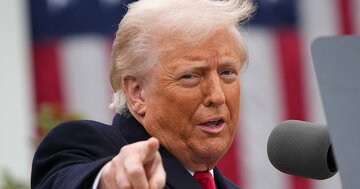
For President Trump, banning TikTok, which is used by many of his supporters, is an issue that could directly lead to a decline in his own support. Initially, Trump argued for separating TikTok’s U.S. operations for the sake of American users and economic security. However, his stance changed when he perceived that “TikTok can be used.”
On the other hand, risks such as data leakage from TikTok remain. As argued by the previous Biden administration, concerns about U.S. data sovereignty may increase. Data sovereignty refers to the ability to securely and safely manage citizens’ data within one’s own country, preventing its outflow overseas and manipulation of public opinion.
At present, it is not clear in detail how the Trump administration can protect the data of TikTok users. A key point is the possibility that China’s ByteDance develops, operates, and manages the algorithm and stores big data. According to reports following the U.S.-China agreement, the U.S. operations of TikTok after the sale will be split into two parts.
One part will be the responsibility of a corporate consortium centered on Oracle, primarily handling back-office operations such as data management. The other part, including e-commerce and advertising, is likely to be led by ByteDance.

ByteDance will lead algorithm development and license it to entities like Oracle. Oracle will establish a security framework on servers within the U.S. and manage some of the data. This should be considered as part of TikTok’s U.S. operations.
On the other hand, it can be considered that U.S. companies have not been able to develop algorithms surpassing TikTok’s. Factoring in its leading role in areas like e-commerce, ByteDance (the Chinese side) will likely retain some influence over the U.S. operations. Under such an operational structure, the risk of U.S. TikTok user data leaking to the Chinese side increases.
A similar situation is occurring in Europe. In May, Ireland’s Data Protection Commission (DPC) reported that Chinese employees had accessed data of TikTok users in EU member states. The DPC requested ByteDance to explain safety measures during data transfers to China, but apparently did not receive a satisfactory response. The DPC imposed a fine of 530 million euros (approximately 87 billion yen) on ByteDance for violating the EU’s General Data Protection Regulation (GDPR).
In the United States as well, the risk remains that data could leak to China via TikTok and public opinion could be manipulated. President Trump’s fixation on TikTok carries the risk of undermining U.S. data sovereignty.