Editor’s Note
The U.S. Supreme Court has agreed to hear a case in November challenging the legality of tariffs imposed during the Trump administration. This follows a federal appeals court ruling that deemed many of these tariffs unlawful, though they remain in effect pending the high court’s final decision.
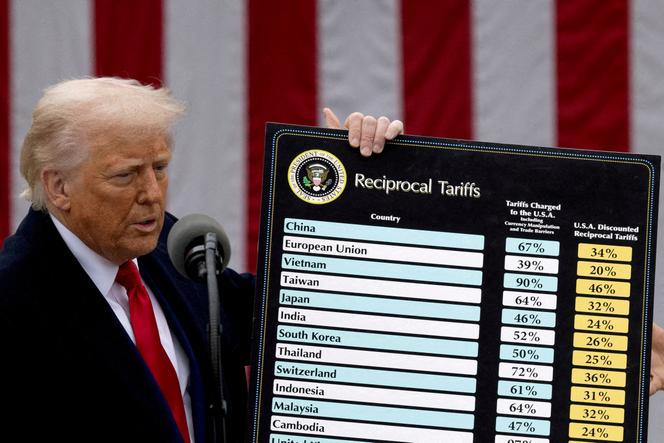
The U.S. Supreme Court, dominated by conservative justices, announced on Tuesday, September 9, that it will examine the legality of tariffs imposed by Donald Trump in early November. A federal appeals court in Washington ruled at the end of August that a large portion of the import taxes decreed by the U.S. president since the beginning of his term were illegal, while keeping them in place until the Supreme Court can rule.
Seized by the Republican administration, the court agreed to study the case urgently and scheduled a hearing on the subject for “the first week of November,” according to the decision issued on Tuesday.
The Trump administration argued before the highest court the harmful consequences of invalidating the tariffs on its trade negotiations with U.S. partners. It fears losing a major means of pressure. The fear of exorbitant tariffs has pushed many of its partners, including the European Union (EU), to refrain from retaliating and to open their markets more to American products.
Since his return to power in January, Donald Trump has implemented, in several waves, new surcharges on products entering the United States. These range from 10% to 50% depending on the situation and the country. It is these tariffs – different from those affecting sectors such as automobiles, steel, aluminum, or copper – that are at the heart of the legal dispute.
The appeals court considered that an emergency economic law, put forward by the U.S. president to implement his tariffs, did not give the president “the power to impose tariffs and other taxes,” a prerogative of Congress.
The dispute was first examined by a specialized court, the United States Court of International Trade, which concluded in May that only Congress, and not the president, could invoke the 1977 IEEPA emergency economic law to “impose an unlimited surcharge on products from virtually all countries.”

this first-instance court recalled in May, insisting on the need for an exceptional situation to invoke this text.