Editor’s Note
This analysis examines the ongoing U.S. tariff campaign, highlighting its expansion to new sectors and countries. The piece frames the trade conflict as a protracted struggle with significant global economic repercussions.
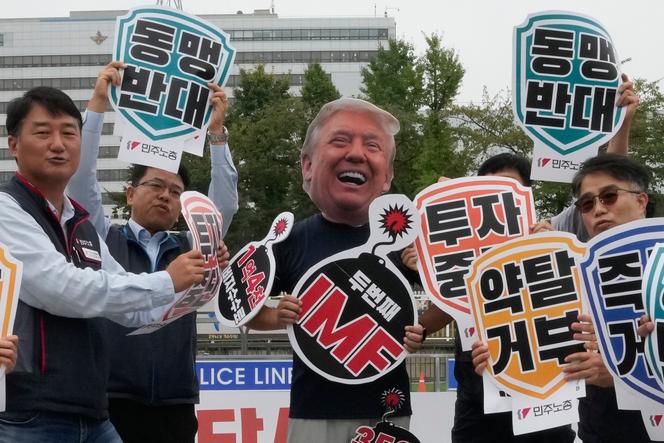
It is a war without end. Six months after April 2nd, declared a “day of liberation” by Donald Trump, the American customs offensive continues.
On Thursday, September 25th, the American president announced new tariffs of up to 100% on furniture, heavy goods vehicles, and patented medicines.
A month earlier, on August 27th, it was India that was targeted with a 50% tax on its imports, as Washington reproaches it for supporting Russia’s war efforts by purchasing its oil.
When the occupant of the White House unveiled them on April 2nd, the tariffs were presented as “reciprocal”: their goal was to reduce the American trade deficit, which reached a record figure of 1.2 trillion dollars (more than 1.023 trillion euros) in 2024, or 4% of GDP, Washington assured. Since then, they have also become a weapon in the service of the geopolitical and economic interests of the United States.
Whatever the grievance, the same threat is always brandished. The European Union (EU) imposes a record fine of 2.95 billion dollars on Google at the end of September? The American president hints that he will retaliate by taxing European imports. On September 12th, former Brazilian president Jair Bolsonaro, an ally of Mr. Trump, is sentenced to twenty-seven years in prison in his country for an attempted coup d’état after his defeat in the 2022 presidential election? A 50% surtax is imposed on Brazilian products.