Editor’s Note
This article highlights a critical issue in the gemstone market, where inconsistent grading and unclear terminology can lead to consumer confusion and significant financial loss. It underscores the need for greater transparency and standardized practices within the industry to protect buyers.
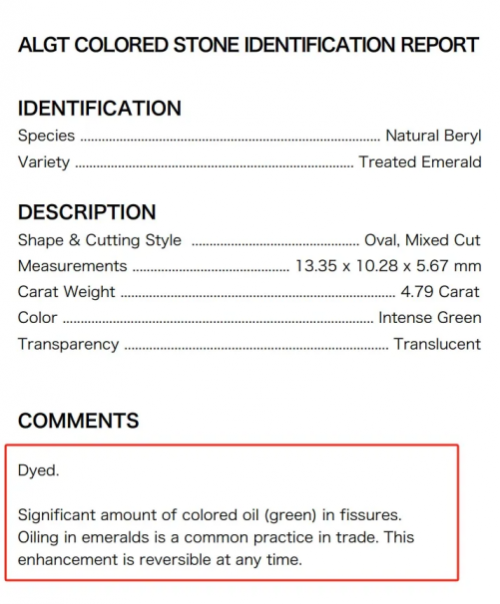
When purchasing emeralds, many people may have encountered the following problems:
These are not only confusing issues for consumers but also real challenges facing the entire jewelry industry.
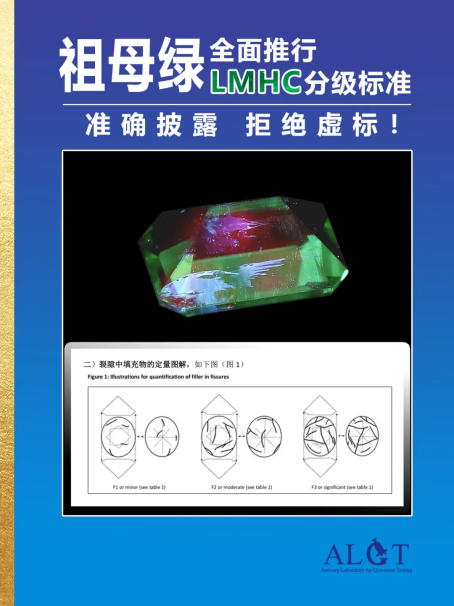
ALGT Gemstone Laboratory has found that in the jewelry market, the extent of clarity enhancement on many emeralds is not rigorously disclosed. This often leads to serious misunderstandings between buyers and sellers.
For example, two emeralds both labeled as “minor oil” may actually differ by two or more clarity enhancement levels if different standards are used.
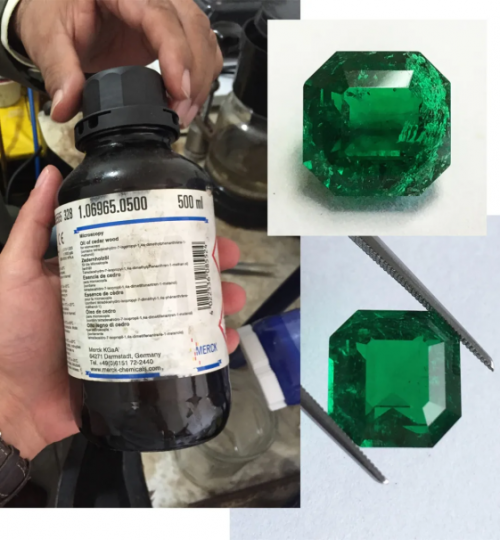
Furthermore, aside from oil or resin, emeralds may also be filled with other substances such as colored oil or wax. If such clarity enhancements are detected, the lab has a responsibility to clearly indicate them on the report. Additionally, since the clarity enhancement of emerald are reversible, it is entirely possible for a gemstone to be retreated after a certificate has been issued. Therefore, a lab report only reflects the emerald’s clarity enhancement condition at the time of testing, which makes re-testing especially important when purchasing emeralds.
Additionally, emeralds filled with colored oil, resin, or wax will be clearly marked as such on the report.
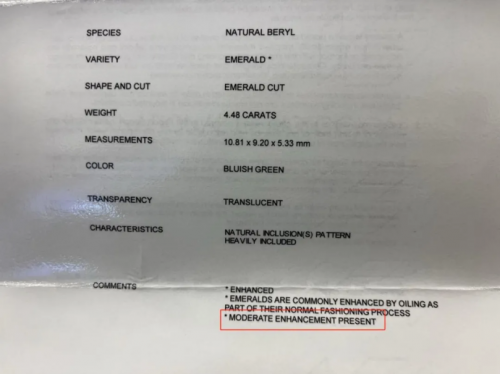
In response to these concerns, ALGT clearly communicates the clarity enhancement level of emeralds directly in the report, using clear language and placing this information in a prominent position.
To help both consumers and professionals better understand clarity enhancement, ALGT introduces its emerald grading and reporting standards. As our slogan says:
Firstly, ALGT Laboratory grades and discloses emerald clarity enhancement according to the rules set by CIBJO and LMHC standards.
These two organizations are internationally recognized bodies that specify standards and rules for the gemstone identification field.
LMHC, full name: Laboratory Manual Harmonisation Committee.
CIBJO, full name: International Confederation of Jewellery, Silverware, Diamonds, Pearls and Stones (Confédération Internationale de la Bijouterie, Joaillerie et Orfèvrerie).
The Confederation is also the only organisation in the international diamond, gemstone and jewellery sectors to have received official consultative status with the Economic and Social Council (ECOSOC) of the United Nations. This enables it to advance programmes and goals of the UN within the industry, serving as a technical expert, adviser and consultant to governments and the UN Secretariat. It additionally is a member of the UN Global Compact and is committed to the fulfilment of the Sustainable Development Goals.