Editor’s Note
The luxury retail sector is navigating a significant transformation. This article examines how shifting economic conditions and evolving consumer values are reshaping the industry, forcing brands to balance exclusivity with new demands for accessibility and purpose.
The luxury retail market is at a turning point. The sector is facing challenges due to slowing global demand, shifting luxury consumer behaviour, and rising expectations around digitalisation, sustainability, and inclusivity. The challenge for luxury retail brands will be to maintain exclusivity while adjusting to a new price sensitivity, and evolving to meet the needs of younger, more diverse luxury consumers.
This article explores the top luxury retail trends shaping the future of this sector across Europe, the US, and Asia.
The luxury retail market is moving beyond the pandemic-era surge, when consumers accumulated surplus capital due to travel limitations, and were able to redirect this towards luxury purchases. While the sector faces economic headwinds with brands competing more intensely for a smaller pool of affluent buyers, the outlook isn’t entirely negative. The luxury retail market is expected to restabilise between 2025 and 2029 as younger luxury consumers build wealth and continue to prioritise spending on experiences and labels that align closely with their personal identities and values, and moderate growth is expected from 2029 onwards.
There are a number of key luxury retail trends and certain product categories that keep the luxury retail segment afloat in the current economic climate:
1. Affordable luxury and entry-level categories speak to new luxury consumers
Beauty and personal care remain an accessible entry point for many luxury consumers.
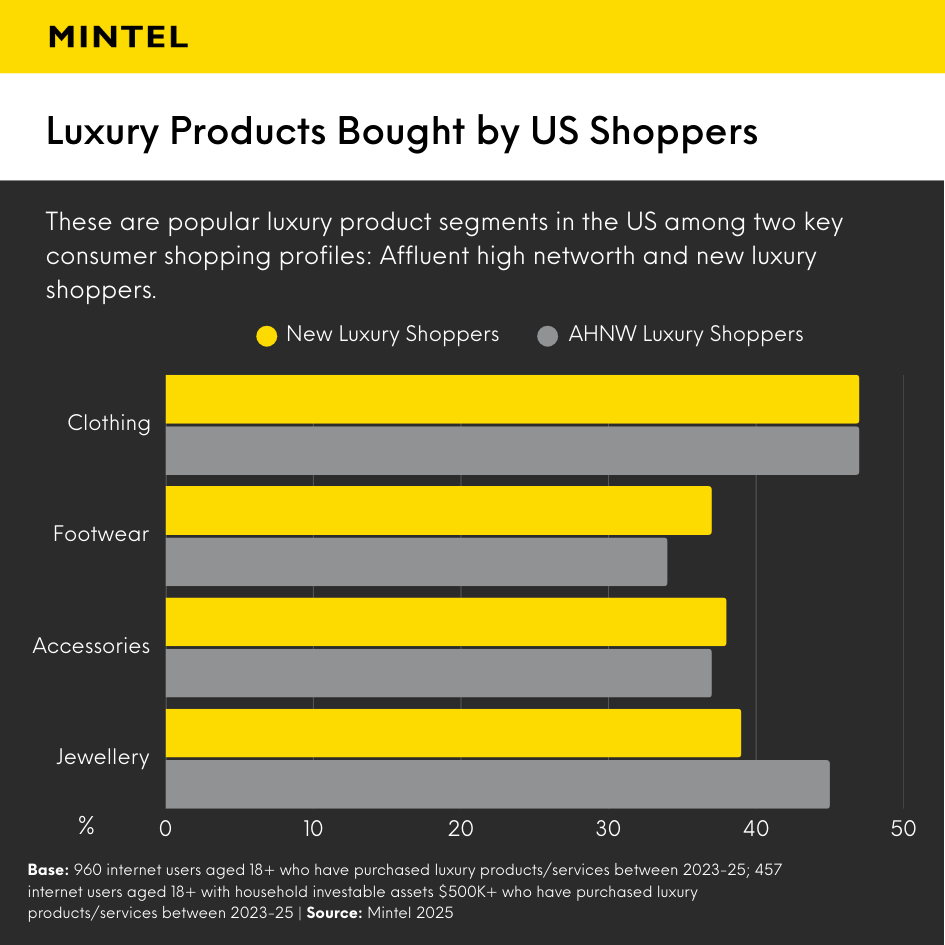
Moreover, apparel, footwear, and accessories also continue to draw new shoppers, because these categories offer lower price points compared to high-ticket items. Meanwhile, jewellery and watches stand out as investment pieces among more affluent consumer groups.
2. Luxury consumers value experience over ownership
Luxury consumer behaviour shows that experiences are increasingly prioritised over ownership, boosting the luxury dining, travel, and immersive events categories. The value of experience goes beyond the purchase of specific experiences and extends to the purchasing of goods.
The in-store and post-purchase experiences can be enhanced through invitation-only events, VIP access, and exclusive services that help cultivate community and reinforce exclusivity. Private members’ clubs, like Harrods’ Shanghai club, and appointment-only formats such as Gucci Salon, provide high-net-worth clients with a level of access and intimacy that defines the tastes of modern luxury consumers.
3. Exclusivity can be retained in luxury retail through a scarcity mindset
Offering limited edition collections and one-of-a-kind items is a key strategy. These products create a sense of rarity and drive demand. For example, in 2022 Louis Vuitton Moët Hennessy offered hyper-curated, unique items with exclusive experiences, such as private presentations and bespoke fittings by launching heristoria.com.
Social media has become a valuable tool for brands to create scarcity and excitement through exclusive online product drops, private virtual communities, and influencer partnerships.

The use of online stores and spaces for research may have become an integral part of the purchasing journey, but the store experience remains key. Therefore, flagship stores remain important and can help elevate customer satisfaction in the luxury retail segment. Household names like Tiffany and Dior have grasped the importance of their in-store experience.
Prior to that, Dior revealed a sweeping renovation of its Avenue Montaigne complex in Paris, aiming to combine six buildings into a 10,000 sq m complex featuring couture salons, a spa, rooftop gardens, a restaurant and pastry shop, and the world’s biggest fashion museum dedicated to a single designer.
Urban Dwellers
Urban residents are particularly active in the luxury retail market, especially in categories such as home appliances and furnishings. The notable trend in luxury retail of the growing investment in home upgrades can be accredited to this consumer group. Their access to premium shopping environments and experiential retail spaces reinforces their strong representation among luxury consumers. This reflects a broader shift in luxury consumer behaviour.
Gen Z and Millennials

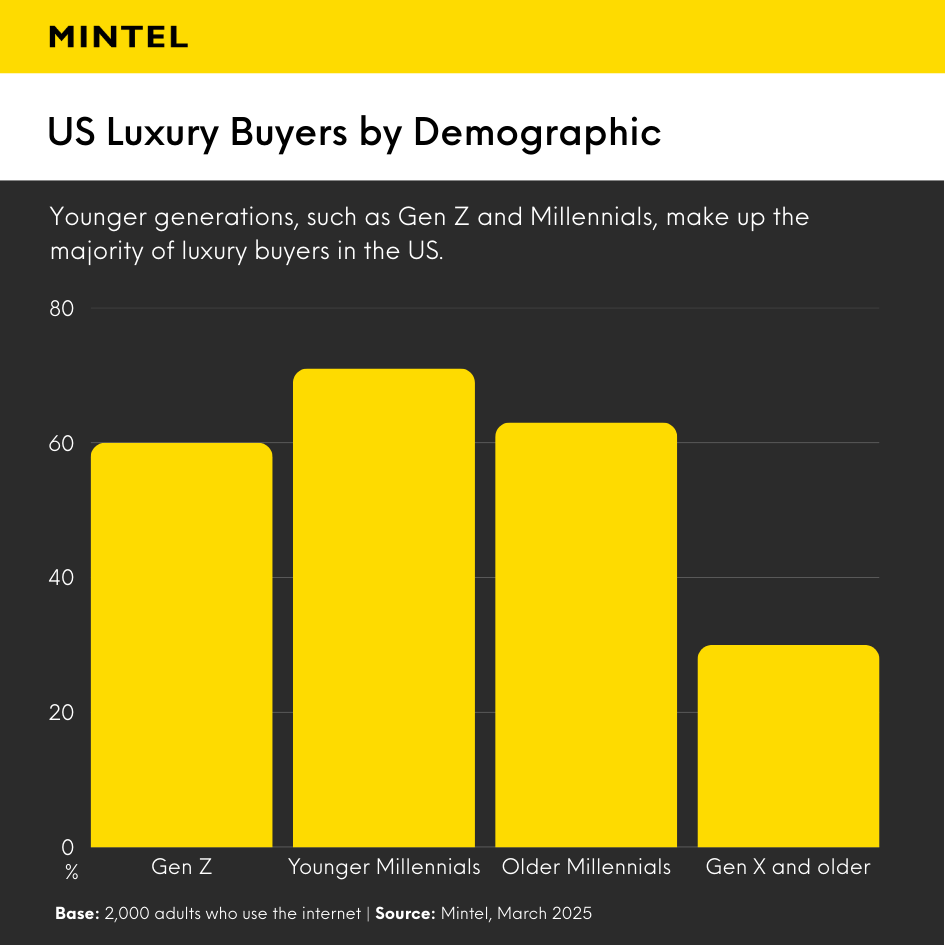
These younger generations are crucial for the future of luxury retail. They are building wealth and continue to prioritise spending on experiences and labels that align closely with their personal identities and values.