Editor’s Note
This article highlights the rapid expansion of the lab-grown diamond market, projected to grow from $29.73 billion in 2025 to nearly $97.85 billion by 2034. This surge is primarily fueled by shifting consumer values, with younger generations driving demand for more sustainable and affordable alternatives to mined diamonds.
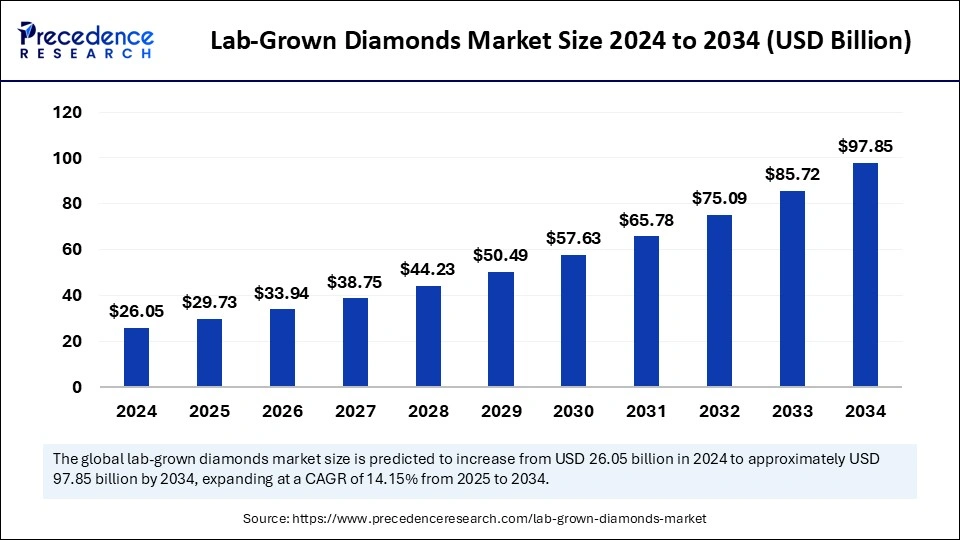
The global lab-grown diamonds market size is accounted at USD 29.73 billion in 2025 and predicted to increase from USD 33.94 billion in 2026 to approximately USD 97.85 billion by 2034, expanding at a CAGR of 14.15% from 2025 to 2034. The market is driven by the rising preference for sustainable, affordable options, and consumers, particularly millennials and Gen Z, are increasingly choosing eco-friendly alternatives to natural diamonds.
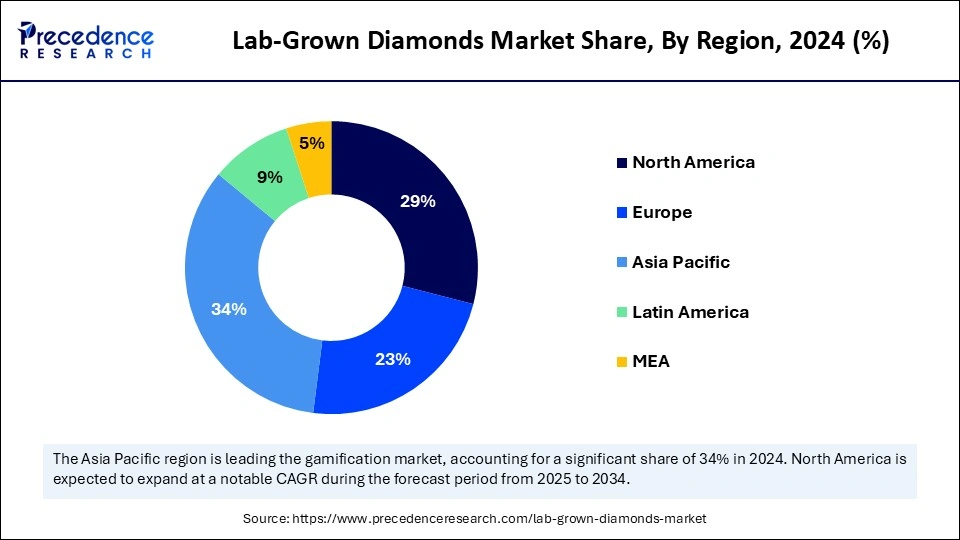
Asia Pacific dominated the global market with the largest market share of 34% in 2024.
North America will witness the fastest growth during the forecasted years.
By manufacturing method, the CVD segment contributed the largest share in 2024.
By manufacturing method, the HPHT segment is expected to show considerable growth over the forecast period.
By nature, the colorless segment contributed the highest market share in 2024.
By nature, the colored segment is anticipated to witness significant growth in the studied period.
By size, the below 2-carat segment generated the major market share in 2024.
By size, the above 4-carat segment is expected to show considerable growth over the forecast period.
By application, the fashion segment has held the largest market share in 2024.
By application, the industry segment is anticipated to witness significant growth over the studied period.
Developing sophisticated Artificial Intelligence algorithms to assess and enhance the production process of lab-grown diamonds increases the precision, uniformity, and efficiency of quality evaluation, especially in detecting subtle traits and grading in the lab-grown diamonds market, while reducing human error. AI technology works to enhance both manufacturing techniques and diamond value analysis for cultured diamonds, thus making them clearer and more honest to the end market. The AI-based diamond quality assessments within the lab-produced diamond market enable improved rapid assessment of diamond characteristics, including cut, clarity, color, and weight.
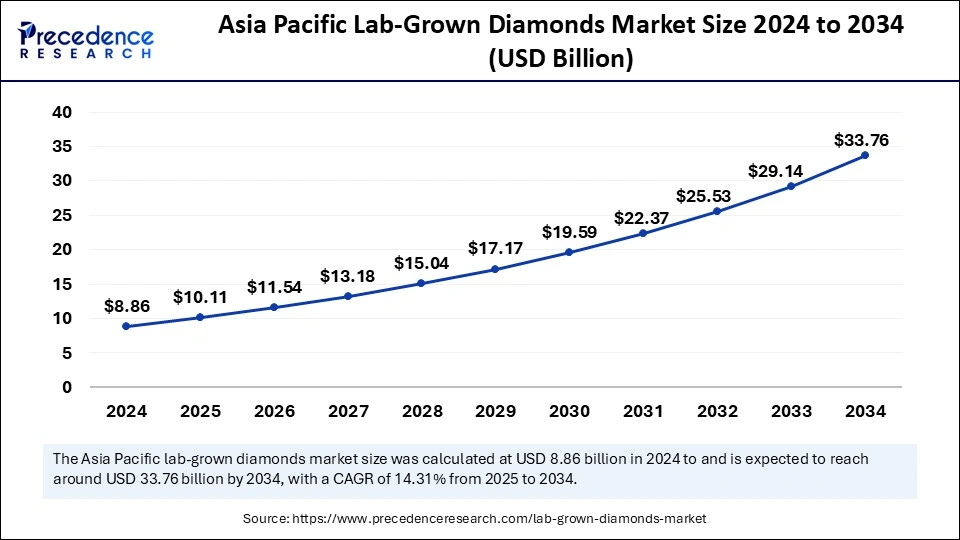
The Asia Pacific lab-grown diamonds market size was evaluated at USD 10.11 billion in 2025 and is projected to be worth around USD 33.76 billion by 2034, growing at a CAGR of 14.31% from 2025 to 2034.
Asia Pacific accounted for the largest share of the lab-grown diamonds market in 2024. India holds great potential to become a major international hub for producing manufactured diamonds, and China currently leads in producing and exporting these stones. The high manufacturing output of quality laboratory-grown diamonds in different carat sizes and forms occurs throughout China and India. Public programs aimed at developing new products help drive market expansion, while the rapid growth of middle-class populations creates rising demand for affordable luxury items, including man-made diamonds. Consumers prefer lab-grown diamonds because these stones reflect ethical values and sustainability, with the growing social and environmental awareness.
North America will witness the fastest growth in the lab-grown diamonds market during the forecasted years. The commercial sectors of automotive and electronics show rapid development in North America, while consumer demand for eco-friendly jewelry and greater awareness about laboratory-made diamonds push forward demand. The rising disposable income of U.S. and Canadian consumers allows for better purchasing ability, which drives the acceptance of lab-grown diamonds as investments.
The market receives support through expanding online sales channels and existing retail networks, enabling consumers to access lab-grown diamonds easily. The market attractiveness in North America rises from positive marketing initiatives and partnerships established between luxury brands. Market expansion in the region will receive additional momentum through advancements in diamond production methods and increasing retail collaboration.