Editor’s Note
After a historic rally to record highs, gold prices saw a sharp correction on Tuesday, falling over 5% as investors took profits. This marks the precious metal’s most significant single-day drop in years, highlighting the volatile nature of current market dynamics.
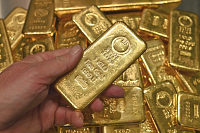
Tuesday, October 21, 2025, at 16:53 (BFM Bourse) – The precious metal experienced a significant decline on Tuesday, October 21, after continuously setting new records.
After repeatedly pushing its records higher, reaching up to $4,381.5 per ounce, gold was due for a breather. The commodity fell by over 5% on Tuesday, October 21, weighed down by profit-taking. Around 16:35, the ounce of gold (31.1 grams) was down 5.18% at $4,130.4.
The yellow metal had not experienced a decline of this magnitude since 2020 and the early months of the Covid-19 pandemic. For the entirety of 2025, the precious metal remains up 56.5%.
Typically driven by geopolitical and economic tensions, gold is currently being supported by a slight easing in Sino-American tensions.
notes the Bloomberg news agency.
Since the beginning of the year, gold has been driven by a multitude of factors. The political and geopolitical uncertainties caused by Donald Trump’s erratic economic policy, particularly regarding tariffs, have reinforced gold’s role as a safe-haven asset. Especially as other traditional safe havens, such as the dollar, U.S. Treasuries (and also the yen with the imminent arrival of a Japanese Prime Minister favorable to fiscal stimulus and inclined to advocate for low rates) have seen their status weakened this year.
Significant purchases by central banks, particularly China and emerging countries, have been a tailwind for nearly two years now.
UBS highlighted in February.
More recently, the start of the U.S. Federal Reserve’s (Fed) rate-cutting cycle last September further enhanced the metal’s appeal.
For reference, lower rates tend to support gold. Unlike stocks (with dividends) and bonds (with coupons), gold does not generate income. Its price is consequently aided by a decline in interest rates, as it becomes increasingly attractive to invest money in gold rather than placing it elsewhere.
The weakness of the dollar, which has suffered against other world currencies since the beginning of the year, constitutes another technical support factor.
Like all commodities, gold prices are denominated in dollars. A decline in the greenback, all else being equal, makes gold less expensive for investors whose reference currency is not the dollar.
Finally, the “shutdown,” meaning the paralysis of a significant portion of U.S. federal services, and to a lesser extent, the climate of political uncertainty in France, have sustained the rally.
Research firms are unanimous in their belief that gold will continue to advance. Goldman Sachs estimates the ounce will reach $4,900 next year.
This rally is not without raising certain questions.
Barclays questions in a recent note.
adds the British bank.
Julien Marion – ©2025 BFM Bourse
