Editor’s Note
As precious metal prices surge, jewelers are adapting with a new trend: smaller, more expensive pieces. This article explores how the rising costs of gold and silver are reshaping the industry.
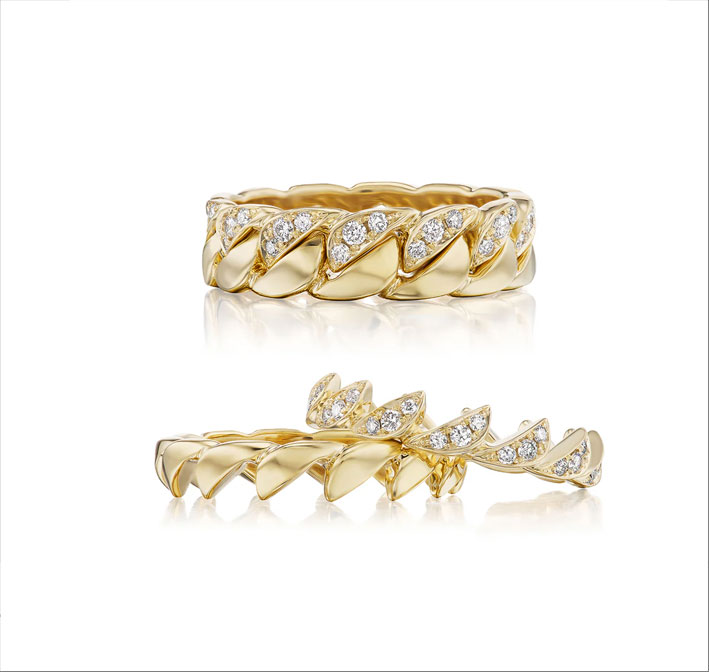
Gold and silver prices are soaring. And jewelers are reducing the size of their jewelry.
Smaller jewelry. And more expensive. It must be accepted: this is the trend that will dominate jewelry in the coming months, if not years. The cause: the surge in gold prices, and now silver as well. There’s no escaping it: even jewelry made from this cheaper white metal is seeing its prices explode. This is why some jewelry houses have already decided to reduce the size of their jewelry, similar to products found in supermarkets: same price, but smaller volume. Vhernier has just presented a new, smaller version of the Freccia collection. Roberto Coin has presented a miniature version of the Princess line, called Carousel. And the list goes on.
Will smaller formats attract buyers? This is the question jewelry houses are also asking themselves. Major brands that favor jewelry adorned with large precious stones are less affected by the exorbitant prices of gold and silver. In this case, the price of the jewelry is primarily determined by the stones themselves, with the impact of the metal on the final price being lesser. Of course, the price of diamonds, rubies, or sapphires is also important for high jewelry, but these have not experienced the surges seen for precious metals.
Another trend, or trick, adopted by jewelers in recent years concerns titanium. This very resistant and extremely flexible metal has been adopted in jewelry for its specific qualities, despite its difficulty to work with. Besides its strength, this metal can also be colored, without external plating. But another reason for using titanium today is the possibility of using it as an alternative to gold. One can easily imagine that these considerations are presented as design considerations, which in reality hide the desire to avoid overvaluing the price of a piece of jewelry by avoiding the use of gold; this will last a long time.
Gold has now surpassed $4,100 per ounce, and the silver market (nine times smaller) has seen its price climb to $52.12 per ounce in London, a record since 1980, the year when the price was driven by speculation from the Hunt brothers before deflating. Analysts believe the rise in silver and gold prices is linked to Donald Trump’s tariff threats and the resulting sharp increase in purchases of ETFs (specialized investment funds indexed to indices or sectors). In the case of silver, supply is lower than demand, partly because the metal is also used for industrial purposes, such as in solar panels. Furthermore, in India, significant silver purchases have occurred for Hindu festivals, partly because the price of gold has doubled in the space of a year. Will the rise in precious metals continue? Difficult to predict. In any case, the time is for mini-jewelry.
