Editor’s Note
This acquisition underscores a seismic shift in the luxury sector, where beauty products are now the primary growth driver. As L’Oréal’s landmark deal to absorb Kering Beauté demonstrates, the future of luxury is being reshaped at the cosmetics counter.
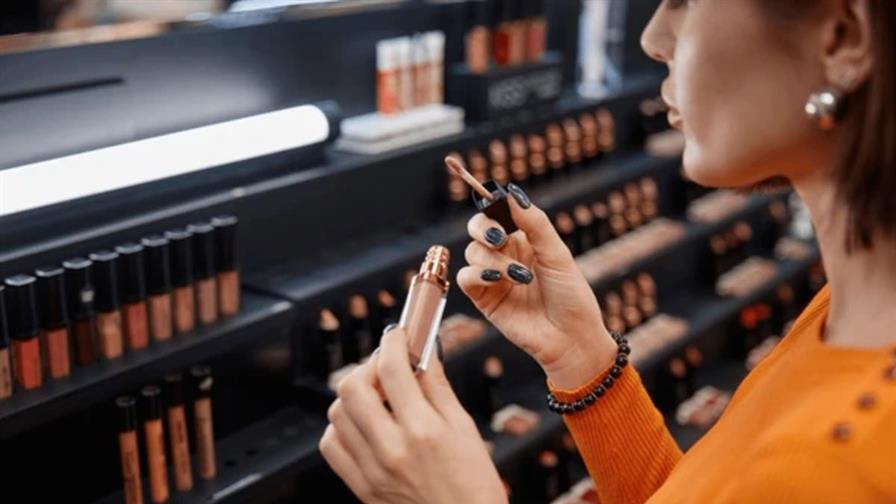
Beauty has become the new engine of luxury. While fashion hits the brakes, makeup, perfume, and skincare accelerate without looking back. The latest move confirms this: L’Oréal acquired Kering Beauté, the cosmetics and perfumery division of the Kering conglomerate, for 4 billion euros.
The agreement will last for 50 years and is set to be completed in early 2026. During this time, the French giant will hold the exclusive licenses for the brands of the group founded by François Pinault, in exchange for royalty payments.
This is a maneuver that redefines the global luxury landscape and further concentrates power in the hands of the group that already reigns in the sector.
The boom in the sector is no coincidence. According to McKinsey & Co.’s State of Beauty 2025 report, the beauty industry has been growing 7% annually since 2022, driven by a new consumer relationship with their image and well-being.
In Spain, the industry association Stanpa confirms similar figures: 7.7% growth in 2024, well above that of the restaurant sector (+2%) and almost on par with tourism (+10%).
This expansion has translated into a hyper-competitive industry, where viral brands are born every week at the pace of TikTok. Their success may be ephemeral, but it’s enough to erode the results of traditional giants, who often react slowly to a public that moves faster than ever.
While Estée Lauder cuts 7,000 jobs in an attempt to restructure its portfolio and Coty seeks to sell its consumer lines to generate liquidity, L’Oréal makes a bold move.
With this purchase, the French group (which already controls names like Armani, Valentino, Prada, Miu Miu, Mugler, Maison Margiela, Ralph Lauren, and Lancôme) doubles its lead over Unilever, its closest competitor. In 2024, L’Oréal generated 43.5 billion euros in revenue, almost double the 24.6 billion of the British multinational.
The deal for Kering Beauté includes the fragrance house Creed, for which Kering paid 3.5 billion in 2023. It also paves the way for future additions: when the Gucci license with Coty expires in 2028, it will presumably pass under the umbrella of L’Oréal.
Both companies have announced that, beyond the licenses, they will collaborate in a 50/50 joint venture to explore “opportunities at the intersection of luxury, well-being, and longevity,” three concepts that define the new global aspiration.
The goal: to create cutting-edge experiences and services that fuse L’Oréal’s scientific innovation with Kering’s understanding of the luxury consumer.
The move also represents a strategic shift for Kering, which had attempted to build its own beauty division, similar to its rival LVMH.
But the financial context has weighed more heavily: the company is going through a restructuring phase and has debt close to 9.5 billion euros, according to Vogue Business.
The operation marks the first major move by the new CEO, Luca de Meo, following the withdrawal of François-Henri Pinault from the front line. In parallel, he has postponed the full acquisition of Valentino and has strengthened the creative area by placing Demna—the architect of Balenciaga’s success—at the helm of Gucci, the crown jewel.