Editor’s Note
This article highlights Korea Zinc’s proactive steps to integrate ESG principles into its core operations, specifically by enhancing due diligence across its strategic mineral supply chain. The move underscores a growing industry imperative to ensure transparency and responsibility from sourcing to production.
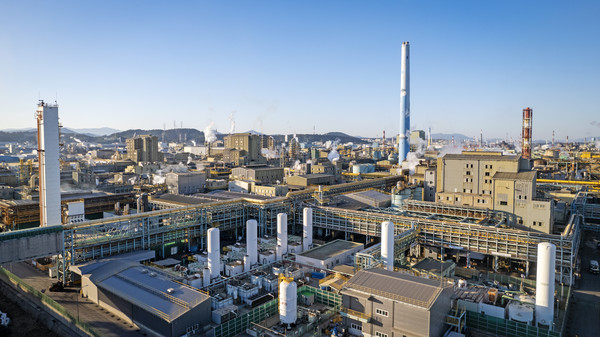
Korea Zinc is accelerating the advancement of its ESG management, focusing on enhancing transparency across its strategic mineral supply chain. While increasing production of key strategic minerals such as indium, antimony, and bismuth, the company is also expanding a company-wide responsible minerals management system designed to preemptively block human rights and environmental risks.
According to industry sources on the 8th, as global supply chain stability has emerged as a major issue amid recent US-China tensions and China’s strengthened export controls on strategic minerals, Korea Zinc has moved to solidify its ESG management, going beyond supply chain diversification to conduct due diligence on whether mining is ethical.
Korea Zinc has been conducting on-site due diligence on its key supply chains since the first half of this year. This is a measure to verify, in accordance with OECD guidelines, whether minerals used in its products are linked to major risk factors designated by the international community, such as forced labor, child labor, support for rebel forces, and money laundering.
In particular, Korea Zinc has made on-site due diligence mandatory before signing new supply contracts to identify supply chain risks in advance, with the policy of meeting the responsible sourcing standards of global certification bodies such as the London Metal Exchange (LME) and the London Bullion Market Association (LBMA). Related information is disclosed transparently through its official website.
Responsible minerals refer to minerals that are mined in conflict zones or where human rights or environmental issues may arise during the mining process. This includes not only tin, tantalum, tungsten, and gold (3TG) but also non-ferrous metals such as zinc, lead, silver, and copper. Korea Zinc is expanding its supply chain risk assessment to cover all non-ferrous metals, its main products, beyond just 3TG.
According to Korea Zinc’s published Responsible Minerals Report and Sustainability Management Report, the company has established a management system centered on the OECD’s ‘Due Diligence Guidance for Responsible Supply Chains of Minerals from Conflict-Affected and High-Risk Areas,’ aligning with global standards such as the Responsible Minerals Initiative (RMI), LME, and LBMA. For suppliers, it conducts self-assessment, risk evaluation, and on-site due diligence in parallel.
The company has also introduced effective policies, such as establishing a Supplier Code of Conduct and specifying the possibility of transaction termination in case of violations. The scope of management for high-risk regions and suppliers is being expanded in a way that ensures procurement transparency through evaluations by external verification bodies.
Korea Zinc plans to continue strengthening its ESG leadership and enhancing the reliability of its global supply chain by expanding the application of responsible sourcing principles company-wide.