Editor’s Note
The United Arab Emirates is pursuing a suite of economic agreements with Namibia, aiming to establish a free trade pact, an investment protection treaty, and a deal to avoid double taxation. This initiative underscores a strategic push to significantly enhance bilateral trade and encourage deeper private sector investment between the two nations.
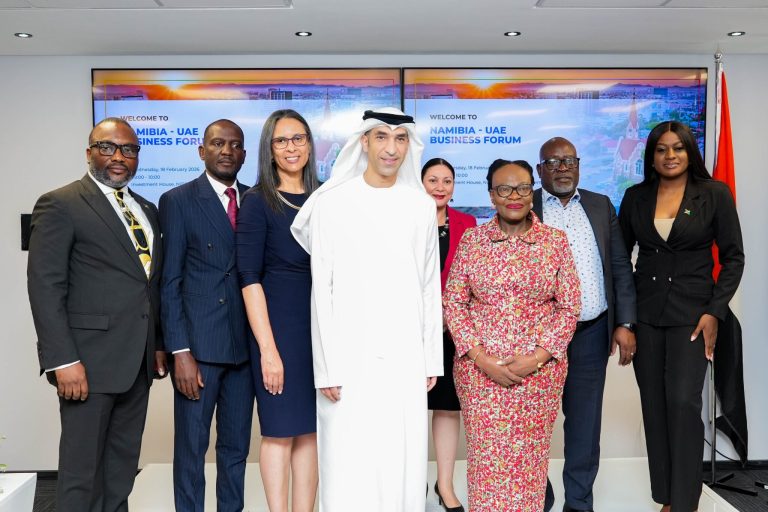
The United Arab Emirates has indicated its readiness to explore a free trade agreement, investment protection accord and double taxation agreement with Namibia as part of efforts to expand bilateral trade and deepen private sector investment.
Speaking during the Namibia–UAE Business Forum on Tuesday, UAE Minister of Foreign Trade Thani bin Ahmed Al Zeyoudi said current trade volumes do not reflect the full economic potential between the two countries.
Al Zeyoudi noted that the UAE’s non-oil trade surpassed US$1 trillion last year, driven by expanded trade agreements, logistics investments and broader trade partnerships.
Namibia’s Minister of International Relations and Trade, Selma Ashipala-Musavyi, said the visit builds on bilateral relations dating back to 1990 and aligns with government’s seven development priorities under the eighth administration of President Netumbo Nandi-Ndaitwah.
She said trade data shows Namibia’s main exports to the UAE include diamonds, scrap metal, charcoal, precious stones, frozen fish and grapes, while imports from the UAE range from petroleum oils and fertilisers to machinery and automotive parts.
Ashipala-Musavyi said Namibia is seeking greater export diversification and value addition, including in diamond cutting and polishing.
She added that Namibia is keen to expand beef and meat exports to the UAE market while strengthening cooperation in agro-processing, irrigation technology and food value chains.
At the same event, Acting Chief Executive Officer of the Namibia Investment Promotion and Development Board (NIPDB), Jessica Hauuanga, described the UAE as a strategic partner and global economic hub.
Namibia also highlighted the upgraded container terminal at the Port of Walvis Bay and its logistics corridors as potential areas for infrastructure collaboration, positioning the country as a regional trade hub.