Editor’s Note
This article highlights the opening of a new school foundry at the Anna-Sophianeum Gymnasium in Schöningen—a regional first in Lower Saxony. The facility aims to provide students with hands-on, practical learning experiences to enrich their education.
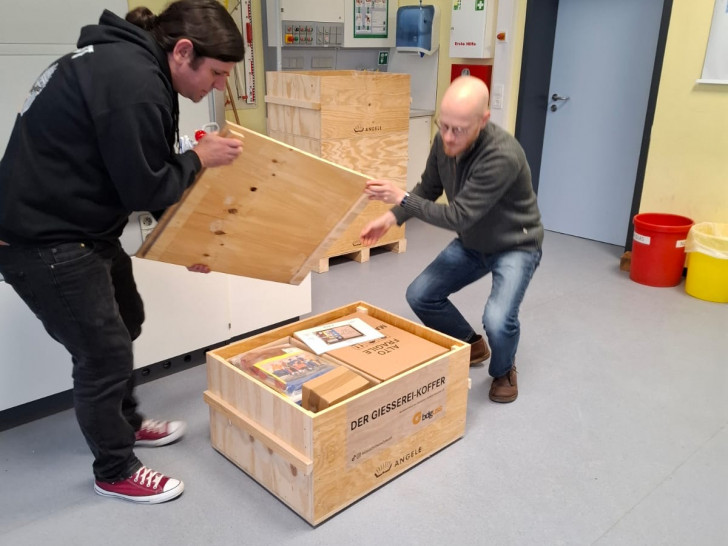
The Anna-Sophianeum Gymnasium in Schöningen now has a school foundry, which is intended to enrich lessons in the future.
It is a premiere in the region and even in Lower Saxony: Since this week, the Anna-Sophianeum Gymnasium in Schöningen is among the schools that have a school foundry – as the only one in the entire federal state. The offering stems from a private donation by a foundry enthusiast.
The initiative was started by a former resident of Helmstedt. Heiko Lickfett explains:
He reports having worked for 35 years in the Federal Association of the German Foundry Industry and developed the school foundry concept there,
Now, Lickfett, in retirement, decided to donate one of these school foundries. A family connection then led to the contact with Schöningen: Brother Uwe Lickfett lives not far from Sebastian Pach, a physics and chemistry teacher at the Schöningen Gymnasium.
explains Pach, who also brings plenty of enthusiasm for the school foundry.
says the teacher in an interview with regionalHeute.de. The 5,000-euro package –
as Pach describes it – from the Federal Association of the German Foundry Industry, which includes the furnace as well as other utensils and protective clothing, has now arrived and was officially handed over to the school.
In the furnace, students can melt metal and then pour it into molds, let it cool, and subsequently process it further. Now it’s about deciding exactly where – in which room – the foundry will be used.
explains Pach, referring to the high heat generation and the then-liquid metal.
When it comes to how the foundry can be used in lessons – the teacher is almost overflowing with ideas.
In the sciences, the foundry could be helpful, but manual metalworking would also be a topic. From the Bronze Age in history lessons to phase transitions in chemistry – there are more than enough points of connection in school.
And Pach is also looking forward to long-term engagement with the new set.
For initiator Heiko Lickfett, the advantages of a school foundry are obvious: