Editor’s Note
This article highlights a significant technical breakthrough for Blencowe Resources, whose Ugandan graphite has proven highly effective for synthetic diamond production. The reported conversion rate surpasses a key industry benchmark, potentially enhancing the project’s commercial viability and underscoring the evolving critical minerals landscape.
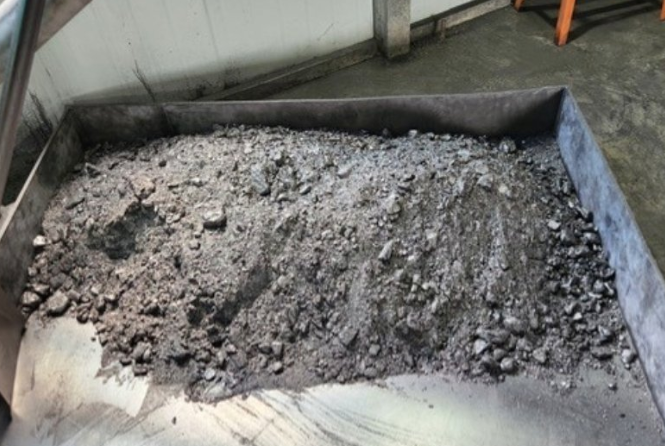
Recently, London-listed mining company Blencowe Resources announced that graphite concentrate from its Orom-Cross graphite project in Uganda has demonstrated suitability for manufacturing synthetic industrial diamonds via the High-Pressure High-Temperature (HPHT) method in independent tests conducted by American Energy Technologies Company (AETC) in Chicago, USA. The tests achieved a weight conversion rate of 53.6%, exceeding the industry’s commonly referenced benchmark of 50%. AETC noted that this conversion rate threshold is widely considered a key indicator for determining whether synthetic diamond production can be economically viable outside China, given the highly competitive cost structure of the industry.
From the currently disclosed information, this result constitutes a technical validation concerning the downstream processability of graphite. It does not yet involve scaled production, nor does it represent the establishment of stable synthetic diamond manufacturing capabilities. However, this test provides a relatively concrete case for discussing “what type of graphite is more suitable for synthetic diamond production” and some fundamental technical logic behind synthetic diamond manufacturing.
The main characteristics of the Orom-Cross project graphite are its fine flake size and good compressibility. In the HPHT process, the graphite feedstock reacts with an iron-nickel-cobalt molten flux under conditions of 5.5-6 GPa high pressure and 1300-1600°C high temperature to form diamond crystals. The tests showed that the fine flake structure of Orom-Cross graphite facilitates uniform pressure transmission and efficient dissolution of carbon atoms, leading to higher conversion efficiency. In contrast, some graphite deposits in East Africa have thicker flakes and lower compressibility, typically resulting in lower conversion efficiency under the same conditions.
The achievement of 53.6% by Orom-Cross graphite indicates it possesses a certain level of competitiveness in technical parameters. Blencowe stated that this test is part of its value-adding plan, aimed at verifying the feasibility of graphite in downstream applications. Beyond the battery anode material direction, the company will also explore potential collaboration opportunities in the industrial diamond sector. The project is currently advancing drilling and resource assessment, with several high-grade zones recently expanded.
From an application perspective, the primary markets for industrial diamonds remain concentrated in:
* Cutting, grinding, and polishing tools
* Drilling and wear-resistant components
As manufacturing processes and crystal control capabilities improve, their application scope is gradually extending towards higher-end directions. In thermal management and semiconductor-related fields, diamond is being researched and explored for its high thermal conductivity and electrical insulation properties in:
* Heat dissipation substrates for high-power devices
* Composite thermal diffusion structures for devices like GaN and SiC
* Localized thermal management solutions at the packaging level
It should be noted that such applications have higher requirements for material consistency, interface engineering, and processing precision, which differ significantly from general industrial diamond products. These applications are currently still in the stage of technical validation and small-scale use.
From a longer-term perspective, synthetic diamond is not a “mature and finalized” industry; its technological pathways are still evolving rapidly, mainly in the following directions:
**1. Process Innovation**
Beyond the traditional HPHT route, advancements continue in microwave plasma-assisted synthesis and Chemical Vapor Deposition (CVD) technologies. Some companies are beginning to explore new hybrid production systems to balance efficiency and crystal quality.
**2. Quality and Performance Enhancement**
Industry focus is shifting from “larger single crystals” to “more stable, defect-controllable single crystals.” Through defect engineering, doping control, and customized design, the aim is to meet the differentiated requirements of various applications for thermal, optical, and electrical properties.
**3. Automation and Intelligent Integration**
AI-driven process parameter optimization, real-time monitoring, and predictive maintenance are being introduced into high-end synthetic diamond production lines to reduce variability, improve yield, and increase equipment utilization.
**4. Demand-Driven Reverse Shaping**
New material requirements from quantum technology, advanced thermal management, semiconductor devices, and next-generation cutting tools are inversely shaping upstream process and equipment choices.
**Overall**, this news about the Orom-Cross graphite synthetic diamond test is better viewed as a case study on material suitability and process discussion, rather than a signal of industry structure change. It highlights the complex and specific matching relationships between raw material structure, process conditions, and target applications in synthetic diamond manufacturing. Against the backdrop of synthetic diamonds continuously expanding their application boundaries, similar technical validation work will remain a recurring norm in the advancement of this field.