Editor’s Note
This report details a joint U.S.-Japan initiative to diversify supply chains away from China for critical semiconductor materials, specifically through investment in synthetic diamond production.
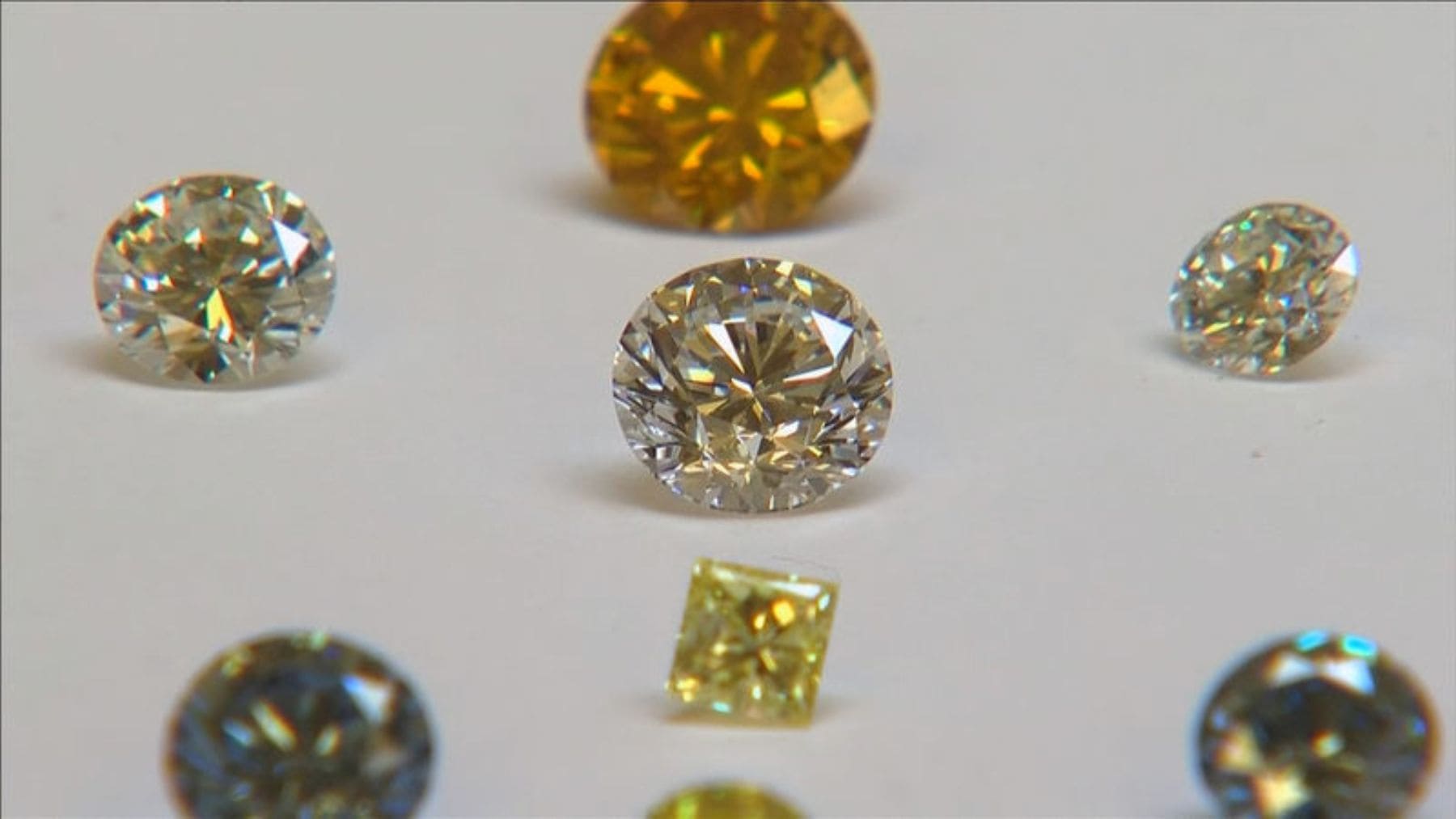
Tokyo and Washington are seeking to cut their dependence on China for a key material used in chip polishing and cooling.
The United States and Japan have placed synthetic diamonds at the center of a much broader economic negotiation, with an investment package of up to $550 billion aimed at reinforcing supply chains considered critical for the semiconductor industry. This does not mean the entire volume is destined for “diamonds,” but rather it is a financial umbrella under which both allies are pre-selecting industrial projects with strategic significance.
The most advanced idea is to build a facility on US soil to produce industrial-grade artificial diamonds, with participation from Japanese companies and support from Japanese public banks and insurers, such as JBIC and NEXI. The explicit goal is to reduce exposure to a bottleneck that currently depends largely on China.

The move has a technical explanation often buried under the headline. In chip manufacturing, synthetic diamond is used in ultra-fine polishing, hard material machining, and increasingly in thermal management due to its ability to dissipate heat in high-performance electronic systems. This function is especially sensitive in an industry where the physical limits of silicon are pushed through precision and temperature control.
The geopolitical dimension is the other half of the story. China concentrates a very significant portion of the world’s artificial diamond production and, in October 2025, announced export controls on certain products related to industrial diamonds (micropowders, crystals, tools, and consumables), as part of a series of measures framed within national security and the technological rivalry with Washington. For those dependent on that supply, the signal is clear: buying cheap is not enough if the tap can be turned off by political decision.
In this context, diamond functions as a thermometer for a larger problem: the reconfiguration of supply chains around “invisible” materials and processes that underpin the digital economy. The debate no longer revolves only around chips or lithography machines; it also extends to less publicized but decisive inputs, from diamond to superhard materials, in a race to secure “friendly” production and domestic industrial capacity.

The initiative, however, is still in the discussion phase. Reuters mentions Element Six, a subsidiary of the De Beers group, as a possible participant, although the company has emphasized that no agreement has been signed. The investment package also includes other pre-selected industrial options.
The fact that two allies reserve a sum of this size to secure supplies speaks volumes about both the material and the moment. Synthetic diamond is not a fad; it is another piece on the board where technological autonomy is being played out in a world of restrictions, licenses, and rivalry between powers.