Editor’s Note
The annual GALA awards ceremony, now in its ninth year, serves as a key barometer for the global gem and jewelry industry. This article highlights the event’s role in unveiling forward-looking trends, research, and technological advancements that shape the market’s future direction.
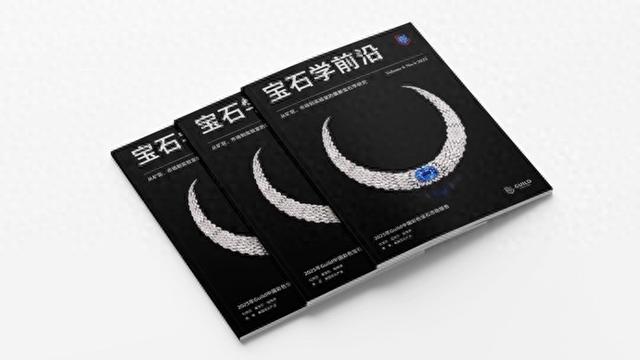
The 2026 “Transcending Time, Witnessing New Life” annual GALA awards ceremony, hosted by the GUILD Gemological Laboratory and the GUILD Gemological Education Center, was recently held. As an important industry award ceremony that has been held for nine consecutive years, the forward-looking industry dynamics, research perspectives, and technological achievements released each year represent important trend guidance and technological directions for the global gemstone industry.
This year’s awards ceremony focused on the market dynamics and development trends of three major categories: colored gemstones, diamonds, and pearls. Based on annual real detection data and combined with field research from over 15 countries and regions worldwide, the GUILD expert team released a report on the development trends of the Chinese and global gemstone markets.
According to Li Ke, Director of the Colored Gemstone Department at the GUILD Gemological Laboratory, the colored gemstone market in 2025 is undergoing a transformation. Consumers are no longer solely focused on single brands, but are comprehensively considering color, clarity, cut, and fire, driving the market towards high-quality and diversified aesthetics.
Ruby supply remains tight. Data from the last five Gemfields auctions show a decline in ruby transaction volume, while rough stone prices have risen. The “Pigeon’s Blood Red” color still dominates the market, with aesthetic preferences showing a trend towards diversification. Rubies under 2 carats constitute the mainstream, while high-quality rubies over 2 carats remain stable, with Myanmar and Mozambique maintaining their core status as production origins.
The sapphire market favors classic blue hues. Tanzanite sapphires show strong performance, and Padparadscha color has maintained high popularity for two consecutive years. Major production origins are still concentrated in Sri Lanka, Myanmar, and Madagascar, with the supply chain gradually concentrating towards core production areas.
Emerald market demand is concentrated on top-tier “Verdant Green.” Its market share continued to rise in 2025, reflecting consumers’ sustained preference for high-value colors. Zambia remains the main source of commercial-grade emeralds.
From rubies and sapphires to diamonds, the origin, recognition, and cultural value of gemstones have always influenced market pricing. In the current market environment, the origin identification of diamonds is particularly important.
Huang Jingjing, Deputy Director of the Colored Gemstone Department at the GUILD Gemological Laboratory, cited data indicating:
In the future, the diamond market will continue to face origin premium issues. However, as consumer awareness levels increase and information transparency improves, the market will pay more attention to the quality of diamonds, such as color, clarity, craftsmanship, and aesthetic characteristics. Currently, the diamond market shows three major trends: diversification of origins, younger consumer groups, and breakthroughs in detection technology, driving industry vitality and innovation.
Two field gemologists—Andrew Lucas, Chief Education Officer of GUILD, and Liu Shuhong, President of the GUILD Gemological Laboratory—representing the expert team, shared first-hand information covering the pearl and colored gemstone industry chains after visiting over fifteen countries and regions in 2025.
Regarding pearls, seawater pearls are constrained by factors such as seawater temperature, salinity, and the expansion of fishing areas. South Sea gold pearls and South Sea white pearls belong to niche markets, with demand existing at various quality levels. The supply-demand gap in the high-end market is particularly evident. The production capacity of high-quality Akoya pearls continues to shrink, exacerbating supply-demand imbalance, while commercial-grade products must directly compete with Chinese freshwater pearls. Chinese freshwater pearls have become an indispensable force in the global pearl market, with both quality and technology making significant progress.
Regarding colored gemstones, from 2024 to 2025, the market maintained stable and continuous emerald production, but high-quality, large-carat emeralds are still in short supply. Over the past two years, demand for colored gemstones in various countries has diverged, with some countries experiencing increased demand and others seeing a decline. However, demand for high-quality, large-sized colored gemstones remains strong.
From a category structure perspective, compared to 2024, the market shares of freshwater and seawater pearls remained basically stable, with freshwater pearls at 76% and seawater pearls at 24%, consistent with the global production structure. However, within the seawater pearl segment, trends show a 10% growth in South Sea pearls, an 11% adjustment in Akoya pearls, and a stable proportion of Tahitian pearls. The data behind this is not due to short-term aesthetic changes, but is closely related to the stability of the fishing cycle, production quotas, and the price system. High-shortage categories are more resilient in the current environment.
Lu Moqing, Director of the Pearl Department at the GUILD Gemological Laboratory, believes that in the next three to five years, the Chinese pearl market will continue to develop in the direction of structural optimization. High-quality pearls will maintain their scarcity value and resilience. Collecting and investment consumer groups will pay more attention to quality, certification, and provenance. Establishing a unique brand, design innovation, and quality standards remain key to winning the market.