Editor’s Note
This article examines the volatile performance of precious metals during the 2026 Spring Festival holiday, highlighting gold’s rebound and silver’s amplified movements.
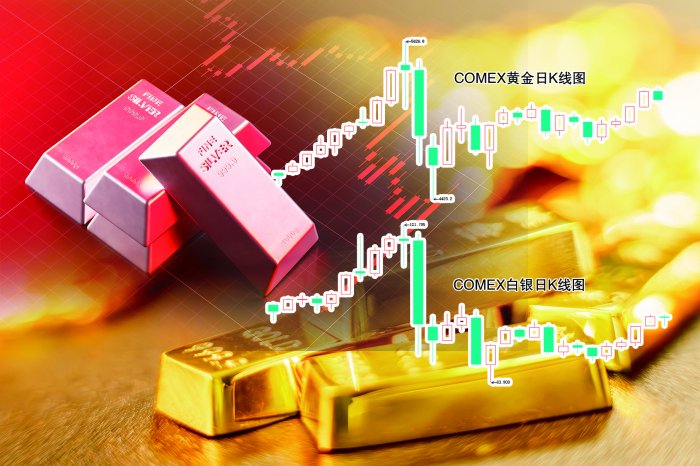
During the 2026 Spring Festival holiday, the international precious metals market first experienced a pullback before rising again, resuming its upward trend.
London spot gold (hereinafter referred to as “London gold”) rebounded for four consecutive trading days, once breaking through $5,200 per ounce. London spot silver (hereinafter referred to as “London silver”) moved in high sync with gold, but with even more pronounced volatility. As of the close on February 23, London gold accumulated a gain of approximately 3.67% during the Spring Festival holiday period, while London silver rose by about 14.03%.
On February 24, London gold surged and then retreated, consolidating near the $5,200 per ounce level; London silver briefly turned positive during the session, returning above $88 per ounce. On the same day, the Shanghai Gold Exchange’s gold T+D contract closed at 1,147 yuan per gram at midday, up 3.6%.
Analysts believe that this round of precious metals performance was jointly driven by three main factors: the escalation of the U.S.-Iran political situation, the initial signs of a stagflationary pattern in the U.S. economy, and the U.S. dollar being pressured by trade tariff decisions, which together triggered a large influx of safe-haven buying into the precious metals market.
Zhuojin Wealth Management’s Chief Investment Office (CIO) stated in a viewpoint published on February 23 local time: On one hand, the U.S. Supreme Court ruled that the Trump administration’s large-scale tariff policies were illegal, after which former U.S. President Trump announced he would raise the global tariff on goods from 10% to 15%, reigniting trade uncertainty. On the other hand, market concerns that U.S.-Iran tensions might escalate into military conflict further strengthened gold’s safe-haven appeal, supporting its demand.
Furthermore, multiple data points collectively indicate signs of stagflation in the U.S. economy, also strengthening the upward trend of precious metals. From the growth perspective, data shows that U.S. GDP growth in Q4 2025 was significantly below expectations, with the full-year growth rate being the lowest since 2021; the Manufacturing and Services PMI for February 2026 also fell short of expectations.
Simultaneously, U.S. inflationary pressures continue to heat up. Liu Chi noted that the recently released U.S. December core PCE price index rose 3.0% year-on-year, higher than the expected 2.9%, with the month-on-month increase being the highest in nearly a year. High inflation coexisting with low growth implies a downward trend in real interest rates, providing support for precious metal prices.
Regarding the pullback in gold and silver prices on February 24, Zhang Yuyan, Deputy General Manager of the Foreign Exchange Commodities Department at Industrial Research, analyzed to a Shanghai Securities News reporter that the tariff issues and Iran situation uncertainties driving the market still exist, so the day’s price fluctuations were more of an adjustment after rising to near technical resistance levels. Zhuojin also indicated that some investors may hold a cautious attitude towards recent gold price volatility.
Recent sharp gold price fluctuations have led many central banks to temporarily slow their gold purchasing demand. Gaosheng believes that recent diversified demand from private sector departments buying gold call options has pushed up gold price volatility and, in the short term, suppressed the global central bank gold purchasing festival. However, this kind of slowdown is a temporary phenomenon. Many central banks are still willing to increase gold holdings to hedge against geopolitical and financial risks, but tend to resume purchases after price volatility subsides and stabilizes. Therefore, the current festival is more of a strategic adjustment to “wait for volatility to subside,” rather than a trend reversal.
In the short term, the implied volatility of Cboe gold ETFs has risen rapidly, meaning gold prices are still in a high-volatility environment. Liu Chi believes that multiple bullish factors are supporting, or will continue to push precious metal prices higher. In the short term, once part of the supporting logic reverses, precious metal prices may experience significant downward volatility. Under the phase of high gold volatility expectations, a small, multiple-investment layout may be a better coping strategy.
Against this backdrop, the Shanghai Gold Exchange has also adjusted the margin levels and price limit ratios for some contract trades. The Shanghai Gold Exchange notified that starting from the settlement on February 24, the margin ratio for contracts such as Au(T+D), mAu(T+D), Au(T+N1), Au(T+N2), NYAuTN06, and NYAuTN12 will be adjusted from 21% to 18%, and the price limit from the next trading day will be adjusted from 20% to 17%; the margin ratio for the Ag(T+D) contract will be adjusted from 27% to 24%, and the price limit from the next trading day from 26% to 23%; the margin for the CAu99.99 contract will be adjusted from 200,000 yuan per lot to 180,000 yuan per lot.
Many institutions remain confident in gold price increases for 2026. Zhuojin stated that geopolitical risks are difficult to subside in the short term, enhancing gold’s appeal as a potential store of value amid uncertainty. According to its forecast, the gold price will reach $6,200 per ounce in the first three quarters of this year, before adjusting back to $5,900 per ounce by the end of December. Gaosheng reiterated that it is bullish on gold in the medium term, and under the baseline scenario, it expects the gold price to slow its rise to $5,400 per ounce by the end of this year.
Zhuojin recommends that investors can allocate a medium single-digit percentage of gold in their investment portfolios, using it as a strategic diversification tool to hedge against inflation and geopolitical risks. Investors seeking returns may consider taking advantage of the current relatively high price volatility to profit.