Editor’s Note
This analysis highlights the ongoing strain in the silver market, driven by heightened volatility and physical scarcity. The recent regulatory adjustment by the CME Group underscores the current price dynamics, though underlying tightness persists.
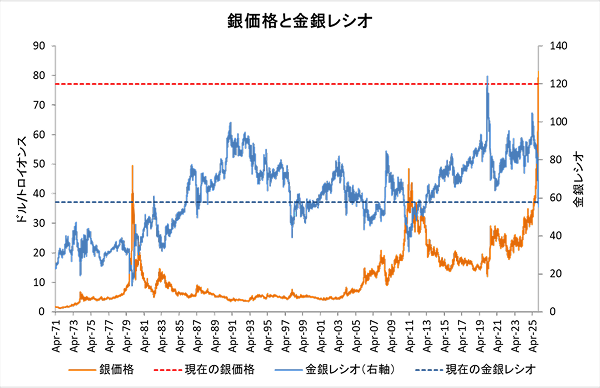
The tightness in the silver market shows no signs of abating. The CME Group has raised margin requirements for silver futures, citing increased price volatility (a sign of rising prices) as the reason. This has temporarily pushed the basis (the difference between spot and futures prices) into positive territory, while the overall tightness in the physical market is being maintained. The recent price surge is significantly outpacing the historical patterns seen during the dot-com bubble and the post-2008 financial crisis rally, driven by expectations of increased demand from the service sector and a shortage of physical supply. As a result, the gold-to-silver ratio, which had soared to over 100 at one point, has now fallen below 60. The ratio for smartphones with built-in cameras, which began to spread widely after 2003, is 69.8, indicating that silver’s rise is even more pronounced.
On the other hand, the holdings of physically-backed silver ETFs have seen a significant increase, driven by strategic buying from central banks and other institutional investors ahead of the rebalancing period. This surge in ETF buying is believed to be influencing the market, with actual COMEX inventories also rising. Consequently, the premium for physical silver over futures prices has widened. While both industrial demand and the premium are rising, there is a possibility that, as seen in the past, industrial users might turn to futures markets for procurement, which could lead to an outflow of physical silver from the market. According to last year’s report from the Silver Institute, the majority of the increase in silver demand is attributed to growth in industrial applications, particularly in photovoltaics. Conversely, a slowdown in this sector could lead to a significant price correction.
The backdrop for the rise in silver prices includes excessive quantitative easing by major central banks and the surge in inflation triggered by sanctions against Russia following the Ukraine invasion. However, clear fundamental factors are needed to explain the recent shift in trend. While it’s uncertain which factors will become dominant, within a plausible range, the rise in silver prices could be attributed to portfolio rebalancing (shifting from bonds to commodities) amid the AI boom, leading to increased demand for hedging instruments and consequently driving up the prices of safe-haven assets like silver. Other considerations include the expansion of the U.S. Treasury’s borrowing needs due to military spending, the potential for China to sell U.S. Treasuries as a countermeasure against U.S. tariffs (a form of financial warfare), and the possibility of the U.S. defaulting on its debt if the debt ceiling is not raised. However, the most plausible scenario currently is a conflict between China and Taiwan, which is still about four months away, leaving room for other unforeseen changes in the interim.