Editor’s Note
This article highlights the accelerating global adoption of AI grading technology in agriculture, using the potato industry as a key example. It explores how systems like Ellips–Elisam’s True-AI are helping producers meet rising quality demands and operational challenges.

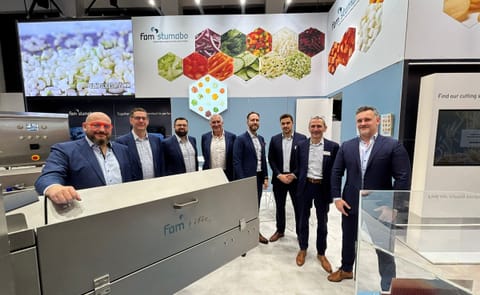
Ellips–Elisam highlights its True-AI potato grading technology at Fruit Logistica 2026 in Berlin, showcasing how AI helps growers and packers improve quality consistency, increase throughput, and reduce labor dependency.
As the potato industry moves into 2026, quality is no longer optional—it defines contracts, margins, and long-term grower success. With rising quality demands, labor shortages, and increasing pressure from buyers, many growers and packers are asking a critical question: Is AI-powered grading really worth the investment for potatoes in 2026?
At Fruit Logistica 2026 in Berlin, Ellips – Elisam will address that question head-on by demonstrating how AI-driven optical grading is reshaping potato operations worldwide. Visitors can meet the team at Hall 6.1, Booth A50 to discuss real-world ROI, technology advancements, and performance results from growers already using Ellips True-AI.
In the past year alone, 20 growers and packers worldwide, operating more than 142 grading lanes, upgraded their Elisam potato graders to Ellips True-AI. The goal: stay ahead of rising quality expectations while improving efficiency and reducing operational risk.
According to Ellips, the shift to AI grading is no longer limited to large industry powerhouses. Smaller-scale growers and family-run packing operations are increasingly investing in advanced sorting technology to future-proof their businesses.
One of those early adopters is Wada Farms, where the return on investment became visible almost immediately.
Kip Yeates, Vice President Fresh Operations, Wada Farms Potatoes, Inc.
Another example comes from Pioneer Potatoes, a small family-run operation that saw dramatic labor and efficiency gains.
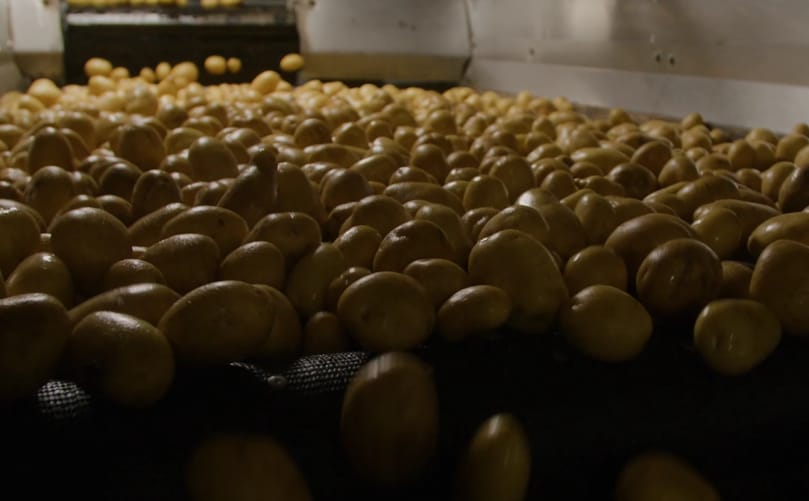
Wylie Thulen, the owner and operator of Pioneer Potatoes
Ellips notes that many growers and packers are dealing with a combination of challenges, including:
Challenging weather conditions, leading to large variation in potato size and shape
Rising internal quality issues, such as hollow heart, internal browning, and inconsistent dry matter
Hard-to-detect external defects, including wireworm, compression bruising, scab, scurf, punctures, sprouting, and mechanical damage
High labor costs and limited availability of skilled workers
Poor storability caused by undetected early degraders
Pressure to hit volume targets while meeting strict delivery deadlines
Increasingly tight quality specifications from demanding buyers
Given these pressures, Ellips concludes that optical AI sorting has shifted from a “nice-to-have” to a “must-have.”
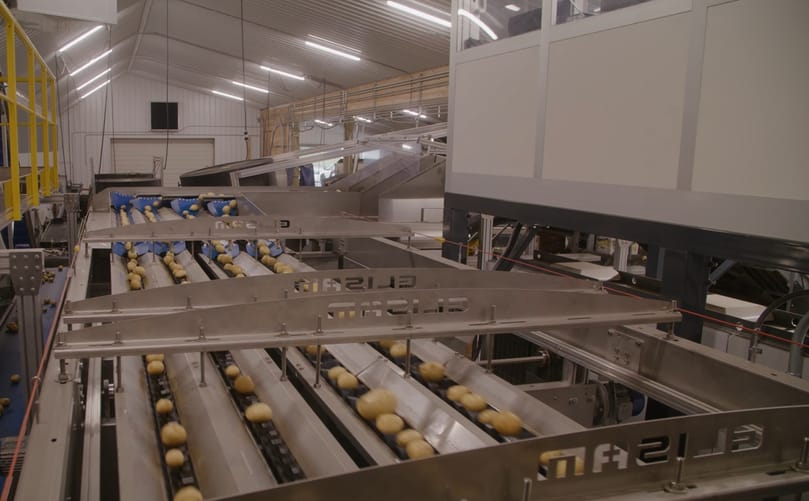
According to Ellips, AI-driven grading provides several key advantages:
Advanced defect detection: Identifies challenging internal and external defects to maximize returns, reduce waste, and protect quality.
Perfect matching to customer specifications: Easily adapts to changing market and buyer requirements while delivering consistent quality.
Simple operation, smarter outcomes: Automates complex grading decisions with an intuitive, self-learning system that delivers expert-level results.
Speed aligned with capacity goals: Increases throughput and handles lower-quality batches with confidence.
Fully automated labor reduction: Reduces dependency on scarce labor, lowers operational costs, and improves overall efficiency.
Growers and packers interested in evaluating whether AI-powered grading is the right investment for their operation are invited to visit Ellips–Elisam at Fruit Logistica 2026, Hall 6.1, Booth A50, in Berlin, Germany.
For direct inquiries, contact:
Jouke van der Meer
+31 6 34 61 53 67