Editor’s Note
This article examines the complex legacy of Queen Fabiola of Belgium, whose 2014 death revealed intricate family and legal disputes over an estate shaped by her childless marriage and late-life decisions.
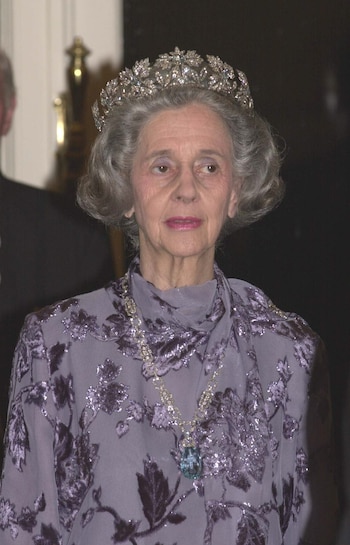
On December 5, 2014, Fabiola de Mora y Aragón, Queen Consort of Belgium for over thirty years following her marriage to King Baudouin, passed away in Brussels. Her death not only marked the farewell to one of the most unique figures in 20th-century European royalty but also opened a long and complex process concerning her inheritance, marked by controversy, family tensions, and decisions made by the monarch herself in her final years.
King Baudouin and Fabiola never had children due to medical issues, a circumstance that shaped their estate planning. Upon the king’s death in 1993, Fabiola became the universal heir. Two decades later, with her passing, numerous questions arose about the fate of an estate estimated at over 100 million euros. Although childless, the queen had over thirty nieces and nephews in Spain, descendants of her siblings, who maintained a close relationship with her and hoped to keep mementos of whom they always considered a close and affectionate aunt.
Officially, it was assumed the bulk of Fabiola’s legacy would go to a public foundation in Belgium, ‘Ouvres de la Reine’ (Works of the Queen), dedicated to helping the underprivileged. However, over time, details emerged pointing to a more complex reality. The recent news of an auction announced by the Ansorena jewelry house has refocused attention on the fate of her assets.

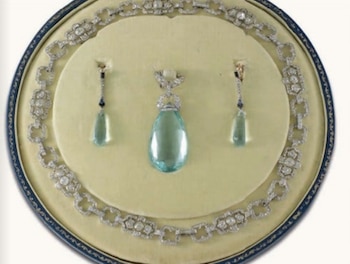
This coming Friday, January 23, a demi-parure of platinum, aquamarines, and diamonds that belonged to Queen Fabiola of Belgium will be auctioned, a piece that sparks interest for both its material value and historical significance.
The lot starts with an initial price of 40,000 euros, though the outcome of the auction will only be known on January 23. Over a decade after Fabiola’s death, this event brings the complexities of her legacy back to the forefront.
Many wonder how a personal jewel of the Queen ended up in an auction house if, in theory, most of her fortune was destined for ‘Ouvres de la Reine’. To understand, one must go back to 2012, when Fabiola began worrying about the future of her assets and the situation of her relatives after her death. Seeking legal advice, she discovered that if she directly bequeathed her estate to her Spanish nieces and nephews, they would face a tax burden of nearly 70% from the Belgian treasury.
Aiming to avoid this high taxation and preserve the integrity of her legacy, Fabiola decided to create a private foundation called ‘Fons Pereos’ in October 2012. The news caused a significant uproar in Belgium, as several political parties denounced that this foundation might have received public funds, given that the Queen had deposited into it the allowance she received from the state’s general budget. Criticism also arose over the possibility of such a large fortune ending up in the hands of foreign relatives with minimal taxation.
The controversy grew to the point that in 2013, Fabiola opted to dissolve the foundation. As a direct consequence, the Belgian government decided to halve the Queen’s financial allowance, a measure she accepted without public objection. After closing ‘Fons Pereos’, Fabiola resolved that, upon her death, most of her estate would be transferred to the ‘Ouvres de la Reine’ foundation, following the charitable line she had championed for decades and which Queen Mathilde of Belgium continues today. However, the final distribution of her inheritance dragged on for years and was accompanied by exchanges of messages and disagreements among some of her nieces and nephews.
In January 2016, several of them told *La Otra Crónica* of *El Mundo*:
These requests seemed to find a response with the creation in Spain of the INEIS foundation, established parallel to ‘Fons Pereos’ and involving some of Fabiola’s descendants. This entity manages, among other assets, Villa Astrida, the chalet in Motril where the Belgian royals spent long summer seasons.
This complex estate structure helps explain why jewels that belonged to the Queen are now coming to market. The piece being auctioned by Ansorena was worn by Fabiola at highly significant events, including the wedding of King Felipe and Queen Letizia in 2004. Jeweler Erika Navarlaz of Navarlaz Joyeros highlights its uniqueness, stating: