Editor’s Note
The latest Bain & Company report signals a pivotal shift in China’s luxury sector. While 2025 saw a continued decline, the market is showing signs of stabilization and a more selective consumer base is expected to drive a moderate recovery in 2026. This analysis highlights the evolving dynamics of post-pandemic luxury consumption.
The Chinese luxury market declined in 2025, but positive signals are emerging for 2026. This is the finding of the latest Bain & Company report, which forecasts a moderate market recovery driven by more selective consumers.
After a particularly difficult 2024, the market limited its decline to 3-5% in 2025, according to the latest study published by Bain & Company. In detail, the first months of 2025 were marked by persistent consumer caution, but the second half showed signs of stabilization, notably thanks to a partial recovery in confidence and more targeted consumption.
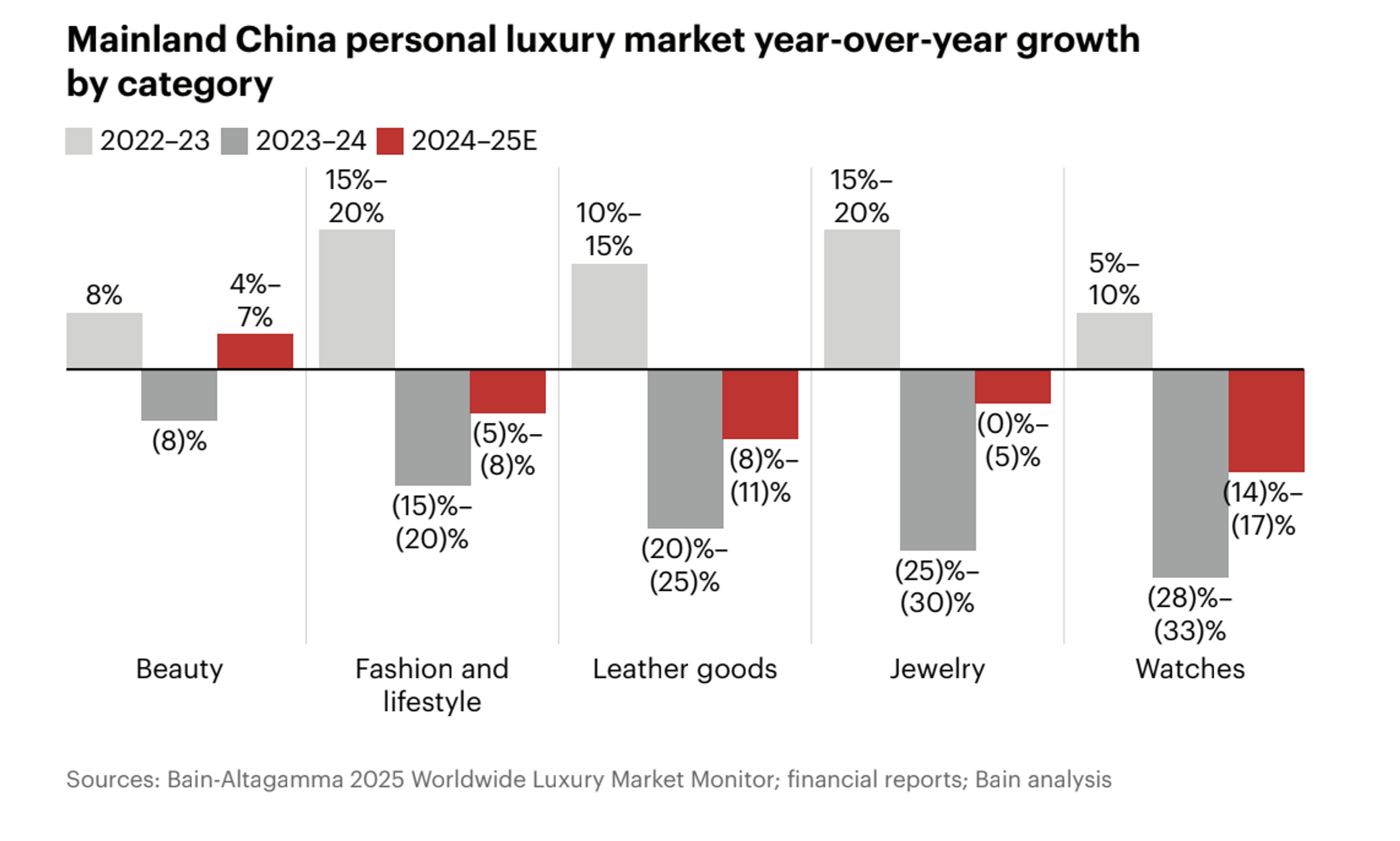
Among the categories, beauty remains the most dynamic, with growth (+4-7%) supported by demand for ultra-premium skincare and fragrances. More specifically, it is innovative products and new fragrance lines that have allowed brands to maintain customer interest and loyalty, even during periods of economic caution.

Jewelry also shows signs of resilience. Consumers continue to favor pieces that retain or increase their value, particularly precious metals, and limited collections appeal to buyers concerned with rarity and exclusivity.
In contrast, watchmaking remains particularly fragile, with an estimated decline of 14 to 17% in 2025.
Fashion, however, is holding up better than leather goods, thanks to a more innovative offering and collections capable of appealing to both high-end and aspirational consumers, notably through a stronger digital presence and engaging marketing campaigns.
According to Bain & Company, the second-hand market continues to grow rapidly in China, at +15-20%, notably thanks to the rise of livestreaming, which allows sellers to interact with potential buyers and conclude sales in real time. It is classic pieces, particularly in leather goods and watches, that retain a strong resale value and appeal to investment-conscious buyers.
Local brands are also continuing to carve out a place for themselves, particularly in beauty and certain segments of personal luxury, thanks to products adapted to cultural expectations and a competitive price positioning.