Editor’s Note
In a surprising shift, 2021 saw gold, silver, and jewelry emerge as China’s standout consumer product category, outpacing traditional favorites like cosmetics and automobiles. This article explores the factors behind this remarkable 29.8% year-on-year growth in retail sales.
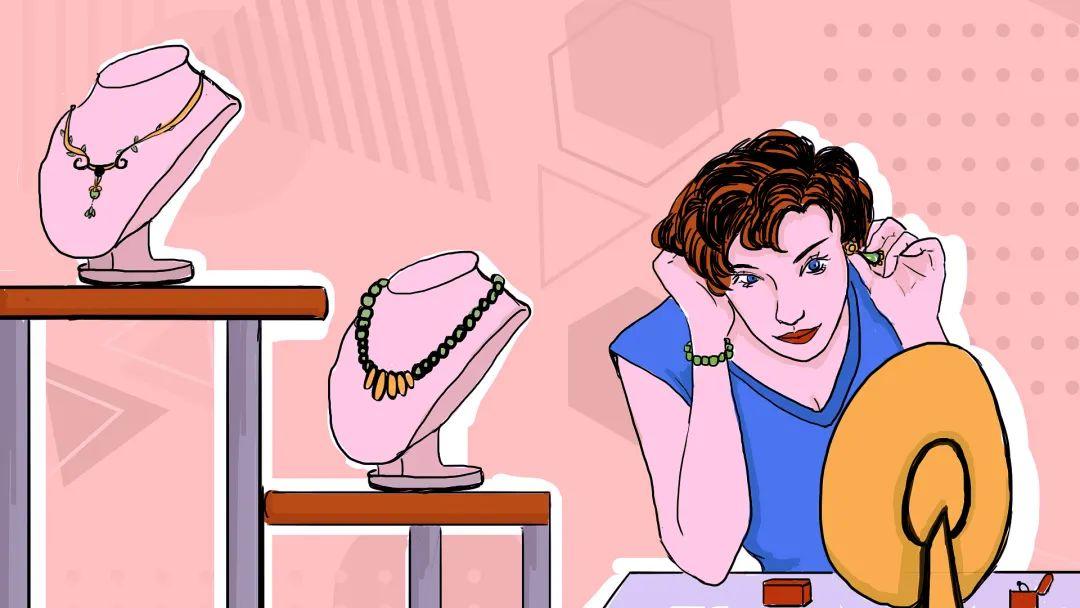
What was the most prominent consumer product in China in 2021? It wasn’t the persistently popular cosmetics, nor the high-priced automobiles, nor the most common daily necessities like food and clothing, but rather—gold, silver, and jewelry.
According to statistics from the National Bureau of Statistics, in the total retail sales of consumer goods from January to December 2021, the year-on-year growth of gold, silver, and jewelry categories was 29.8%, with the growth rate more than double that of automobile, cosmetics, clothing, footwear, hats, and textile categories, surpassing tobacco, alcohol, and home furnishing categories, demonstrating enormous growth potential.
This is inseparable from the trend of younger branding in jewelry and is also closely linked to the consumption power of the middle-aged and elderly demographic.
From the perspective of the silver-haired economy, it seems easy to understand: among high-unit-price consumer goods, middle-aged and elderly people generally have a deeper understanding of cars and luxury goods, but their recognition of gold, silver, and jewelry is exceptionally high.
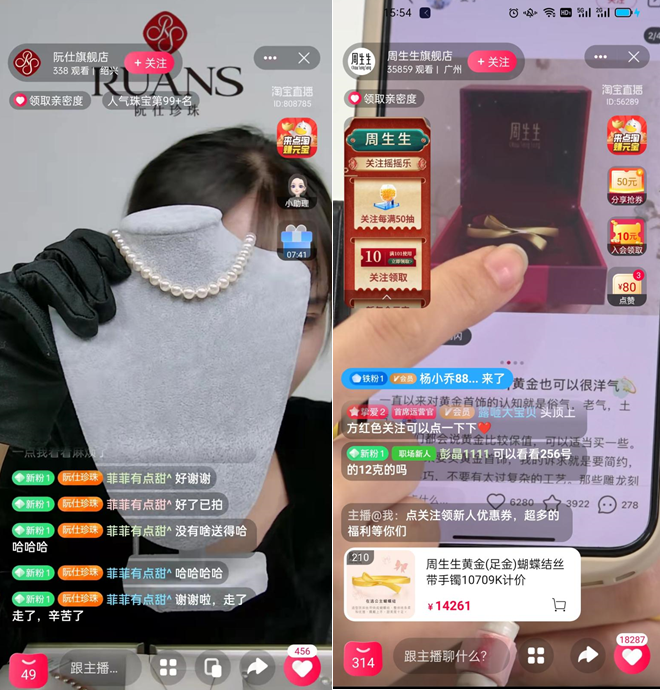
On platforms like WeChat video accounts, Douyin, and live-streaming platforms, jewelry has already become a popular product for many silver-haired KOLs to promote, deeply favored by middle-aged and elderly consumers due to its characteristics of superior quality, high value, and preservation of value.
In this article, AgeClub will study the situation of jewelry live-streaming sales on online platforms and visit offline stores and interview silver-haired consumers to explore the current state of gold, silver, and jewelry consumption among the middle-aged and elderly population.
AgeClub summarizes that silver-haired consumers have three major demands for jewelry consumption: status, heritage, and aesthetics.
In traditional concepts, gold and silver jewelry have always been synonymous with “wealth” and “nobility.” Wearing jewelry implies adding additional value to oneself and is a symbol of status and position. Moreover, compared to diamonds, traditional jewelry represented by gold and jadeite possesses a more “understated” noble temperament.
From the perspective of value preservation needs, gold and silver jewelry have always had the attribute of being a “hard currency,” and they carry irreplaceable commemorative significance and heritage value.
In the eyes of many elderly people, buying other things is “wasting money,” while buying gold and silver jewelry is an “investment,” a “family heirloom” that can be passed down to children and grandchildren. Guided by this consumption concept, the silver-haired group’s enthusiasm for purchasing gold and silver jewelry is even more fervent.
Aunt Feng, who just turned 60 this year, is a genuine jewelry shopping enthusiast. Over the years, she has purchased many gold bracelets, jadeite bracelets, and jade pendants, and has also bought a peace lock for her newborn granddaughter.
She confided to AgeClub:
When asked about purchasing channels, Aunt Feng said:
Regarding the choice between “cost-performance” and “family heirloom,” groups with different consumption capacities will give different answers, but Aunt Feng stated that she would definitely choose the product with the highest value within her budget, which also reflects the important attributes of jewelry’s “value preservation” and “heritage.”
In terms of aesthetic needs, traditional jewelry firmly captures the middle-aged and elderly group, especially the aesthetics of middle-aged and elderly women, making them the main force in gold and silver jewelry consumption.
The older you get, the more you can appreciate the beauty of gold, silver, and jade, which has become a consensus. When young, you might think gold is a bit “vulgar,” or feel that jewelry and jade are not fashionable enough. As you age and return to authenticity, you always come to re-acknowledge the “elegant and superior” quality of traditional jewelry.
Driven by the multiple attributes of status symbolism, aesthetic needs, and value preservation/heritage, the silver-haired group’s willingness to consume gold and silver jewelry is increasingly strong. The enormous consumption potential flowing into the gold and silver jewelry consumer goods market has become a matter of course.
The product design of gold and silver jewelry brands is also being adjusted and innovated to cater to the preferences of the middle-aged and elderly group.
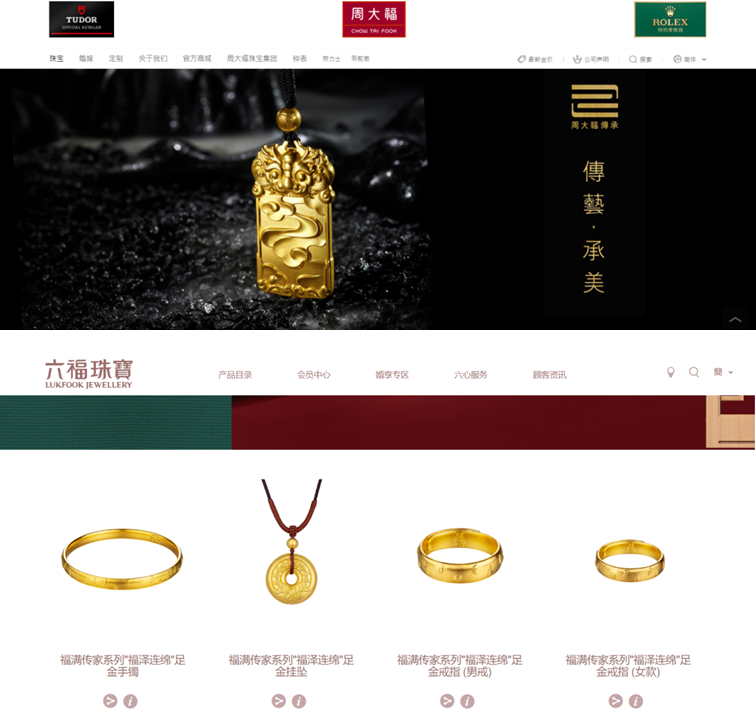
Traditional gold brands emphasize the “auspiciousness” and “heritage” that middle-aged and elderly people care about, endowing gold and silver jewelry with greater value and auspicious meaning. For example, Chow Tai Fook’s “Heritage Series” and “National Jade Heritage Series,” and Chow Sang Sang’s “Blessings Passed Down Through Generations” series, etc., while increasing the weight of gold, also incorporate traditional auspicious patterns to the greatest extent, using patterns like clouds, dragons, and Ruyi, implying blessings for longevity, continuous blessings, and so on.
Image source: Chow Tai Fook official website, Chow Sang Sang official website
Compared to the heritage and nobility of gold and jade, diamond jewelry symbolizes more temperament and fashion, able to bridge tradition and modernity, and is very suitable for matching both combat attire and fashionable clothing. It is not as ostentatiously wealthy as gold and jade, and is especially favored by middle-aged and elderly women.
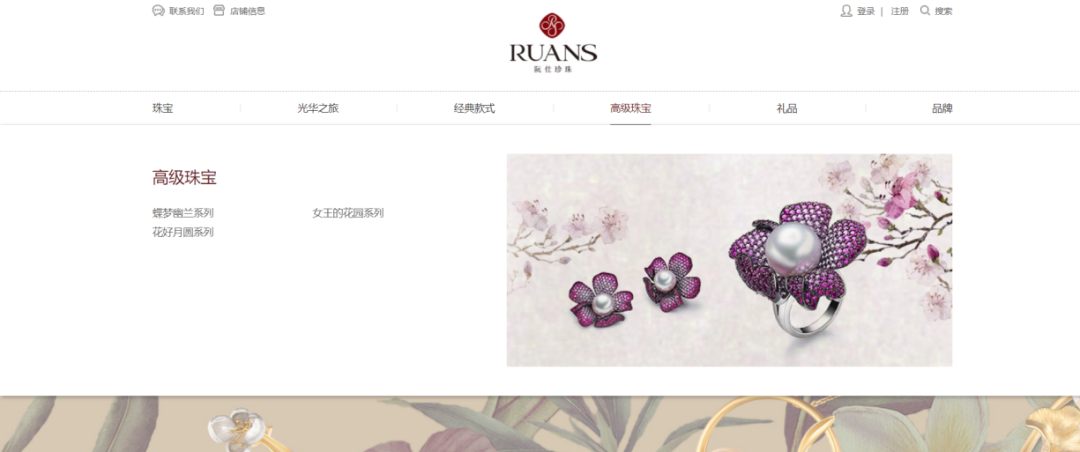
For example, Luk Fook’s “Queen’s Garden Series” promotes that it can give women “the charm of time’s precipitation and the excellence of years of training.” In recent years, Luk Fook has also added more poetic classical aesthetics, such as “Moon Palace Fairy” and “Flowers Full Moon Round.” The two-way fit between merchants and consumers provides relatively favorable market conditions for improving the acceptance of diamond jewelry among the middle-aged and elderly group.
Image source: Luk Fook official website
Although the internet adoption rate among the middle-aged and elderly continues to accelerate, and online shopping has become an increasingly important part of life, offline stores are still an important channel for their gold and silver jewelry consumption.
According to the “2021 China Jewelry Listed Company Research Report,” in terms of terminal retail outlets, significant differentiation has appeared among A-share listed jewelry companies. As of June 2021, four companies—Lao Fengxiang, Chow Tai Seng, Ming Yuan Shares, and China Gold—had over 3,000 retail outlets each, and their recent store expansion speed was significantly higher than the industry average.
Image source: “2021 China Jewelry Listed Company Research Report”
Hong Kong-funded jewelry brands also show similar characteristics, namely that the three leading brands—Chow Tai Fook, Chow Sang Sang Group, and Chow Tai Seng—are still accelerating the layout, sinking, and expansion of terminal retail outlets in their channels.
To truly understand the sales situation of traditional brand jewelry stores, AgeClub visited shopping malls for experience and research before the Spring Festival. As the New Year approaches, business at offline jewelry physical stores is booming. In the impression, one-on-one quiet service jewelry stores have become bustling with crowds.
In the specialty stores of brands with the best business, such as Chow Tai Fook and Chow Tai Seng, there are almost no idle sales staff. The main consumers are middle-aged and elderly people, often accompanied by their children, and the most popular products are gold bars, gold jewelry, and jadeite.
A salesperson at a Chow Tai Fook store said that in recent years, the store has also launched many new styles specifically for middle-aged and elderly consumers, such as lightweight gold bracelets and jadeite pendants with traditional auspicious patterns, which are very popular.
However, offline is not the only battlefield. The rise of online live-streaming e-commerce has also provided new growth points for jewelry brands to reach silver-haired consumers.
On platforms like Douyin and Kuaishou, many silver-haired KOLs with hundreds of thousands or even millions of fans have emerged. They often share life insights and shopping experiences, and their recommendations for gold, silver, and jewelry are highly trusted by their peers.
A consumer in her 50s told AgeClub that she and her friends often watch jewelry live streams together and discuss them, which has become a new form of social entertainment for them.
Faced with this trend, traditional jewelry brands have also begun to actively layout online live-streaming channels. They not only cooperate with head anchors but also cultivate their own brand live-streamers, using professional explanations and after-sales guarantees to attract silver-haired consumers to place orders online.
In summary, whether offline or online, the silver-haired group’s demand for gold, silver, and jewelry is real and strong. For brands, deeply understanding their consumption psychology, meeting their needs for status, heritage, and aesthetics, and building a multi-channel sales network that combines online and offline will be the key to capturing this huge market.