Editor’s Note
The allure of diamonds as a timeless and stable investment is fading. As this article highlights, the market is undergoing a significant shift, with prices for natural diamonds in a sustained decline. The rapid rise of lab-grown alternatives is a key factor challenging the traditional value proposition of these gems. This trend suggests a fundamental change in consumer perception and the jewelry industry’s landscape.
There was a time when owning a “big diamond ring” for marriage was the dream of many girls, and diamonds were once considered by many consumers as highly value-retaining jewelry. However, with the meteoric rise of lab-grown products, diamonds are rapidly losing their luster.
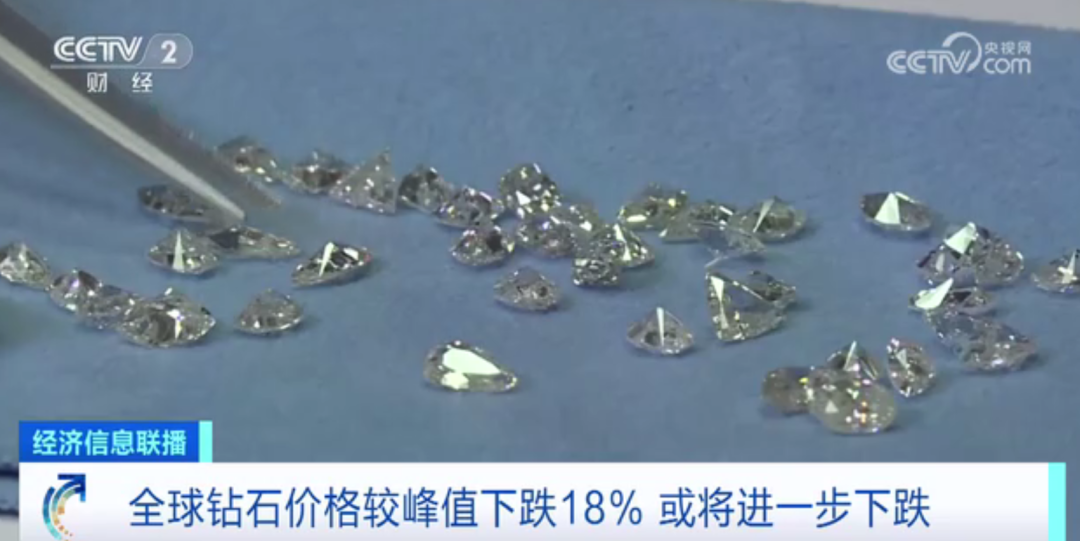
Recently, according to a report by the American CNBC website, the latest global rough diamond price index shows that diamond prices have fallen by 6.5% this year and have dropped by 18% compared to the historical peak in February 2022. A 1-carat natural diamond of slightly above-average quality cost $6,700 a year ago, while the same diamond now sells for $5,300.
Diamond prices are in a continuous dive. Future diamond prices may continue to fall until they overturn consumers’ perception of diamonds as a store of value.
According to a June 24 report by China Central Television’s finance channel citing CNBC, the latest global rough diamond price index shows that diamond prices have fallen by 6.5% this year and have dropped by 18% compared to the historical peak in February 2022.
The International Diamond Exchange (IDEX) released its latest price index report, showing the diamond index has been declining for 15 consecutive months.
Furthermore, according to the “Diamond Industry Internal Reference” published by the Shanghai Diamond Exchange, the rough diamond sales at the fourth sight of the international diamond giant, South African mining company De Beers, fell by 20%, attributed to slowing demand in China. The company also canceled an auction due to low buyer sentiment.
Analysts say diamond prices will “dive” further.
According to CNBC, a 1-carat natural diamond of slightly above-average quality cost $6,700 a year ago, while the same diamond now sells for $5,300.
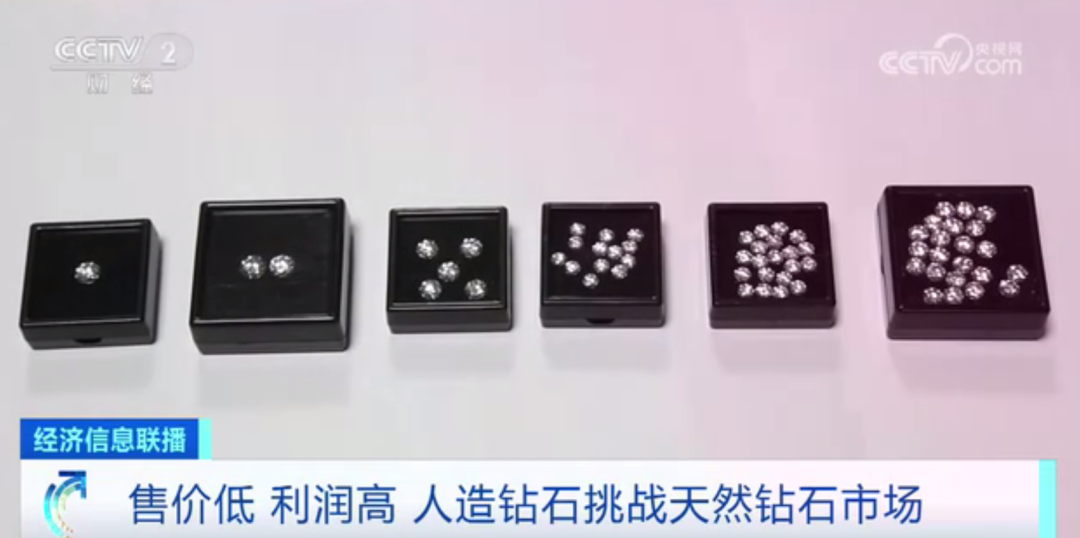
One reason for the decline in diamond prices is the expansion of the lab-grown diamond market.
The report states that in 2020, lab-grown diamonds accounted for only 2.4% of market sales. So far this year, that proportion has reached 9.3%.

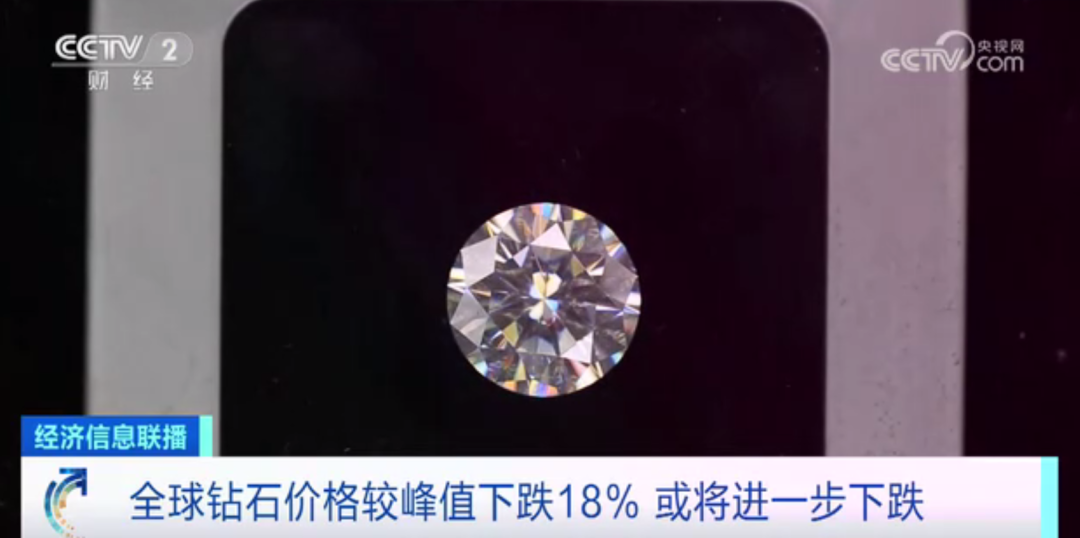
Lab-grown diamonds, cultivated in high-temperature and high-pressure environments simulated in laboratories, are almost indistinguishable from natural diamonds but are priced lower, leading more consumers to switch to lab-grown diamonds. As machine efficiency improves, the price of lab-grown diamonds is getting lower, and retail profit margins are also expanding.
Over the past three years, the price of lab-grown diamonds has fallen by 59%, while retail profit margins can reach 60%, significantly higher than the 34% for natural diamonds.
Analysts say global diamond prices will fall further. It is expected that in the next 12 months, the price of natural diamonds will drop by 20% to 25% from current levels, representing a 40% decline from the peak in February of last year.
According to a previous report by Qianjiang Evening News, “If I could do it again, I would have my husband spend that 30,000 yuan on gold jewelry.” Xiao Lin, a woman born after 1985 in Hangzhou who has been married for five years, feels it was a waste of money looking back at the diamond ring her husband bought for over 30,000 yuan.
Xiao Lin’s choice may be a reflection of many young people. Ms. Zhao, the manager of a jewelry chain store in Hangzhou, told Chao News reporters: “In the past, 70% of store sales came from inlaid jewelry like diamond rings, with gold playing a supporting role. Now it’s the opposite; gold sales account for 70%.”
Another Hangzhou resident, Ms. Zheng, who got married in 2008, said diamond rings were a standard for weddings at that time. Although she didn’t have the habit of wearing rings, she still chose a diamond ring worth over 10,000 yuan as a marriage token.
However, in the 15 years since her marriage, she has worn it less than five times. Having heard that diamonds over 30 points retain value better, she asked a friend to check the current market price for her diamond ring. The buyback price turned out to be less than 1,000 yuan, with the ring setting being the main value.
Earlier this year, a video sparked heated discussion online: a woman who bought two diamond rings for 18,000 yuan ten years ago found they are now only worth 180 yuan for buyback?!
According to a June 28 report by China News Service’s Zhongxin Jingwei, Pan Helin, co-director and researcher at the Digital Economy and Financial Innovation Research Center of the International Business School of Zhejiang University, stated that diamond prices are the result of the interaction between supply and demand.
From the demand side, the main function of diamonds is to meet people’s demand for diamond jewelry during weddings, with the main market being East Asia. However, due to various reasons, marriage rates have declined in many East Asian countries, objectively shrinking the demand market for diamonds.
On the other hand, the association between diamonds and love is also weakening. After centuries of marketing, consumers are generally experiencing aesthetic fatigue.
Taking China as an example, according to data from the Ministry of Civil Affairs, China’s marriage data began to decline year by year from 2014. In 2013, there were 13.4693 million couples, which fell below 10 million in 2019 and further below 8 million in 2021. In 2022, the number of marriage registrations nationwide decreased by 803,000 couples compared to the previous year, a drop of about 10.5%.
Furthermore, Pan Helin also believes that many young consumers who were previously keen on diamonds now prefer gold.
According to data from the “2022 China Gold Jewelry Industry Insight Report,” young Chinese people’s willingness to consume gold has grown rapidly over the past five years, increasing from 16% in 2016 to 59% in 2021, making them the age group with the highest potential for gold jewelry consumption.
According to Chao News, reporters found in interviews that due to the low value retention rate of diamonds, young people have developed the idea that “buying diamonds is not as good as buying gold.” Xiao Cao, who got married last month, told reporters that he and his wife prepared 100,000 yuan to buy wedding jewelry. However, considering the value retention rate of diamonds, after discussion, they only spent over 10,000 yuan on a diamond ring and used the rest of the money to buy gold bars.
It is also worth noting that in recent years, with the continuous advancement of lab-grown diamond technology, their color and clarity have become superior to natural diamonds. More and more consumers are turning to lab-grown diamond products, which has put pressure on the demand for natural diamonds to some extent.
From the supply side, the addition of lab-grown diamonds has made diamond supply abundant. Starting in 2019, China established a path for developing lab-grown diamonds. For example, Zhecheng County in Shangqiu City, Henan Province, achieved poverty alleviation and prosperity through lab-grown diamonds. Producing lab-grown diamonds is not difficult, such as by using high temperature and high pressure to mimic the natural diamond formation environment, or through chemical vapor deposition, where a small diamond seed crystal attracts carbon elements to eventually become a large diamond. Internationally, many practitioners also promote lab-grown diamonds. For instance, the International Diamond Association recognizes lab-grown diamonds as diamonds and no longer distinguishes between lab-grown and natural diamonds.
Both supply and demand are pushing diamond prices into a downward trend. What might be strange is not that diamond prices are diving, but why they are diving only now, and why the drop is not even higher.
In fact, this is still due to manipulation by diamond merchants. For example, De Beers always emphasizes the difference between natural and lab-grown diamonds, brands lab-grown diamonds separately, and even advises consumers not to wear lab-grown diamonds on important occasions. Some diamond merchants have invented machines to distinguish between lab-grown and natural diamonds by identifying subtle textures. These actions aim to rebuild the scarcity of diamonds to increase their price. But now, it seems all these efforts may be in vain, as technological trends are unstoppable.
Furthermore, from a physics perspective, referring to the first principles highly praised by Tesla CEO Elon Musk, carbon elements are cheap and readily available. Diamonds are just a form of carbon element, so diamonds will eventually become cheap and readily available. First principles are very effective for predicting technological development. Once, producing Tesla cars was very costly, and the selling price was set below cost. This was because Musk believed that the lithium, iron, and nickel metals that make up cars are cheap, so the cost of lithium battery cars would inevitably show a downward trend in the future, making Tesla profitable.
Therefore, from the perspective of first principles, diamond prices will continue to fall.