Editor’s Note
De Beers has reportedly implemented a significant price reduction for rough diamonds over 0.75 carats at its first auction of the year, shifting to a consolidated pricing model. The exact scale of the cut remains undisclosed.
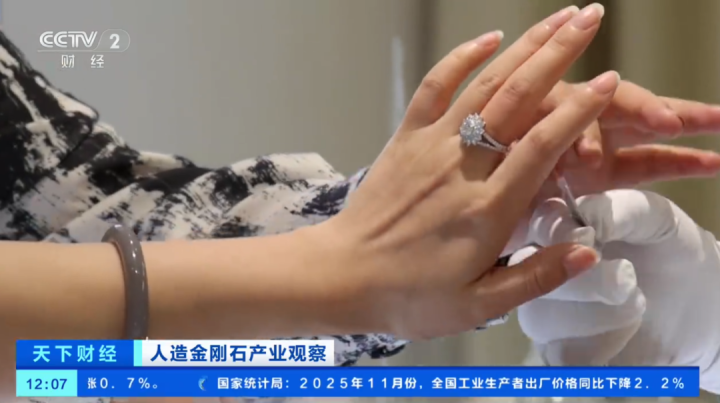
On January 20, according to Yicai reports, at the first routine diamond auction of the year which started this Monday, De Beers significantly lowered the prices of rough diamonds above 0.75 carats. The specific extent of this price adjustment is currently unknown.
Informed sources stated that De Beers adopted a unified pricing and invoicing policy for this auction—no longer pricing each box of diamonds individually but issuing a consolidated total price invoice, making the price reduction difficult to calculate. Industry insiders estimate the negotiation range to be between 10% and 15%.
De Beers’ price cut stems from falling prices due to declining global diamond demand. According to the RapNet Diamond Price Index (RAPI), in 2025, the RAPI for diamonds over 3 carats slightly fell by 0.4%; smaller, everyday consumer-grade diamonds like 0.3–0.5 carats, impacted by lab-grown diamonds and weak demand, saw significant price drops, with 0.5-carat diamonds falling over 20% for the full year 2025.
De Beers holds significant sway in the rough diamond market. The company holds 10 diamond auctions annually, and participating “sightholders” typically can only passively accept the prices and supply quantities offered. However, in the current tense market environment, many diamond dealers are no longer willing to pay the prices set by De Beers.
It is noteworthy that in recent years, the diamond industry, one of the symbols of global luxury, has been wavering. Terminal demand remains persistently weak. In 2025, US imports of polished diamonds fell 48% year-on-year, market consumer confidence is insufficient, and high gold prices are driving consumers towards lighter gold jewelry, further pressuring diamond demand. De Beers has accumulated over $2 billion in inventory, and since last year, the completion rate of its diamond auctions has also been declining.

In fact, the trend of significant declines in both diamond sales volume and price has persisted for several years.
As early as September 2023, CCTV Finance reported that in the preceding year, the price of certified diamonds had fallen by 35% to 40%. Among them, diamonds from 0.5 to 3 carats were hit the hardest, with sales volume also dropping by 30% to 35% during the same period.
At that time, De Beers lowered the price of its mainstream product, natural diamonds from 2 to 4 carats, by 40%. Subsequently, in January 2024, De Beers cut rough diamond prices by about 10%, and in December of that year, it reduced the price of rough diamonds sold on the secondary market by 10% to 15%.
According to Cover News, a decade ago, Ms. Li from Chengdu spent one hundred thousand yuan on a one-carat diamond ring. Today, after consulting multiple recyclers, the highest valuation she received was only thirty thousand yuan. The brilliance of the ring in her hand has been overshadowed by the chill of depreciation.
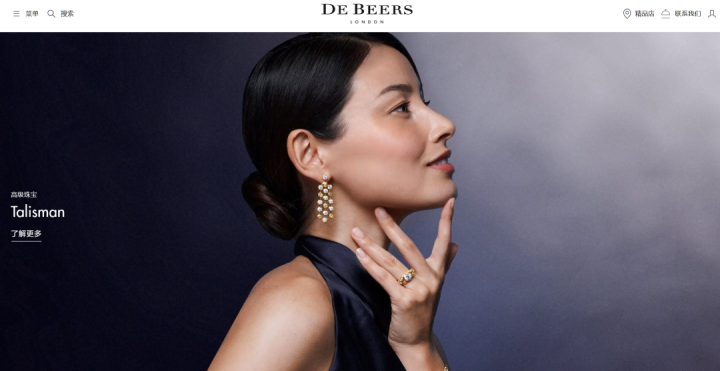
For comparison, in January 2016, ten years ago, the gold price of Lao Feng Xiang was about 290 yuan per gram. By January 20, 2026, Lao Feng Xiang’s gold price had reached 1,456 yuan per gram, an increase of over 400%.
Furthermore, increasingly cheaper lab-grown diamonds are severely squeezing the living space of natural diamonds.
According to CCTV Finance, in 2025, lab-grown diamonds accounted for over 40% of the global diamond jewelry market sales, an increase of more than 8 times compared to 2019.
At the same time, in recent years, the retail price of lab-grown diamonds has fallen by over 50% from its peak. Today, the price of a 1-carat lab-grown diamond has dropped from 8,000 yuan to 3,500 yuan, less than one-tenth the price of a natural diamond of equivalent quality.
Currently, China’s synthetic diamond industry scale leads the world, with increasingly diverse downstream products. The “2024 China Jewelry Industry Development Report” mentions that, according to incomplete statistics, China’s lab-grown diamond production in 2024 was about 22 million carats, a year-on-year increase of 144.44%, accounting for 63% of global total production.
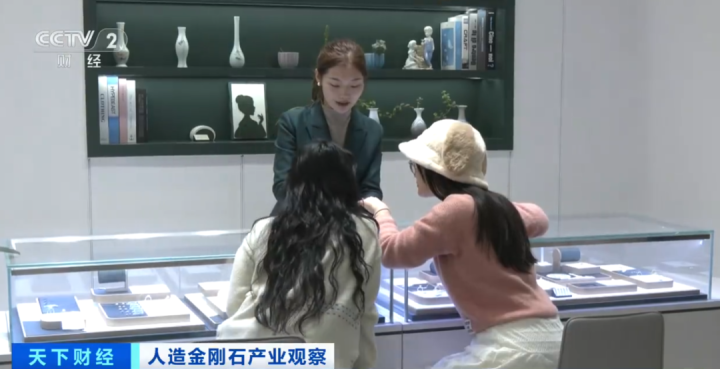
At a store specializing in selling lab-grown diamonds in Nanyang, Henan, reporters saw a continuous stream of consumers coming for inquiries and purchases, mainly young people. The store manager stated that young people account for about 70%, and sales in 2025 doubled year-on-year.