Editor’s Note
The recent unearthing of a rare 42-carat blue diamond in South Africa’s Cullinan mine underscores the region’s enduring geological significance and its capacity to produce extraordinary gemstones that captivate both the mining industry and the luxury market.
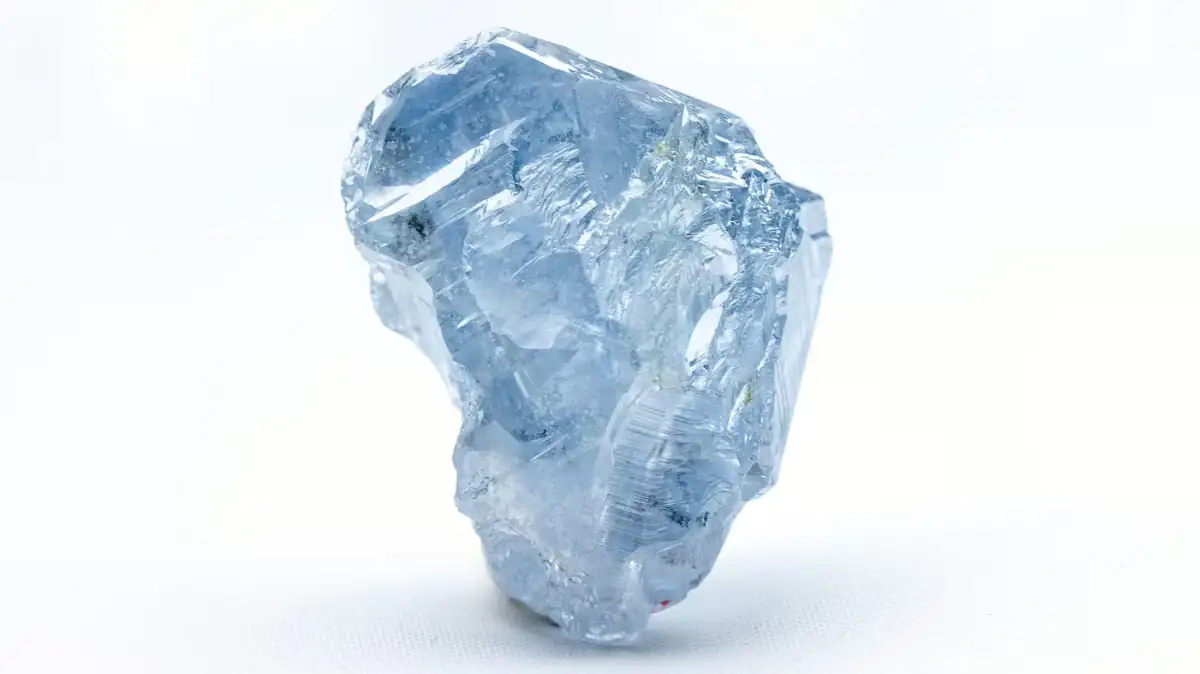
A gemstone of exceptional rarity was recently extracted from the Cullinan mine, located northeast of Pretoria, South Africa. It is a natural blue diamond weighing nearly 42 carats, whose value could reach approximately $40 million after cutting and polishing. This discovery immediately attracted the attention of mining industry experts and luxury market players. It highlights the persistence of South Africa’s geological potential and also recalls the strategic role of gemstones in the economies of producing countries.
The Cullinan mine, world-renowned for its historical discoveries, continues to surprise more than a century after its opening. The recently unearthed diamond is distinguished by its intense blue color, an extremely rare characteristic in nature. Blue diamonds generally belong to a particular category called type IIb, whose formation is linked to the presence of boron in the crystal structure. This specific composition gives them a unique hue and high value on the international market.
The rough stone also has a singular shape that symbolically resembles the map of the African continent. Even if this resemblance is purely coincidental, it reinforces the media impact of the discovery. For specialists, the final cut of the diamond will determine a large part of its value. According to initial assessments, the stone could give rise to a high-quality jewel, highly sought after by collectors and auction houses.
South Africa holds a central place in the global history of diamonds. Since the late 19th century, the discovery of major deposits has profoundly transformed the country’s economy. The Cullinan mine, opened in 1902, is notably famous for yielding the largest rough diamond ever discovered, fragments of which now adorn the jewels of the British monarchy.
Over the decades, South African mining has been structured around more rigorous standards regarding safety, traceability, and environmental responsibility. Companies in the sector must now comply with legal frameworks aimed at limiting the ecological impact of their activities and ensuring local economic benefits. This evolution reflects the country’s desire to modernize its industry while preserving its mining heritage.
Despite increased competition in the global market, South Africa retains an advantage in the production of high-quality diamonds, particularly rare and colored stones. These exceptional gems represent a niche segment, but one with high added value, capable of strengthening the country’s international visibility and attracting foreign investment.
In several regions of the world, diamonds and gemstones constitute major economic levers. They generate export revenues, support public finances, and promote job creation in the extraction, processing, and trade sectors. In Southern Africa, countries like Botswana, Namibia, and South Africa have long used these resources to finance infrastructure and social programs.
Gemstones also play a role in the international influence of producing states. Major, often highly publicized auctions help strengthen their image on the global economic stage. However, this wealth comes with significant challenges, particularly in terms of governance and transparency. International mechanisms have been established to combat illegal trade and promote responsible exploitation of mining resources.
In this context, every major discovery takes on a strategic dimension. A diamond with a potential value of several tens of millions of dollars can represent a significant financial contribution, but also a symbol of a country’s expertise and geological potential. The valorization of these resources depends as much on their exploitation as on their processing and commercialization under ethical conditions.
The Cullinan blue diamond has not yet been cut, and its future remains open. Its transformation will require meticulous work to preserve its color and purity as much as possible. Experts estimate that the cut could reveal a stone of exceptional quality, likely to command high prices on the luxury market.