Editor’s Note
The sharp rise in gold and silver prices is having a profound effect on traditional craftsmanship. As this report from Delhi’s historic Dariba market illustrates, the resulting 50% drop in jewelry sales is not just an economic indicator but a crisis threatening livelihoods and a centuries-old artisanal heritage.
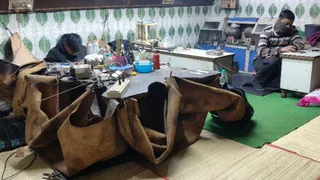
The soaring prices of gold and silver have severely impacted the jewelry industry in Delhi’s Dariba market. Jewelry sales have declined by 50%, leading to widespread unemployment among artisans.
The unexpected surge in gold and silver prices has cast a shadow over the hundreds of years-old jewelry factories in Dariba market, Chandni Chowk. The demand for jewelry has decreased as gold and silver are moving out of reach for traditional customers.
This has affected the employment of artisans. Showing his factory located in Chhatta Pratap Singh Gali, Kinari Bazaar, Kishendu Dhara says that 52 artisans used to work here, now only 16 remain. Only a few of them have work. Due to lack of work, artisans are returning to their home states.
Kishendu came to Dariba from Singur, Bengal about 25 years ago. The Mughal-era jewelry market Dariba is over 300 years old. The artisans here are mainly from other states, with 90 percent from Bengal. The rest are from Rajasthan, Maharashtra, Punjab, Uttar Pradesh, and other states.
There are about 10,000 small and large jewelry factories in and around Dariba, where two-three to 70 artisans work, making jewelry by hand. For example, making a single ring can take a week. The jewelry from here, excellent in design and quality, is exported to various states as well as countries like Saudi Arabia, the USA, the United Arab Emirates, and others.
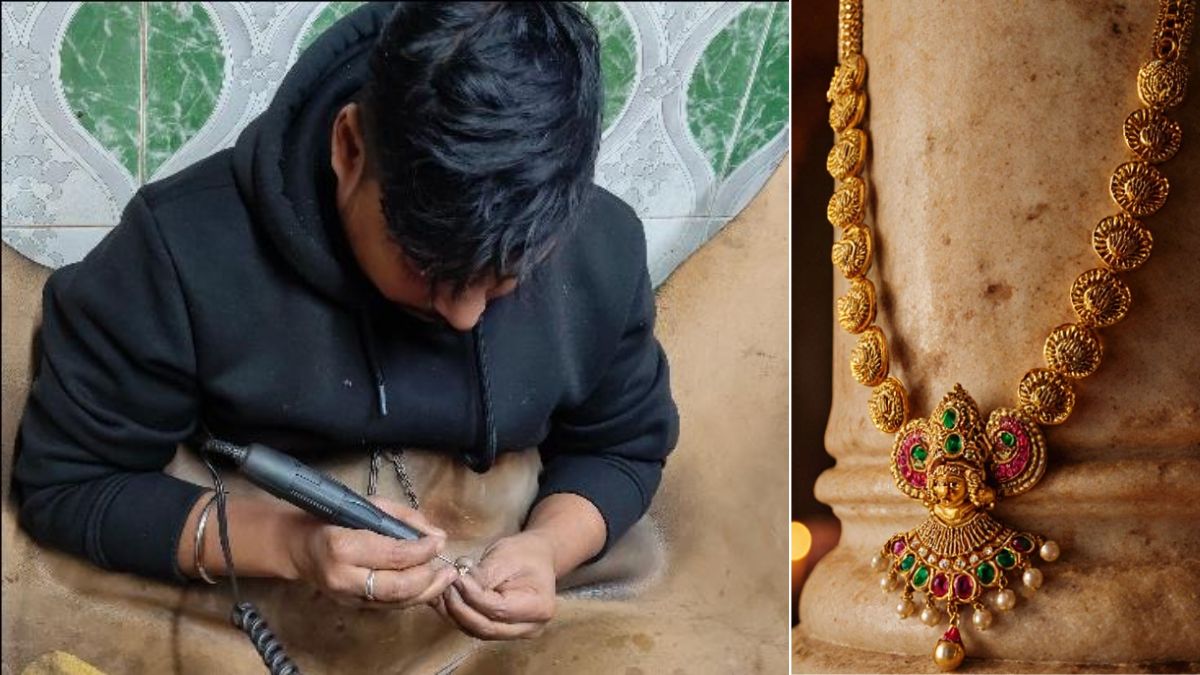
Currently, exports to the USA have significantly decreased due to tariff wars. Manish Verma, General Secretary of the Dariba Trade Association, says that jewelers have been completely sidelined by the gold and silver prices being determined in the futures market. There is a decline of up to 50 percent in jewelry sales. The government should investigate this abnormal situation and make efforts to curb it.
Similarly, jewelry factories in Karol Bagh and Gandhi Nagar are also suffering from the impact of rising prices. According to experts, until a few years ago, there were over 250,000 jewelry manufacturing factories in Delhi, which have now reduced to 100,000. Out of about 800,000 artisans, only around 400,000 remain in the profession.
The surge in gold and silver prices has been ongoing since 2022 due to the Russia-Ukraine war. However, with some deviation, unexpected sharp increases are being seen due to Trump’s tariff policy, Iran and Greenland tensions, gold purchases by central banks of several countries, and some other reasons. This has impacted factories along with the jewelry market.
Sukumar Adak, operator of another factory, expresses concern, saying that orders at his place have halved compared to before. Running the factory is becoming increasingly difficult for him. Meanwhile, artisans are facing a livelihood crisis. The worrying thing is that they are not linked to any government scheme.
In this situation, efforts are being made to empower them through the PM Vishwakarma Scheme and labor registration. Mans Mandal, associated with the matter, said that after talking to Delhi government officials, camps for this will be set up soon.

In this downturn, while Delhi’s jewelry artisans are appealing to Chief Minister Rekha Gupta for help—their organization recently wrote a letter to the Delhi government—the Mamata government is trying to lure artisans of Bengali origin. Amidst preparations for the assembly elections, messages are coming from there that cards will be made for artisans here, through which they will receive financial assistance.