Editor’s Note
This article examines the growing debate around 9-carat gold in India. While marketed as an affordable option, its low purity (37.5%) raises concerns about tarnishing and long-term value, making it a contentious choice for both weddings and investment.
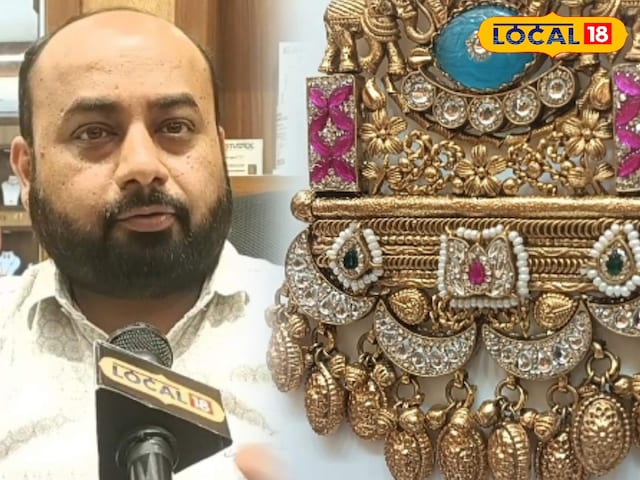
Jabalpur News: 9-carat gold jewelry, which has emerged as a low-cost option in the market, is now a hot topic of discussion in the bullion market. Both traders and customers are in a state of confusion about buying 9-carat gold because its purity is only 37.5 percent, while the rest is alloy. Due to this, after some time, differences in its color and shine become noticeable, and it does not look like traditional gold. However, 9-carat gold is valid under BIS hallmark and government standards, and with its price being around Rs 40,000 per 10 grams, it is certainly becoming a cheap option for customers. But due to low returns and color issues, people are not yet preferring it for investment, weddings, and festivals.
Ajit Jain, a bullion trader from Jabalpur, Madhya Pradesh, told Local 18:
He said that 9-carat gold means that the jewelry contains 37.5% pure gold and the remaining 62.5% is alloy. This metal is now also coming under the BIS hallmark. Due to containing only 37.5% gold, its price is much lower. It yields lower returns compared to 24 and 22-carat gold. Also, the yellow color of 9K gold is lighter, so it does not look as shiny as 22 and 18-carat gold. Due to the higher proportion of alloy, it can even turn slightly black under some conditions, especially if not maintained properly.
He said that therefore, in the market, people still prefer 22K or 24K gold for investment and weddings-festivals. So, while people do inquire about 9-carat gold as an investment, they are not buying it due to many shortcomings. This is why its demand is currently low in the market. Meanwhile, 9-carat gold jewelry is only being seen in big cities.