Editor’s Note
This article details a historic plunge in commodity prices, triggered by speculation over a potential change in Federal Reserve leadership. The dramatic reversal, particularly in gold, underscores the volatile and often speculative nature of even traditional safe-haven assets in the current climate.
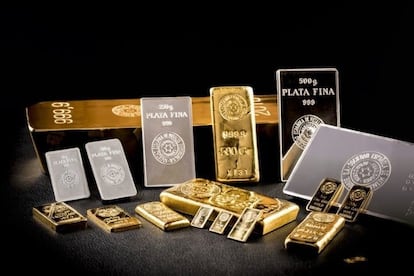
Commodities are deepening a crash that highlights the speculative nature of recent gains in an asset traditionally considered a safe haven. Donald Trump’s nomination of Kevin Warsh as the next Fed Chair candidate to replace Jerome Powell has blown bullish bets sky-high, forcing a historic drop. Gold touched $4,400 per ounce this morning, compared to last Thursday’s near-record highs of almost $5,600. A plunge of 20% in just over two trading sessions.
On Friday, the metal already sank 8.95%, according to Bloomberg’s spot market data (though it fell as much as 12%), and this Monday it has fallen up to 5%. Even more extreme is the behavior of silver, which is down 7.5% today and has lost 32.7% from its recent highs of $121 just days ago.
For Manuel Pinto of analysis firm XTB, the precious metal has been affected by the announcement of Kevin Warsh’s nomination:
Although Warsh is likely to lean towards cutting interest rates, at least according to his most recent statements, the market sees him as a veteran of the Federal Reserve and Wall Street, ruling out a scenario of extreme decisions that would significantly weaken the dollar. In the opinion of Sergio Ávila of IG, “the visible trigger is political-monetary. Trump wants to nominate the hawkish Kevin Warsh for the Fed.”
The violence of the metals’ fall, in any case, shows that their rise was not only driven by a need for protection against a falling dollar, but also by the search for quick money and bullish positions that had to be unwound in a hurry.
Ávila of IG reiterates that “it’s not so much a structural change as a cleansing of excesses.”
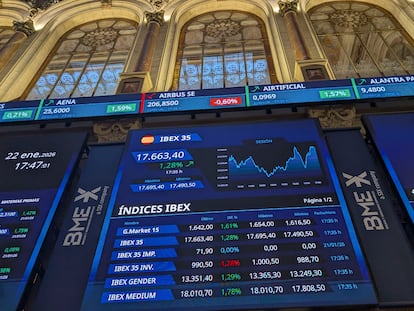
The collapse in precious metals prices is shaking all markets on a Monday where stock markets are turning red.
The expert refers to a common movement in the futures market when an asset that has risen strongly suddenly falls: all bullish bets go into loss, and investors have to post new margin for their trades, so they sell whatever they have at hand.
The historic gold drop follows an equally historic rise. Thanks to strong purchases by small investors, gold had doubled in price since early 2025 and had surged 25% in 2026 alone. Silver, with a more speculative component due to its less liquid market, quadrupled in value since the end of 2024 and had risen up to 60% in 2026. Concerns over geopolitical instability accelerated gold and silver purchases in January, amid US intervention in Venezuela, the US-EU conflict over Greenland, and doubts about Federal Reserve independence—events that punished the dollar and sent precious metals soaring. Additionally, the agreement reached to avoid a partial US government shutdown has provided some respite for the dollar, pressuring gold.
Antonio Di Giacomo, senior market analyst at XS.com, maintains that although gold has fallen from the $5,000 level, “it retains its defensive role in a high-uncertainty environment.”
