Editor’s Note
This article explores the enduring allure of diamonds, moving beyond their traditional symbolism to examine the realities of their market and cultural perception.

Following the JOYA show that captivated Monaco last November, the fascination with diamonds remains undiminished. But what do we really know about this precious stone? A dive into a world where brilliance and preconceived ideas coexist.
Historically, diamonds have been associated with wealth, power, and prestige. The legendary 10.47-carat ring that Prince Rainier III gave to Princess Grace in 1956, a Cartier creation set with an emerald-cut diamond flanked by two baguettes, is the perfect example. It continues to inspire jewelry creations.
The first revelation of this investigation: the rarity of diamonds is more about marketing than geological reality.
reveals Monegasque gemologist Julija Kozarjonoka. An assertion that challenges the image of exclusivity carefully cultivated for decades by the industry.
Another persistent misconception: fluorescence. That bluish glow under ultraviolet light, like in a nightclub or under a manicure lamp? It does not necessarily mean the diamond is synthetic.
explains Julija Kozarjonoka. A natural phenomenon often misinterpreted by worried owners.
The industry is currently undergoing a profound transformation. Synthetic diamonds, created in a laboratory, are disrupting established norms. Chemically, physically, and optically, there is no difference between a synthetic diamond and a natural diamond. The main difference lies in their origin: natural diamonds form underground over millions to billions of years, while synthetic diamonds are created in a laboratory in a matter of weeks or months.
This emergence has profoundly transformed the Monegasque market. Better-informed consumers are now asking the right questions. Lab-grown diamonds have introduced greater competition, often leading to more competitive prices for both types of diamonds.
But this revolution also has its dark sides. The ecological discourse of synthetic diamond producers does not withstand analysis: production consumes enormous amounts of energy. The chemical reactors used to create stones of more than half a carat operate at a temperature of 7,760 degrees Celsius and are extremely energy-intensive. One study even revealed that greenhouse gas emissions per carat from natural diamond production would be three times lower than those from manufacturing synthetic stones, which are mainly produced in China, India, and Singapore using electricity generated from fossil fuels.
In the face of this new reality, verification becomes crucial. In Monaco, customers of the J.Le Renard workshop regularly come to have their acquisitions appraised.
notes the gemologist. Her advice is clear:
Detecting a synthetic diamond requires sharp expertise. Standard gemological tools, like a microscope, allow examination of the diamond’s inclusions and growth patterns. The UV light test is also a valuable tool: many synthetic diamonds show fluorescence patterns different from natural diamonds under UV light.
But beware of hasty certainties. Julija Kozarjonoka warns: detecting synthetic diamonds with the naked eye is generally difficult, as they closely resemble natural diamonds in appearance. Hence the importance of working only with certified professionals.
In the Principality as elsewhere, tastes are evolving. Colored diamonds are attracting a clientele seeking originality.
observes the creator of J.Le Renard.
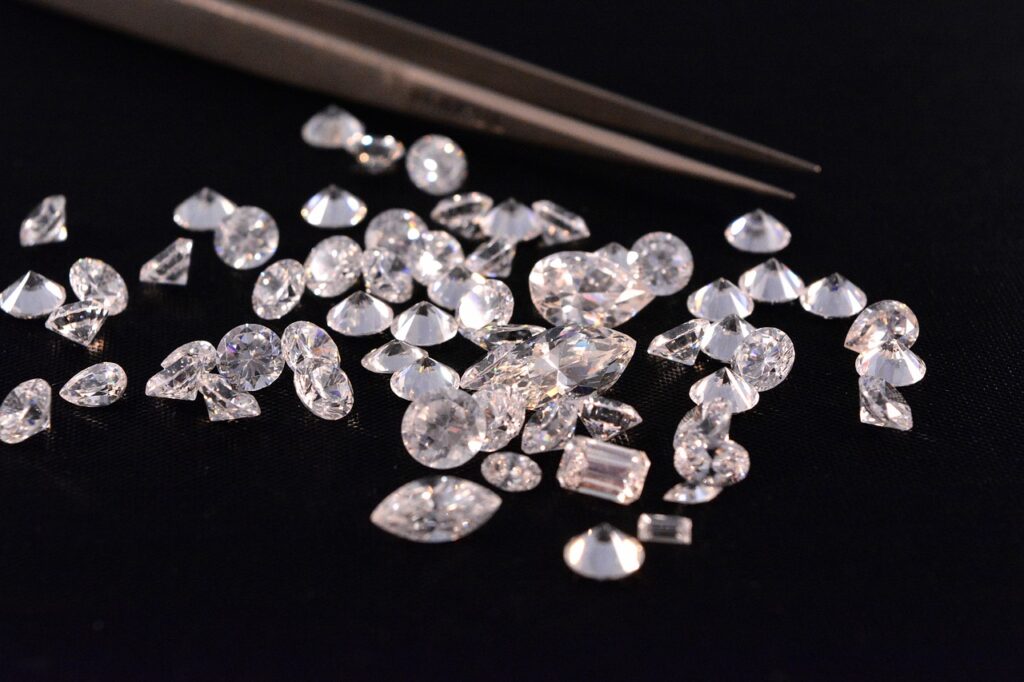
As for classic white diamonds, a transformation is taking place: customers at the Monegasque workshop are increasingly choosing fancy shapes rather than the traditional round cut. A change that reflects a growing quest for originality in high jewelry.
On the question of ethical provenance, however, Julija Kozarjonoka tempers expectations: