Editor’s Note
This article outlines potential price reductions for gold and silver following India’s upcoming budget, should a proposed cut in import duties be implemented. The figures cited are based on current market prices and the anticipated policy change.
New Delhi
Buying gold and silver could become cheaper after the budget to be presented on February 1. The government may reduce the customs duty on them from 6% to 4%. If this happens, gold could become cheaper by about Rs 3,000 per 10 grams and silver by Rs 6,000.
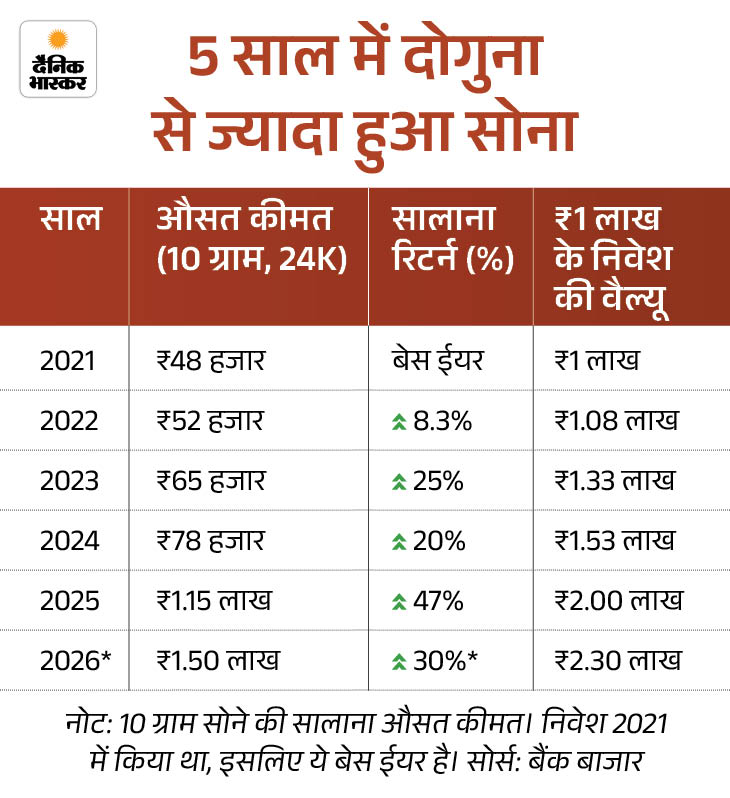
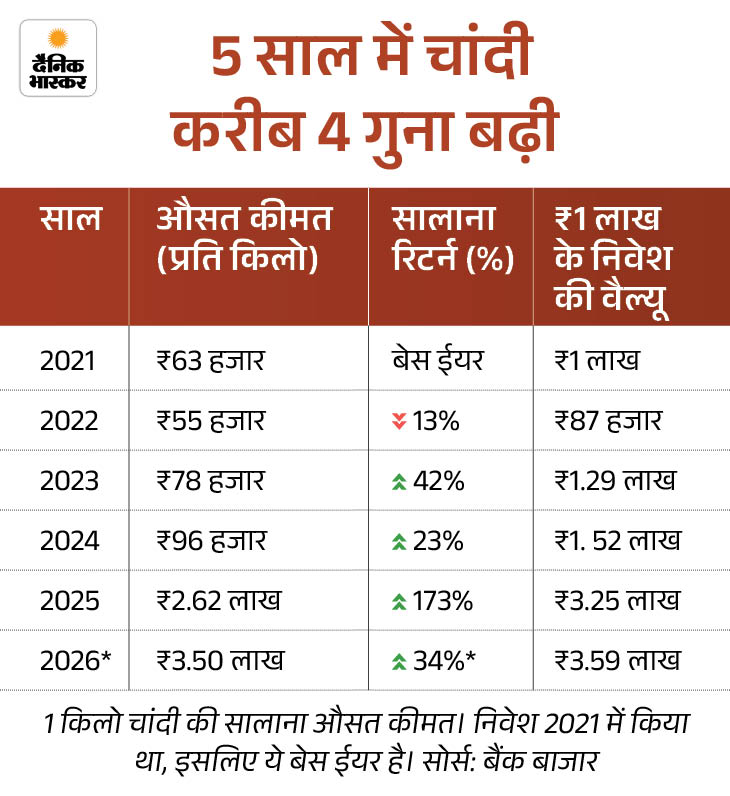
In 2025, gold rose by 75% and silver by 167%. Currently, in January 2026, 10 grams of 24-carat gold is available for Rs 1.50 lakh and one kilogram of silver for Rs 3.50 lakh.
War and Uncertainty: Due to increasing tensions in the world (trade wars and geopolitical risks), investors considered gold a ‘safe asset’ to reduce risk. According to financial services firm JP Morgan, uncertainty has been the biggest driver of prices.
Weak Dollar: The dollar weakened due to interest rate cuts by the US Federal Reserve. Since gold and silver are traded in dollars, their prices surged as the dollar fell.
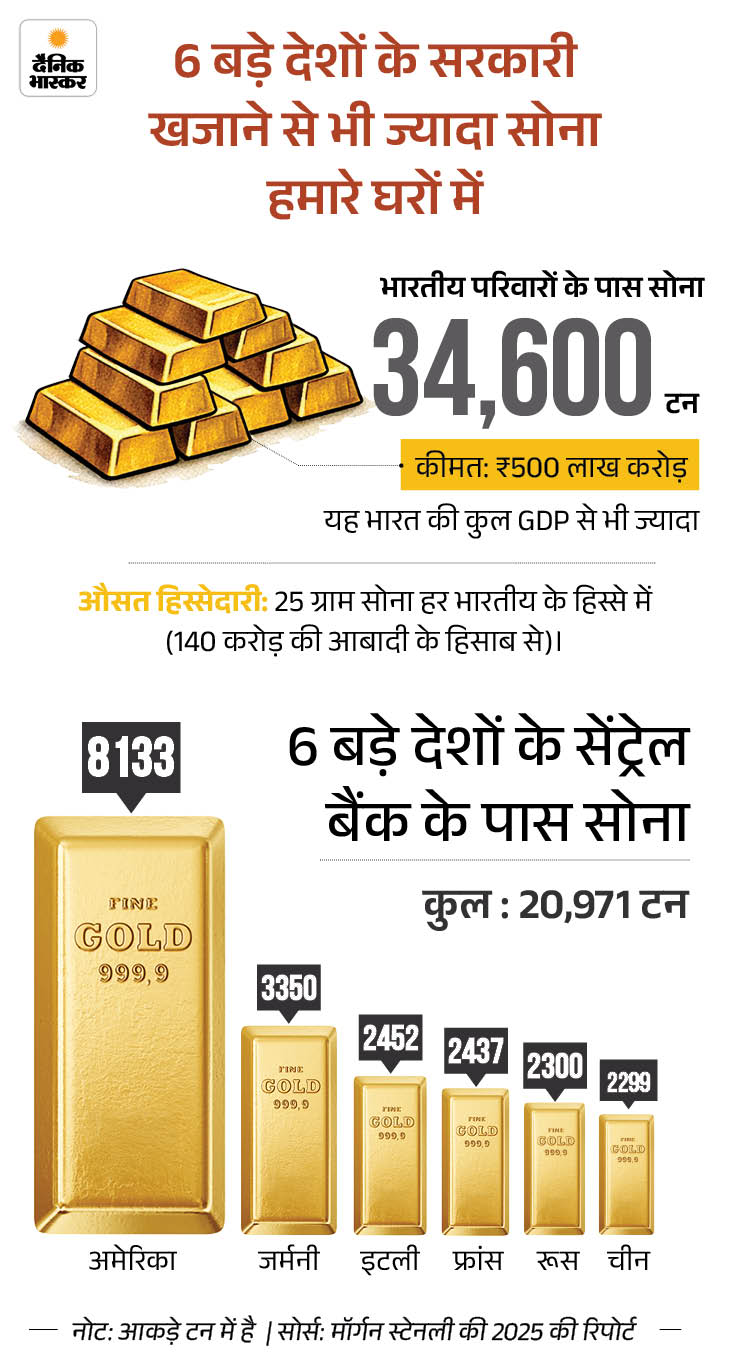
Central Bank Purchases: By December 2025, central banks worldwide held a total of 32,140 tonnes of gold. According to the World Gold Council, central banks purchased 1,082 tonnes of gold in 2022, 1,037 tonnes in 2023, and a record 1,180 tonnes in 2024. In 2025, central bank purchases are also expected to exceed 1,000 tonnes.
Industrial Demand for Silver: More than 50% of silver is used in making solar panels, EV batteries, and chips. Due to increasing demand, silver delivered higher returns than gold.
Supply Shortage: Supply of gold and silver from mining remained limited, while demand kept increasing. This supply shortage has led to a surge in gold and silver prices.
According to financial experts, avoiding large lump-sum purchases before the February 1, 2026 budget is the right strategy. Instead, one should adopt a systematic investment plan (SIP) approach to mitigate the risk of heavy price volatility.
This suggestion comes from Navin Mathur, Director of Commodities at Anand Rathi Shares and Stock Brokers. He advises that adopting a “buy-on-dips” strategy in small installments both before and after the budget would be prudent.
This was stated by Navneet Damani, Head of Research (Commodities) at Motilal Oswal Financial Services.
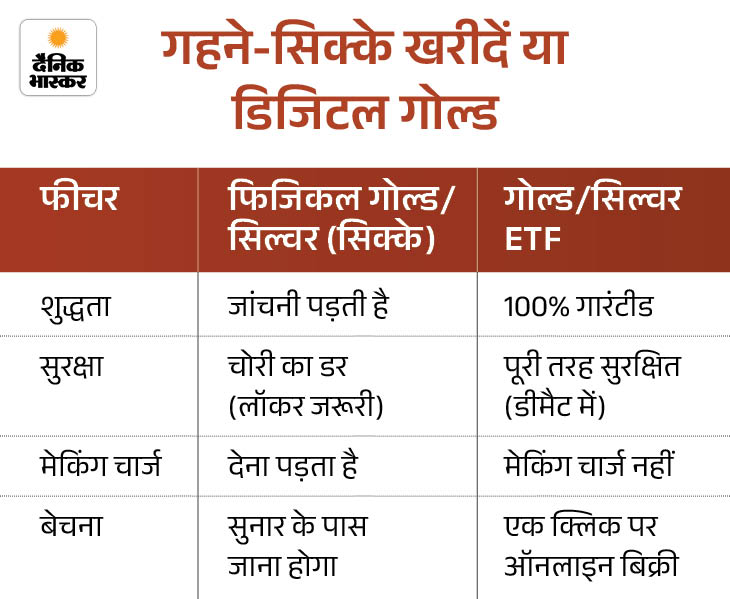
Physical Gold/Silver: You can buy gold/silver coins or bars from trusted jewelers or banks. For investment, 24-carat gold is considered the best. However, keeping it at home carries the risk of theft. Keeping it in a bank locker requires paying a separate rent.
Gold/Silver ETF: For this, you must have a demat account. Just as you buy shares of companies, you can buy units of Gold or Silver ETFs from the stock market. There is no fear of theft here, and 100% purity is guaranteed.
Question 1: Why might the government reduce duty on gold and silver in the budget?
Answer:
The government may reduce duty to curb gold smuggling. Currently, a total tax of 9% is levied, combining 6% import duty and 3% GST. People operating in the grey market are making a profit of about Rs 11.5 lakh per kg of gold by evading this 9% tax.
If the government reduces the tax further, the gap between international and domestic prices will narrow, and smuggling will decrease.
The government had reduced the import duty on gold from 15% to 6% in the July 2024 budget. This increased demand by about 10%.
Reduced duty will lower manufacturing costs and help Indian jewelry exporters compete in the global market.
Silver is used extensively in EV and solar panel manufacturing. Lower duty will boost manufacturing, aiding the green energy transition.
Question 2: What will be the impact on the industry if the duty is reduced?
Answer:
This was stated by Ajay Kedia, Director of Kedia Advisory.
This was stated by Kinjal Shah, Co-Group Head at investment information and credit rating agency ICRA.
The 9% duty cut in July 2024 led to a 5% drop in domestic prices. This increased jewelry sales by 10%, but the subsequent rally in international prices soon wiped out this relief. Jewelry sales also saw a decline of about 10%.