Editor’s Note
LVMH’s latest results show a mixed year, with full-year revenue down but a slight Q4 beat suggesting a stabilizing trend for the luxury giant.
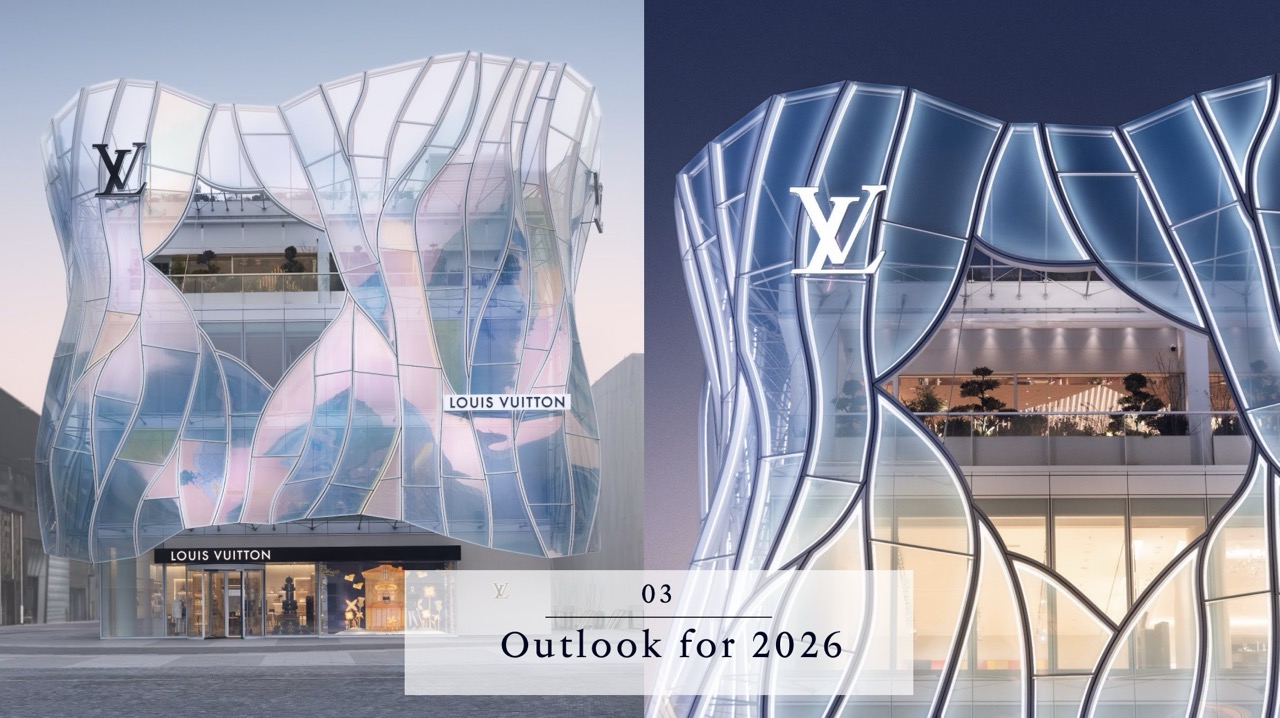
On January 27, after the close of trading on the Paris stock exchange, French luxury giant LVMH Moët Hennessy Louis Vuitton released its financial results for the 2025 fiscal year ended December 31.
Full-year total revenue declined by 5% year-on-year to €80.8 billion (on an organic basis: -1%). Fourth-quarter total revenue grew 1% year-on-year on an organic basis to €22.7 billion, slightly exceeding market expectations and continuing the recovery momentum from the previous quarter. In terms of profitability, recurring operating profit decreased by 9% to €17.8 billion, with an operating margin of 22%. Exchange rate fluctuations had a significant negative impact (approximately €1 billion).
During the earnings call, Group CFO Cécile Cabanis stated that while the domestic market in China is affected by the macro environment, the overall consumption of Chinese clients (including overseas spending) shows a positive trend. Spending by Chinese clients overseas has improved, while domestic consumption remains stable.
Notably, LVMH Chairman and CEO Bernard Arnault revealed during the call that LVMH has acquired the remaining minority stake held by the Loro Piana family, noting that the brand’s valuation has increased approximately fivefold since the initial acquisition (in 2013, LVMH acquired an 80% stake in Loro Piana for €2 billion).
In an interview with the Financial Times, Cécile Cabanis stated that the “creative renewal” and other measures implemented during the industry’s downturn give the company confidence that 2026 will see “gradual improvement.” However, she cautioned:
He pointed to uncertainty in government decision-making across multiple countries as a primary reason.
The Group maintained its dividend of €13 per share, demonstrating confidence in future cash flows.
In 2025, LVMH achieved robust performance in a challenging global environment. Key highlights include:
• Organic revenue grew 1% year-on-year in the second half, with improving trends across all business groups.
• Operating profit remained robust but was adversely affected by currency fluctuations.
• Free cash flow from operations grew 8%, exceeding €11 billion.
• Champagne & Wines revenue remained stable, though cognac demand was soft.
• Fashion & Leather Goods saw strong local demand, maintaining an extremely high operating margin.
• Perfumes & Cosmetics performed well, driven by successful innovations and a highly selective retail strategy.
• Watches & Jewelry saw excellent performance from iconic collections, with successful store renovations at Tiffany & Co.
• Sephora performed particularly strongly, with continued revenue and profit growth, solidifying its position as the global leader in beauty retail.
• The European market declined in the second half.
• The US market grew, driven by solid local consumer demand.
• The Japanese market retreated compared to 2024, primarily due to the strong surge in tourist spending in 2024 driven by a sharp depreciation of the yen.
• The rest of Asia showed a clear improvement in overall trend compared to 2024 and returned to growth in the second half.
Fashion & Leather Goods: Revenue declined in 2025 but improved in the second half, reflecting good resilience in local client demand. Recurring operating profit fell 13%, mainly due to unfavorable currency effects. The operating margin remained at an extremely high level of 35%. Louis Vuitton continued to demonstrate exceptional creative strength. Dior entered a decisive new chapter with Jonathan Anderson as Creative Director. Loro Piana delivered an outstanding performance. New creative directors at Celine, Loewe, and Givenchy received excellent reception for their debut shows. Maria Grazia Chiuri joined Fendi as Chief Creative Officer.
Perfumes & Cosmetics: Total revenue remained stable on an organic basis in 2025. Recurring operating profit increased 8%, with the operating margin rising to 8.9%. Parfums Christian Dior benefited from successful launches. Guerlain saw benefits from new products. Parfums Givenchy successfully launched a new floral version of L’Interdit.
Watches & Jewelry: Total revenue grew 3% organically in 2025. Recurring operating profit decreased 2%. Tiffany & Co. advanced its store network renovation and strengthened its iconic lines. BVLGARI reached another historic high. Chaumet continued developing its Bee de Chaumet collection. TAG Heuer maintained high visibility in Formula 1®.
Selective Retailing: Total revenue grew 4% organically in 2025. Recurring operating profit increased 28%. The operating margin improved by 2 percentage points to 9.7%. Sephora continued robust growth. DFS significantly improved profitability. Le Bon Marché grew thanks to its differentiated strategy.
Wines & Spirits: Total revenue decreased 5% on an organic basis. Recurring operating profit fell 25%. 2025 further confirmed the slowdown in demand evident since 2023, following several years of exceptionally high growth. Trade tensions impacted key markets like China and the US. Champagne houses maintained their 22% market share. Hennessy cognac revenue was constrained by weaker local demand.
Looking ahead, despite an uncertain geopolitical and macroeconomic environment, the Group remains confident and will continue to advance its brand-centric strategy, relying on sustained innovation and investment, and an almost obsessive pursuit of attractiveness and quality in products and distribution.