Editor’s Note
This article outlines the potential economic benefits of a proposed India-EU free trade agreement, highlighting improved market access and new opportunities for trade, investment, and employment.
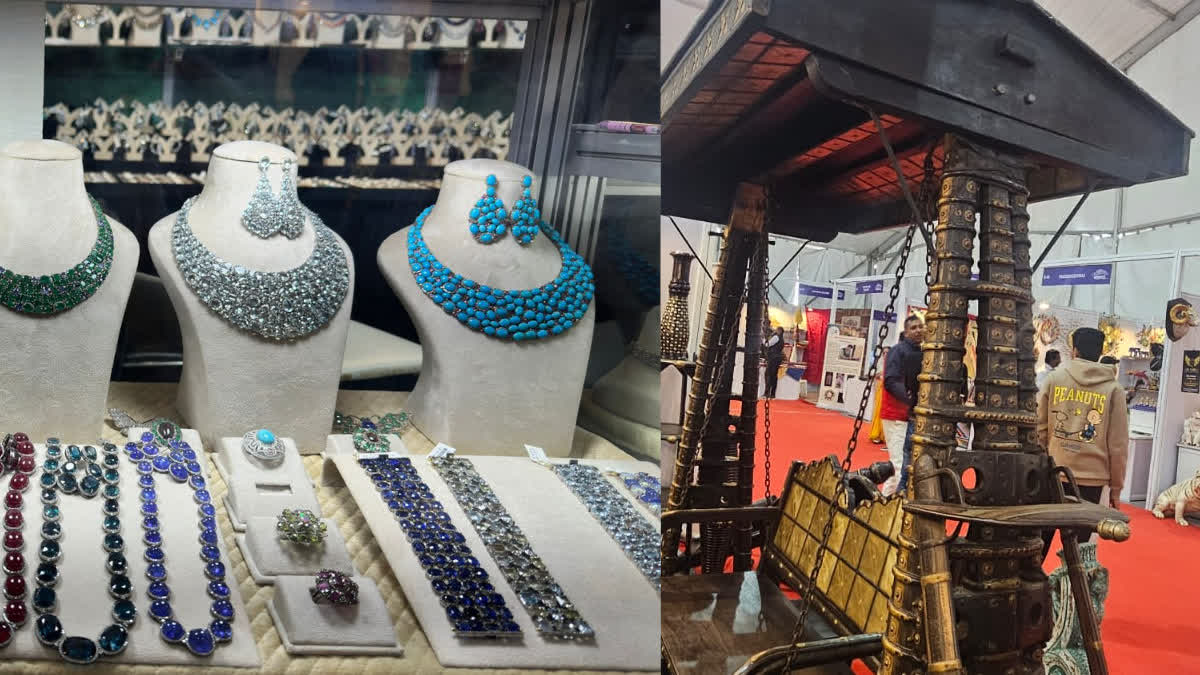
The proposed free trade agreement (FTA) between India and the European Union (EU) is expected to provide significant benefits to Indian exporters, industries, and states. Under the India-EU FTA, India will gain better and broader access to the markets of the EU’s 27 member countries. The agreement is expected to create new opportunities in trade, investment, and employment. States where traditional industries, handicrafts, and manufacturing-based livelihoods provide employment on a large scale are expected to benefit directly. Rajasthan is emerging as a key state on this list. Deputy Chief Minister Diya Kumari stated that this agreement will prove effective in transforming the landscape of labor-intensive industries. Meanwhile, the Export Promotion Council for Handicrafts (EPCH) said this deal will prove to be a milestone for the handicraft industries.
Under the FTA, the path will open for tariff reductions and easier market access for Indian products in European markets. This will boost exports and strengthen labor-intensive industries. Deputy Chief Minister and Tourism Minister Diya Kumari also shared this on her X account. According to her, this will provide small enterprises and traditional artisans with an opportunity to connect directly with international buyers, which has been limited until now.
Rajasthan already has several industrial and artisan clusters whose products are in demand in Europe. This includes gems and jewellery from Jaipur, which are known across the country and the world. After the FTA, exports of precious and semi-precious jewellery made here are likely to increase. Similarly, Jodhpur’s furniture and handicraft industry is already popular in the European market. Relief in tariffs will further enhance the competitiveness of these products. Additionally, districts like Churu, which have labor-intensive industries in sports goods, textiles, and leather, could benefit from new orders and job creation.
The India-EU FTA is likely to have its biggest impact on employment. An increase in orders in the labor-intensive MSME sector will accelerate production, increasing the demand for artisans, craftsmen, and local workers. This will create new sources of income in rural and semi-urban areas and could also curb migration. Economic expert Dr. Rajesh Kothari says this agreement will strengthen campaigns like ‘Make in India’ and ‘Vocal for Local’ on an international platform. Traditional skills in states like Rajasthan will gain global recognition, and the contribution of exports to the state’s economy will increase.
The Export Promotion Council for Handicrafts (EPCH) welcomed the signing of the India-European Union Free Trade Agreement (India-EU FTA) in New Delhi, describing it as a historic step. This agreement will prove to be a milestone for the handicraft industries. EPCH Chairman Dr. Neeraj Khanna stated that this agreement will enhance the access of Indian exports to the markets of the EU’s 27 member countries, provide a clear path for tariff reduction, and create a more convenient environment for trade. This historic achievement will open up opportunities for the export of India’s handmade goods in new EU markets. Once the FTA is implemented, with more convenient arrangements, Indian handmade products will be able to further strengthen their presence in EU markets.
According to Khanna, the European Union is a major market for Indian handicraft exports, where exports to the EU during FY 2024-25 amounted to USD 864.28 million (₹7309.72 crore), contributing over 20% to India’s total handicraft exports. Now, with the implementation of the India-EU FTA, we expect to achieve a CAGR of approximately 10% over the next five years. As the benefits related to tariffs and better market facilitation take effect, export volumes will increase and engagement with buyers will also strengthen.
EPCH Director General Rakesh Kumar explained that last year, US President Donald Trump imposed a 50% tariff on India, after which major handicraft markets across the country, including Jodhpur, were severely affected. This is because 45% of India’s handicrafts are exported to the US, while 30% are exported to Europe. In such a scenario, a duty-free agreement will lead to an increase in exports to Europe. This will also reduce the dependence of Indian handicraft exporters on the US.