Editor’s Note
This article reports on De Beers’s recent price adjustments for larger rough diamonds and the shift in its auction pricing policy. The information is based on insider accounts and industry estimates.
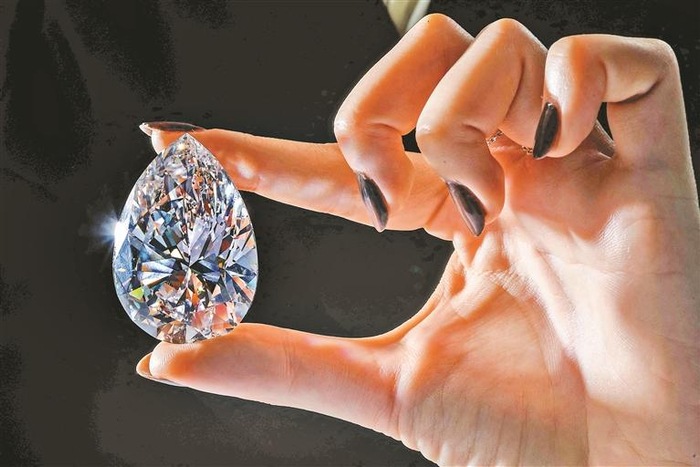
In its first routine diamond auction of the year, De Beers significantly lowered the prices of rough diamonds above 0.75 carats.
Insiders revealed that De Beers adopted a unified pricing and invoicing policy for this auction—no longer pricing each box of diamonds separately but issuing a consolidated total price invoice, making the exact price reduction difficult to calculate. Industry experts estimate the price reduction range to be around 10%-15%.
This price cut by De Beers stems from the price decline following the global slump in diamond demand. According to the RapNet Diamond Price Index (RAPI), in 2025, the RAPI for diamonds above 3 carats slightly fell by 0.4%. Smaller, everyday consumer-grade diamonds like 0.3–0.5 carats, impacted by lab-grown diamond competition and weak demand, saw significant price drops. The price for a 0.5-carat diamond fell by over 20% throughout 2025.
Against the backdrop of declining demand, De Beers had already conducted multiple rounds of price adjustments previously. According to reports, De Beers played the “price reduction card” at its first rough diamond sight in January 2024, lowering prices for various rough diamonds. Among them, rough diamonds above 2 carats saw reductions of over 15%; those between 0.75 and 2 carats saw average reductions of 10%–15%; those below 0.75 carats were reduced by 5%–10%; the comprehensive reduction was about 10%. In December 2024, reports indicated De Beers again cut diamond prices across the board by over 10%.
De Beers’ situation has not improved much. According to relevant news, De Beers lowered its full-year 2024 production guidance from the original 29–32 million carats to 26–29 million carats.
Industry analysts point out that De Beers’ price cuts essentially represent a rational return from the diamond value bubble, as its expensive nature fundamentally lacks irreplaceable support. The chemical essence of a diamond is merely carbon, sharing the same origin as ordinary graphite, and it is not naturally formed with absolute scarcity.
This monopoly-based pricing system is inherently fragile. Once the monopoly structure is broken and market supply-demand dynamics are reshaped, prices inevitably return to their true value range. Compared to assets like gold, which have globally unified pricing and strong liquidity, diamonds lack both an intrinsic value anchor and a standardized valuation system. The bursting of their price bubble is only a matter of time.
Once a symbol of eternity, diamonds were endowed with “value preservation and appreciation” attributes, but reality has reversed. The secondary market for diamonds is not active, and their value preservation and appreciation capabilities are highly debated. Consumers often find it difficult to resell purchased diamonds at a reasonable price, significantly diminishing their actual value.
A review of public information reveals that the trend of declining diamond sales and prices has persisted for several years. As early as September 2023, reports indicated that over the previous year, prices for certified diamonds had fallen by 35%–40%. Diamonds from 0.5 to 3 carats were hit the hardest, with sales also dropping by 30%–35% during the same period.
Media reports cite examples: a consumer who spent 100,000 yuan on a 1-carat diamond ring ten years ago now receives a maximum valuation of only 30,000 yuan from multiple recyclers; a woman from Anhui who bought a diamond ring for 18,000 yuan ten years ago shared on social media that she can now only get 180 yuan for it, a depreciation of 99%.
Searches on social platforms show a 30-point loose diamond with a ring setting being recycled for 3,500 yuan; another netizen commented that their branded diamond necklace fetches only about 30% of the original price in the second-hand market.
This stands in stark contrast to gold’s impressive performance. In January 2016, ten years ago, Lao Fengxiang’s gold price was about 290 yuan per gram. By February 11, 2026, Lao Fengxiang’s gold price had reached 1,552 yuan per gram, an increase of over 400%.
A jewelry industry trader from Shuibei stated bluntly that small, fragmented diamonds now basically have no recycling value. In the diamond recycling field, only natural diamonds of 1 carat and above are eligible for recycling. Even then, their recycling prices are generally only 40%–60% of the original selling price, with final pricing also considering core indicators like color, cut, clarity, and brand premium.
Young consumers are gradually becoming disillusioned with diamonds, while lab-grown diamonds, with their high cost-effectiveness, are rising strongly and continuously capturing market share.
With the maturation of technologies like High-Pressure High-Temperature (HPHT) and Chemical Vapor Deposition (CVD), lab-grown diamonds are indistinguishable from natural diamonds in physical and chemical properties, difficult to differentiate even with the naked eye or ordinary testing instruments.
Reports indicate that in 2025, lab-grown diamonds accounted for over 40% of the global diamond jewelry market by sales volume, an increase of more than eightfold compared to 2019. Meanwhile, the retail price of lab-grown diamonds has fallen by over 50% from its peak. The current price for a 1-carat lab-grown diamond has dropped from 8,000 yuan to 3,500 yuan, less than one-tenth of a natural diamond of equivalent quality.
At a lab-grown diamond specialty store in Shuibei Jinzuo, Shenzhen, most in-store shoppers are young people. Store staff reported good sales in recent years. The lab-grown diamonds in the store are completely comparable to natural diamonds in core indicators like clarity and color, almost indistinguishable to the naked eye, yet the price difference is vast. For example, customizing a classic 1-carat lab-grown diamond ring costs only about 5,000 yuan, and a halo setting style costs only about 8,500 yuan. In contrast, a 1-carat natural diamond ring of equivalent clarity and color grade sells for 80,000–90,000 yuan.
The huge price gap is leading consumers to redefine the consumption value of diamond rings, with rational consumption awareness significantly increasing among younger groups. Huahua, a post-95s individual who got engaged this January, chose a lab-grown diamond ring costing less than 10,000 yuan, planning to use the saved budget for travel with family.
A professional analyst in the jewelry industry stated that from a long-term industry trend perspective, the diamond market will completely shed its “luxury halo” and return to its essence as jewelry, forming a layered pattern of “high-end niche value preservation, mass-market affordable普及.” Diamonds will not exit the market but will bid farewell to the era of high prices pursued by all. Their market positioning will gradually align with colored gemstones like rubies and sapphires. Future industry competition will no longer rely solely on material scarcity premiums but shift towards differentiated competition in design, craftsmanship, and branding.
Specifically, small-carat, medium-to-low quality natural diamonds, under continuous pressure from lab-grown diamonds, still have significant room for price decline. They will eventually form a stable price gap with lab-grown diamonds to meet different consumer tier needs. Large-carat, high-clarity natural diamonds, relying on their natural scarcity and collectible attributes, can maintain relatively stable prices. However, market demand will be limited to niche scenarios like high-end collections and business gifts, making it difficult to support the entire diamond industry’s high-price system again.