Editor’s Note
While record-high gold prices might suggest a cooling market, consumer demand remains robust, driving significant transformation within the gold and jewelry sector. This article explores how the industry is adapting and upgrading in response to these sustained high prices.
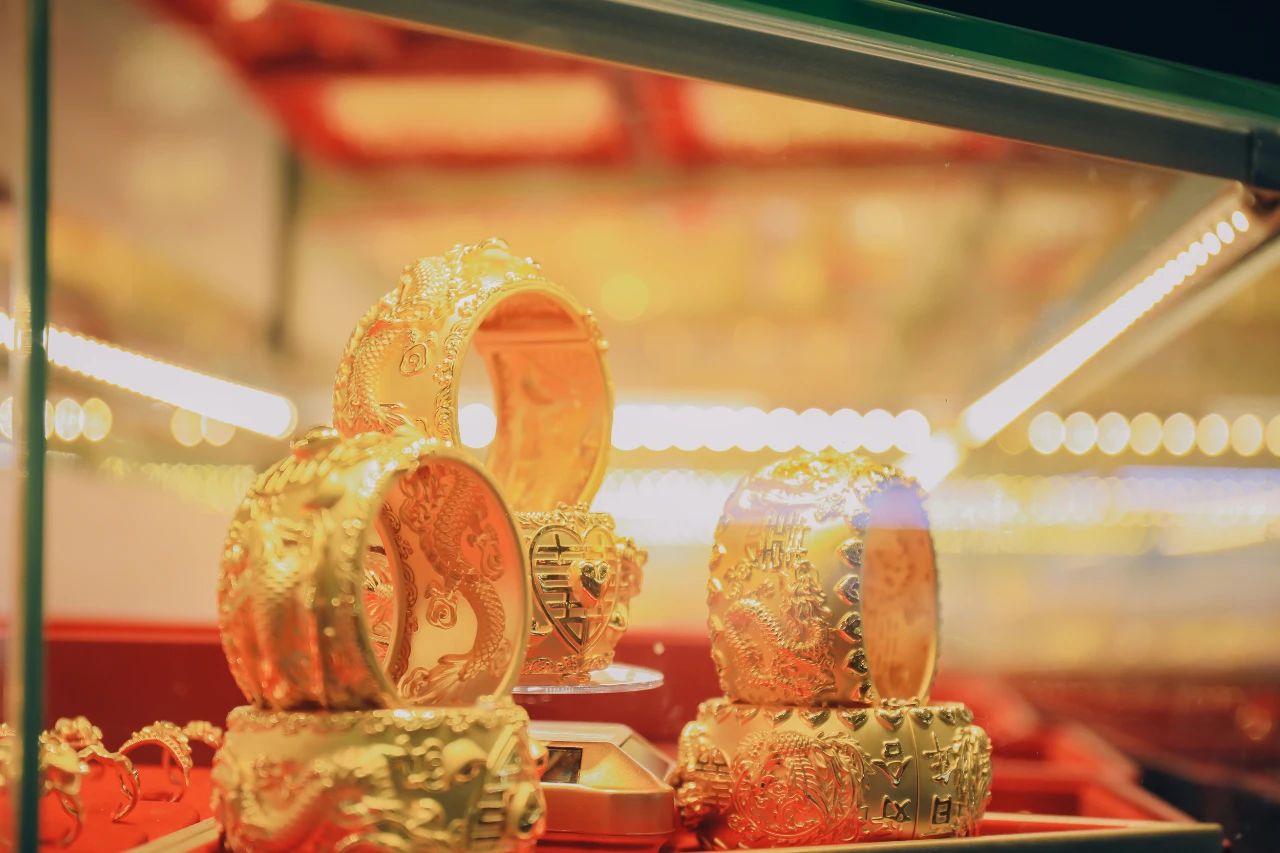
The international gold price has broken through the historical threshold of $4,200 per ounce, but the soaring price has not suppressed consumer enthusiasm. Instead, it has fueled the iterative upgrade of the gold and jewelry industry.
Data from the National Bureau of Statistics shows that in the first half of this year, retail sales of gold, silver, and jewelry products above the quota in China grew by 11.3%. A survey by the World Gold Council indicates that against the backdrop of rising gold prices, consumers’ budgets for gold jewelry are increasing year by year.
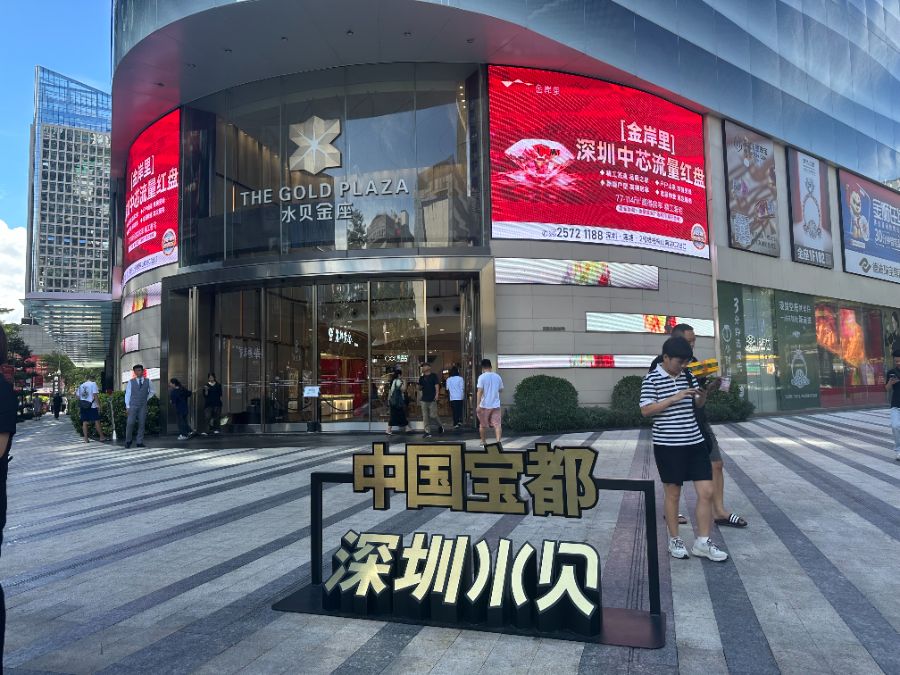
Shuibei in Shenzhen, the largest gold and jewelry distribution hub in China, remains bustling. Whether on weekdays or holidays, the integrated wholesale and retail counters are never short of customers trying on and inquiring about prices. It gets even busier during the Qixi Festival, National Day, and Spring Festival. Inside stores and on countertops, live-streaming hosts selling goods are constantly present, and one printed order after another signifies that another batch of gold jewelry is about to be shipped from here to all over the country.
With the advent of the new consumption era, Shuibei’s solid gold and jewelry industry chain is demonstrating strong appeal. A number of Shuibei enterprises are rising rapidly, and well-known brands are emerging one after another. The “art of touch gold” here is finding new narratives for China’s gold and jewelry industry in the “era of high gold prices”—live-streaming e-commerce is driving the second growth curve, design creativity is empowering products, and culture is helping brands go global.
Deeper changes in the industry are also occurring invisibly. From the first “three supplies and one compensation” processing factory in 1981 to today’s ambition of becoming the “World Jewelry Capital,” Shuibei’s gold and jewelry industry positioning has already leaped from manufacturing to the high-value-added chain of “headquarters economy + creative design + testing and certification.” The Luohu District of Shenzhen, where it is located, has also introduced a package of policies to cultivate brands, empower design, and attract talent.
Currently, gold jewelry has become one of the hottest categories in the live-streaming e-commerce field.
The “2024 China Jewelry Industry Development Report” released by the China Jewelry and Jade Jewelry Industry Association shows that, according to incomplete statistics, the total e-commerce sales of five major characteristic jewelry industry clusters—Shenzhen Shuibei, Yunnan Ruili, Guangdong Sihui, Guangdong Pingzhou, and Henan Zhenping—have exceeded 100 billion yuan. Data cited in the report from the Ministry of Commerce shows that China’s jewelry e-commerce retail sales in 2024 were approximately 298.26 billion yuan, a year-on-year increase of 16.4%.
Shuibei, as one of the largest gold and jewelry distribution hubs in the country, is an undeniable presence. At any time, opening the live-streaming sections of platforms like Taobao and Douyin and searching for the term “gold,” nearly half of the top ten merchants in view are Shuibei brands or stores with “Shuibei” in their names.
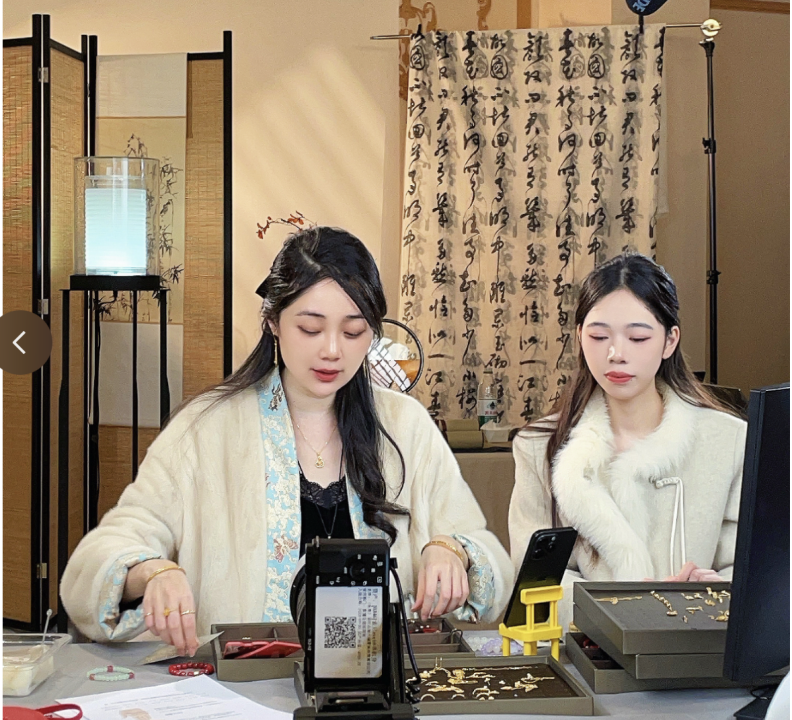
Chen Guojun, founder of a jewelry supply chain, introduced to the 21st Century Business Herald that this is mainly due to changes in consumer shopping habits. For example, the main customer group for online gold jewelry sales on their platform is “treasure mothers” around 30 years old, who are more accustomed to online consumption.
The traditional Shuibei gold business focuses on the design, production, and wholesale of gold jewelry. Now, adapting to changes in consumption trends, Shuibei has fully embraced e-commerce. Some Shuibei gold jewelry brands and wholesalers have directly opened online customer acquisition channels, starting to face consumers directly who were previously hidden at the wholesale end; some factories have also begun supplying goods to live-streaming hosts.
For many Shuibei gold jewelry enterprises, live-streaming e-commerce is no different from opening a “second growth curve” for them.
Riding on the “check-in” trend on social media, Shuibei has become a must-visit destination for many out-of-town tourists coming to Shenzhen.
More consumers diving into Shuibei means that the distance between Shuibei, which previously focused on wholesale, and the market is further narrowed. Behind this, Shuibei is undergoing iterative upgrades in its position as a professional gold jewelry market within the industry chain.
In December 1981, Shenzhen’s first “three supplies and one compensation” gold jewelry enterprise—Shenzhen Dongfang Jewelry Processing Factory—was established in Luohu. From then on, Shuibei entered the gold and jewelry industry from the production and manufacturing stage. For a long time thereafter, Shuibei was deeply involved in the production and processing links of gold jewelry.
Now, with factories moving outwards, professional markets like the Gold Exhibition Center, Teli, Shuibei Pearl, and Shuibei Gold Building have sprung up. Shuibei has gradually completed the leap towards higher value-added industry links such as design and R&D, wholesale and retail, brand cultivation, and inspection and testing, and has also given rise to a number of industry-leading and listed enterprises.
In 2017, Zhou Dasheng, a gold and jewelry enterprise founded in Shuibei, was listed on the A-share market; in June this year, another local brand from Shuibei, Chow Tai Seng, was listed on the Hong Kong Stock Exchange, with its market value rising 25% on the first day of listing. Now, both have entered the top five brand rankings in the domestic jewelry market.
Not only are there locally cultivated enterprises, but leveraging the advantages of a complete industry chain, Shuibei has also attracted many well-known domestic and international brands to establish headquarters or branch business departments here.
In 2009, the century-old brand from Shenyang—Chow Sang Sang Jewelry—joined Shuibei and established a Shenzhen branch. Liao Gang, the brand director of Chow Sang Sang Group, introduced to the 21st Century Business Herald that Shuibei not only has a complete gold and jewelry industry chain, but more importantly, it gathers numerous brand R&D and international promotion centers, making it an indispensable place for the domestic gold and jewelry industry.