Editor’s Note
This year’s Surajkund Crafts Fair spotlights Egypt as its partner nation, with artisans showcasing vibrant traditional crafts that bridge ancient heritage and contemporary appeal.
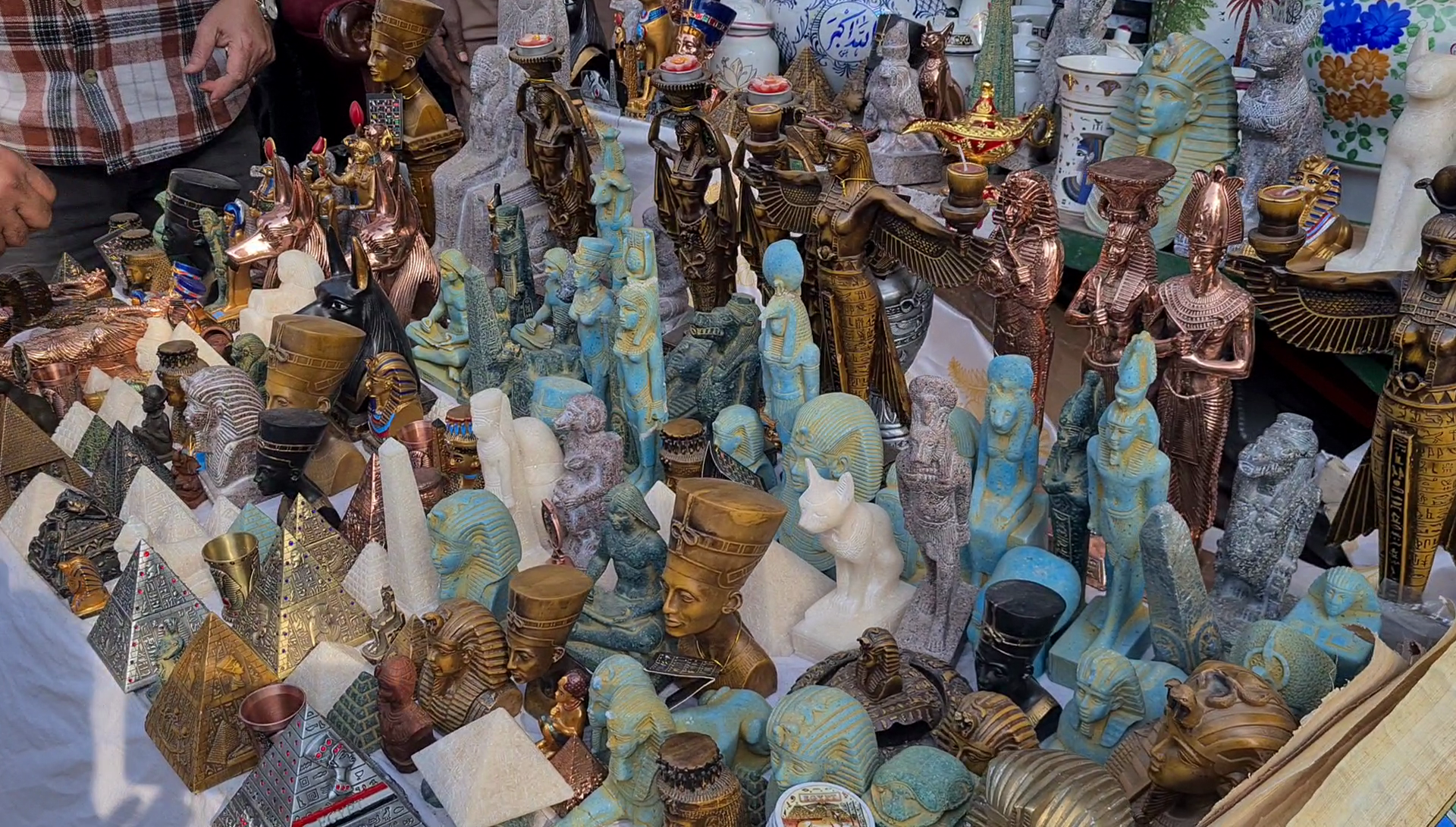
Egypt, this year’s partner country at the 39th International Surajkund Crafts Fair, is captivating audiences with its rich traditional art, handicrafts, and unique designs. The Egyptian pavilion features handcrafted colorful products, traditional attire, and ancient-style jewelry, which are not only beautiful but also reflect Egypt’s cultural and historical heritage. These Egyptian artists are thoroughly enjoying this experience in India, and their handicrafts are gaining recognition at the Surajkund fair.
The 39th edition of the Surajkund International Crafts Fair featured a special attraction: the art and craft of Egypt. It not only revived the cultural heritage of ancient times but was also presented in a new form by today’s artisans. This exhibition showcased unique examples of Egyptian art, deeply connected to their spiritual, religious, and cultural beliefs. It was not just an art exhibition but a journey that took me into the depths of Egypt’s glorious civilization and its art.
The depiction of pyramids in this exhibition was particularly captivating. The pyramids were mesmerizing people not only due to their grandeur and structural perspective but also because of their cultural and historical significance. The exhibition displayed small models and statues of pyramids, meticulously and lovingly prepared by artisans. These pyramids symbolized the prosperity, religiosity, and vastness of ancient Egypt. Visitors to the exhibition were extremely excited about the beauty of these pyramids and their deep symbolic meaning. Many visitors expressed a desire to purchase these pyramids as souvenirs for their homes or offices. Thus, the pyramids became an integral part of Egyptian art and secured a special place in the hearts of the audience.
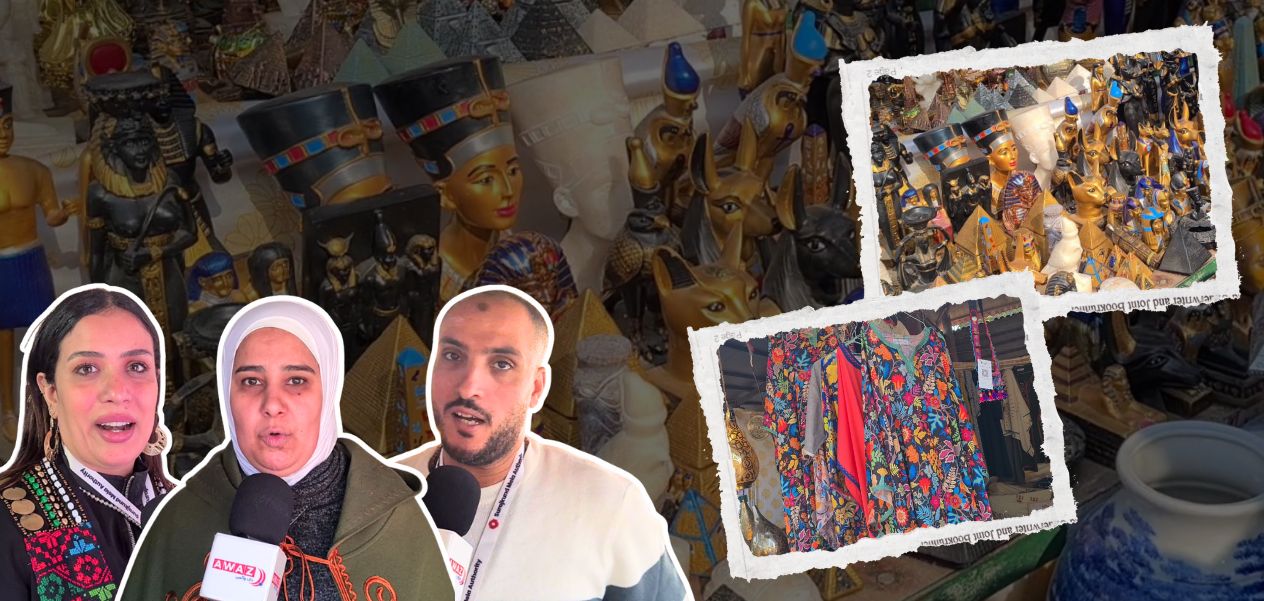
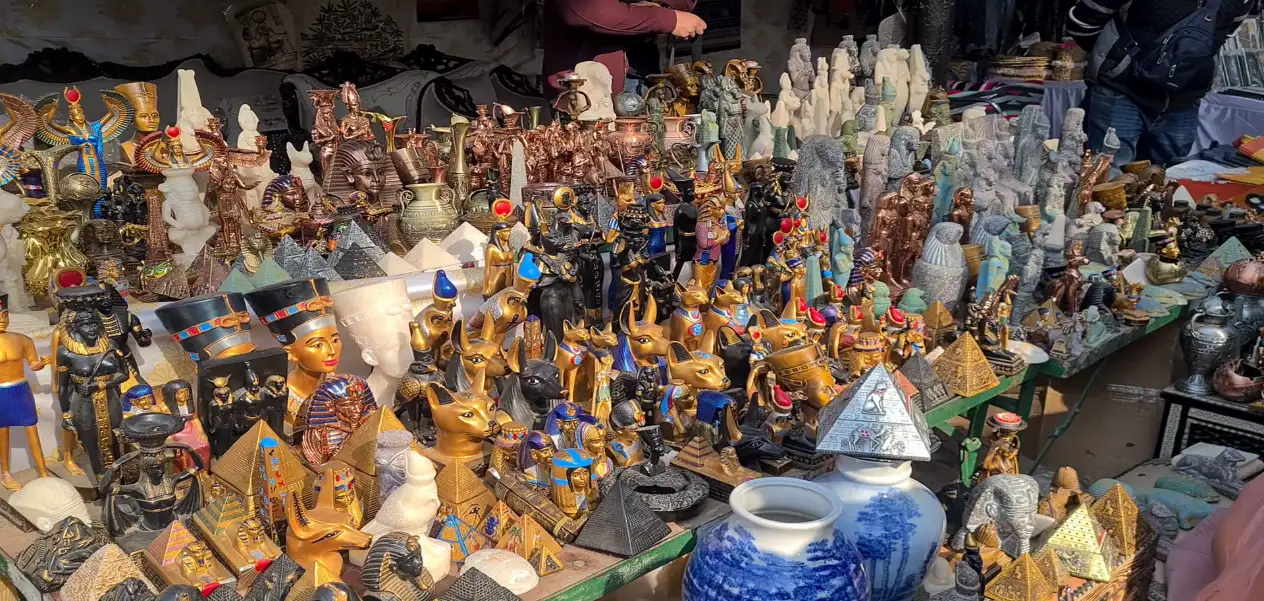
This year at the Surajkund International Crafts Fair, the art of Egyptian artists won the hearts of the audience. The traditional artworks, statues, and attire on display at the fair seemed to bring to life the grandeur and mysterious beauty of the ancient civilization. Attractive statues of Pharaohs, Queen Nefertiti, the god Horus, and Anubis were particularly talked about at the stalls. These artworks, made of stone, brass, and bronze, reflect Egypt’s thousands-of-years-old heritage. The combination of blue and golden colors makes these statues even more magnificent. Showpieces adorned with pyramid shapes, sphinxes, and ancient symbols are greatly enticing tourists.
Traditional Egyptian attire also drew people’s attention at the fair. Long black garments with hand embroidery, geometric designs, and decorations of metal coins reflect Egypt’s cultural identity. These garments are not only beautiful but also tell the story of the local folk art and traditions.
Egyptian artists have displayed their handmade products at this fair. Asmaa Yassin explained at her stall that her products are completely handmade.
She shared that her experience this time was very good and people greatly appreciated her products.
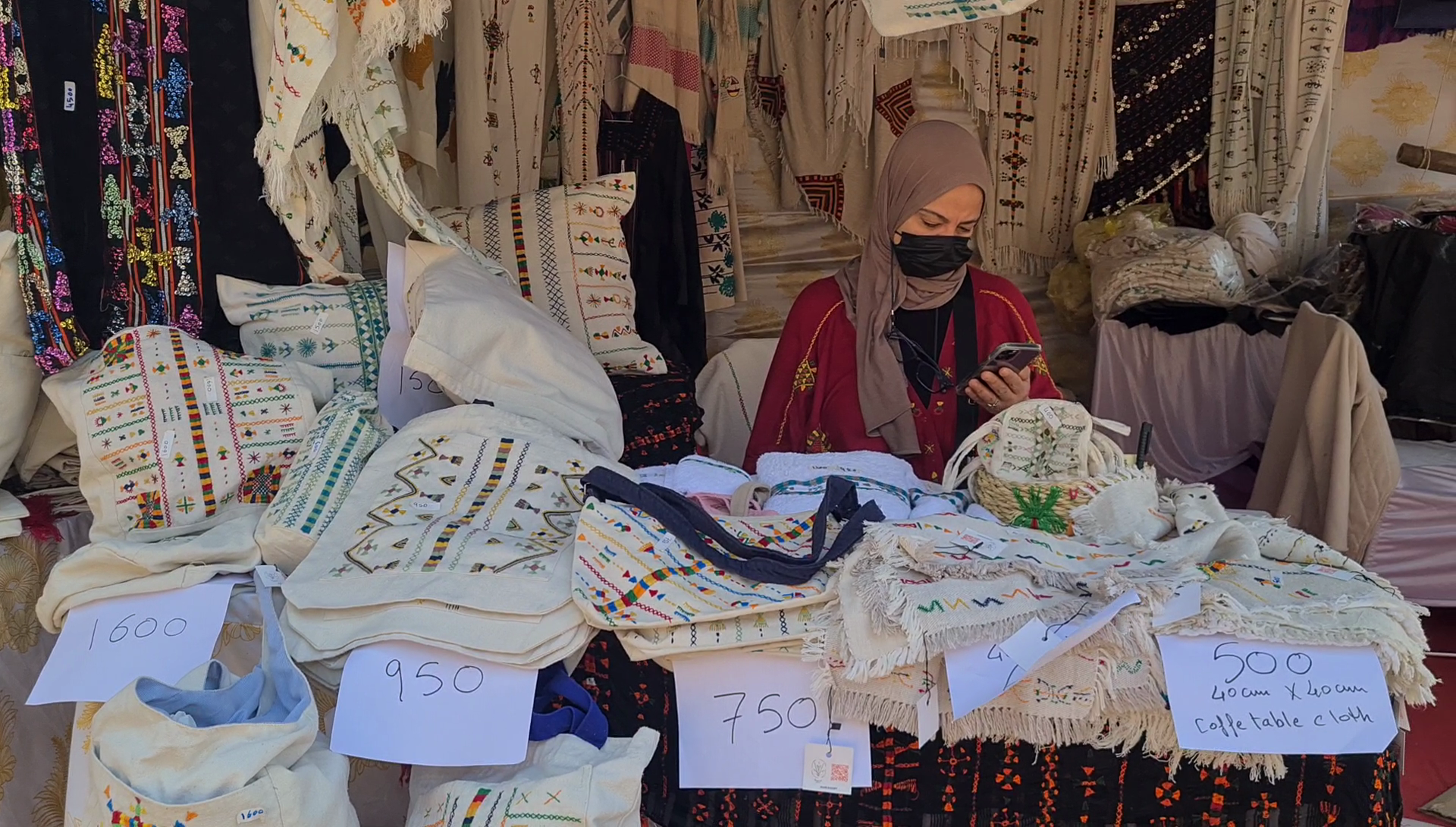
Jehan Khalifa, from Siwa Oasis, explained that her team includes 60 local women who do traditional embroidery.
Her stall at the fair was very crowded, and people were praising the design and quality of her products, although some found the price a bit high.
Maryam from the Egyptian fashion brand Zawaya Art House stated that their goal is to present different “angles” or perspectives of Egyptian traditional art in modern design.
Traditional attire for men and women, such as galabiyas, abayas, tailhams, and other garments, are displayed at their stall.
Another major aspect of Egyptian art was the use of wall paintings and relief designs, which were specifically created for decorating tombs and temples. These designs often featured Pharaohs, gods, and scenes from everyday life, beautifully and vividly displaying Egypt’s religious beliefs and social structures. These art forms incorporated not just beauty but deep religious and cultural meanings.