Editor’s Note
This report details the cautious optimism within Surat’s diamond industry regarding a potential US-India trade deal. Stakeholders hope the agreement will provide crucial relief through zero-duty access for polished diamonds, offering a path forward amid significant market challenges.
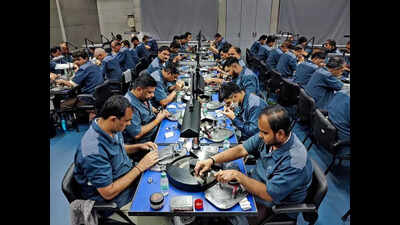
Surat: The proposed US-India trade deal has rekindled hopes of a turnaround for the diamond manufacturing industry in Surat, the world’s largest cutting and polishing hub, with the sector expecting zero duty on loose diamonds under the agreement, industry sources said.
The industry has been grappling with multiple headwinds, including falling diamond prices and restrictions linked to Russian-mined rough. While several challenges remain, stakeholders said the trade deal has offered clarity on at least one key concern.
The Gem and Jewellery Export Promotion Council (GJEPC) described the agreement as a landmark development and a major relief for the sector.
The US is India’s largest export market for gems and jewellery, accounting for 31% — about $9.23 billion — of total exports in FY 2024-25.
However, reciprocal US tariffs introduced in 2025 severely disrupted trade. Duties on polished diamonds and coloured gemstones rose from 0% to 10% in April and further to 50% by August, tightening liquidity and squeezing margins. Jewellery duties also climbed steeply from 5-7% to 55-57%.
While exporters rushed to ship significant volumes before the higher tariff rates kicked in, uncertainty over policy changes kept the industry on edge.
Exports to the US plunged 44% between April and Dec 2025, dropping from $8.6 billion to $3.8 billion. Cut and polished diamond exports fell over 60%, from $3.6 billion to $1.4 billion. Studded gold jewellery exports declined 24% from $2.1 billion to $1.5 billion, while plain gold jewellery shipments fell 28% from $258 million to $184 million.
Industry players said a tariff cut would reduce costs for US importers and boost the competitiveness of Indian diamond jewellery in its biggest market, helping revive demand and stabilise operations.