Editor’s Note
This article reports on Richemont’s unexpectedly strong sales performance in the final quarter of 2025, exceeding market forecasts with significant growth.

Richemont recorded sales of €6.4 billion for the period September-December 2025, above forecasts.
Growth reached +11% at constant exchange rates, against the 7.4% expected by the market.
Jewelry remains the main driver, with a +14% increase in sales.
The gradual recovery in China supports demand, despite a fragile macroeconomic context.
Margins remain under pressure, due to expensive gold and the strength of the Swiss franc.
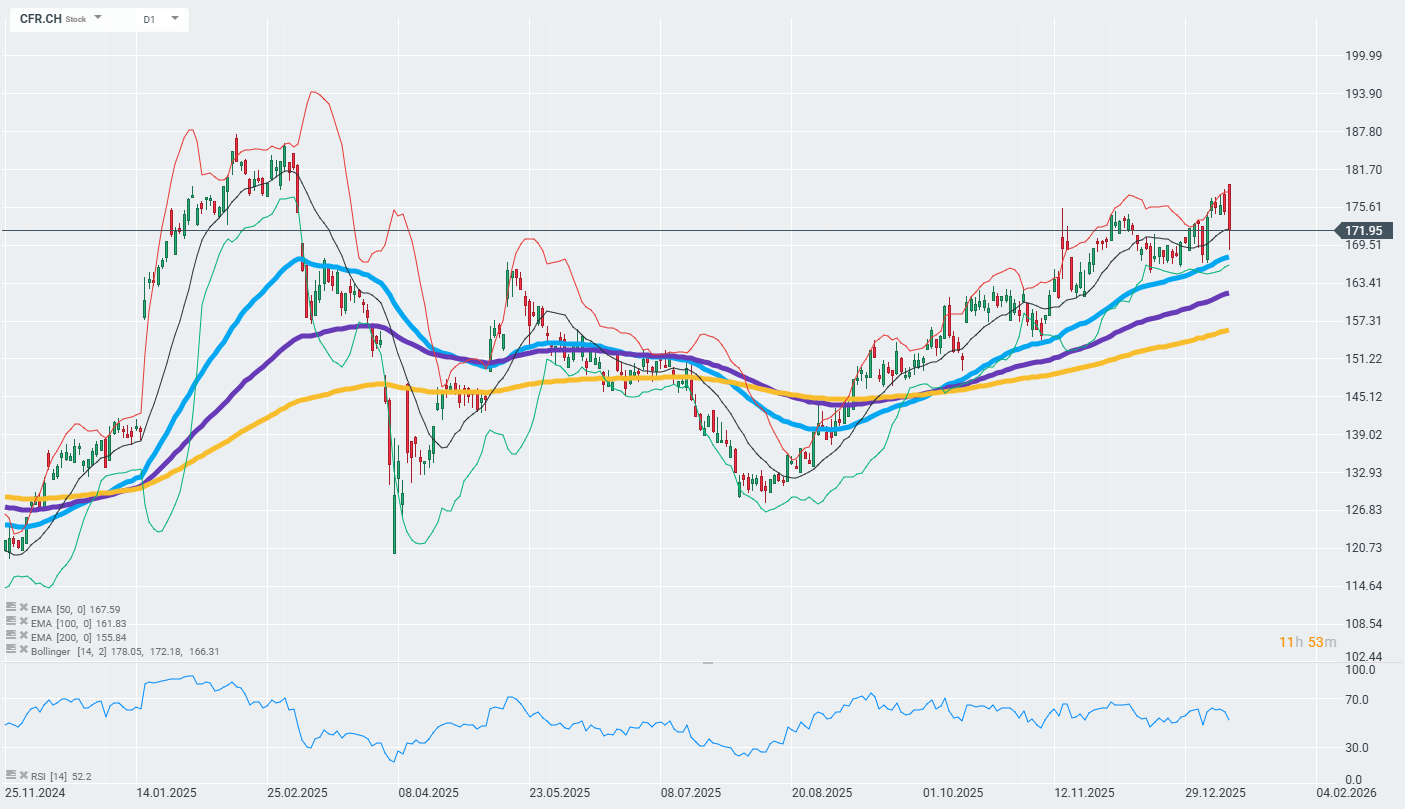
The Swiss luxury group Richemont (CFR.CH), owner of iconic houses like Cartier, Van Cleef & Arpels, IWC, Jaeger-LeCoultre, and Vacheron Constantin, has once again demonstrated the robustness of its business model. For the period September-December 2025, revenue reached €6.4 billion, representing growth of +11% at constant exchange rates.
This result far exceeds market expectations, which were counting on growth of around 7.4%. The publication confirms Richemont’s ability to outperform in an environment that is nonetheless mixed for the luxury sector, marked by persistent macroeconomic and geopolitical uncertainties.
The jewelry division has established itself as the main driver of this performance. Sales of the jewelry houses grew by +14% at constant exchange rates, well beyond consensus. This dynamic reflects sustained global demand for ultra-premium products, a segment where Richemont has a particularly strong positioning.
In contrast, the specialist watchmakers recorded more moderate growth of +7%, but this remains well above market expectations, which were counting on stagnation or even a slight decline.

Richemont’s growth is based on solid geographical diversification. Sales grew by +14% in America, +17% in Japan, and +20% in the Middle East and Africa, illustrating the strength of demand in these regions.
In Europe, growth reached +8%, confirming the resilience of the market despite a more constrained economic context. These performances testify to the group’s ability to capture international high-end demand.
The Asia-Pacific region shows more moderate growth of +6%, slightly below expectations. China, the group’s second-largest market representing less than 20% of sales, shows signs of recovery, despite persistent difficulties related to the real estate crisis and still fragile discretionary consumption.
Historically a driver of global luxury, China remains a key barometer for the sector. Richemont’s results suggest a gradual improvement, without a return to explosive growth dynamics.