Editor’s Note
This article examines how luxury brands are navigating a sector-wide slowdown, exploring strategic shifts from creative overhauls to executive changes as they seek to reignite growth and reassure investors.

For months, the luxury industry has been searching for a formula to escape a crisis that has impacted the bottom line in recent months, knocking down brands that were once the engines of revenue and leaving holding companies with the uncomfortable doubt of whether it is possible to return to the growth rates of the past, or at least regain a dynamism that reassures shareholders. While some groups have reframed their narrative around design changes, particularly in their fashion divisions, Richemont has settled on a seemingly simple yet effective strategy: focus on the product that customers buy when they consume less but choose better.
In this turbulent context, Richemont has quietly re-entered the top of the performance cycle with an advantage. Not only does the Swiss conglomerate report earlier than most of its peers, but it also does so from a category that is better withstanding the heavy digestion in the luxury sector. In an industry where 2026 begins with more question marks than euphoria, the Swiss holding company has released figures for the October-December quarter, the period that typically sets the tone for debate at the start of the year.
During this period, Richemont achieved sales of €6,399 million. At constant exchange rates, the increase was 11%; while at current exchange rates, the growth was 4%, with currency effects again influencing the business reading, especially in Asia.
The driving force behind the revenue was none other than jewelry, the company’s star category, which increased its sales by 14% at constant exchange rates to €4,785 million, thanks to the performance of brands such as Buccellati, Cartier, and Van Cleef & Arpels. For its part, the specialized watchmaking segment, which includes names like Piaget and Panerai, also contributed with €872 million and a 7% increase at constant exchange rates. The rest of Richemont’s other divisions remained stable at constant exchange rates, and within fashion and accessories, growth was a slight 3%, highlighting the momentum of Peter Millar and Gianvito Rossi.
These results are best understood by considering the full picture that explains why jewelry holds its ground better than fashion and resists the economic cycle.
According to Mediobanca, the global jewelry market exceeded €130 billion in 2024, up from €97 billion in 2015. The landscape is also shifting. China’s weight is decreasing, and new hubs are emerging, while Italy gains ground, accounting for 11.2% of world trade, ahead of Switzerland.
Furthermore, the jewelry consumer is and buys very differently from the fashion consumer. The sector is less dependent on high turnover, is more protected by high price points, heritage, loyalty, and a patrimonial component that acts as a cushion during periods of caution. However, this advantage also has a flip side. The more dominant the jewelry engine becomes, the greater the dependence, leaving fashion—where it competes with historic brands like Chloé or Alaïa—in a discreet second place.
In line with the strength of the division, the retail channel accounted for 72% of sales in the quarter, reaching €4,601 million, and the group’s direct-to-customer business represented 78% of sales, stable compared to the same quarter of the previous year. More direct sales mean greater sophistication and control over price and experience, aligning with the demands of the luxury customer. But it also means higher operational and investment requirements.

If the luxury market cools down, fashion is the first to send signals. While desire need not disappear, consumers are buying less, choosing more carefully, and discussing price with a different intensity. That’s why Richemont is closing the nine-month period with peace of mind, because its backbone is not fashion. And that, today, is an advantage.
Fashion remains the most sensitive front of the cycle. Within the fashion and accessories segment, the group brings together Alaïa, Chloé, Delvaux, Dunhill, Gianvito Rossi, Montblanc, Peter Millar, Purdey, and Serapian. For the group, this category does not function as a primary revenue driver but as a territory for image, positioning, and potential margin.
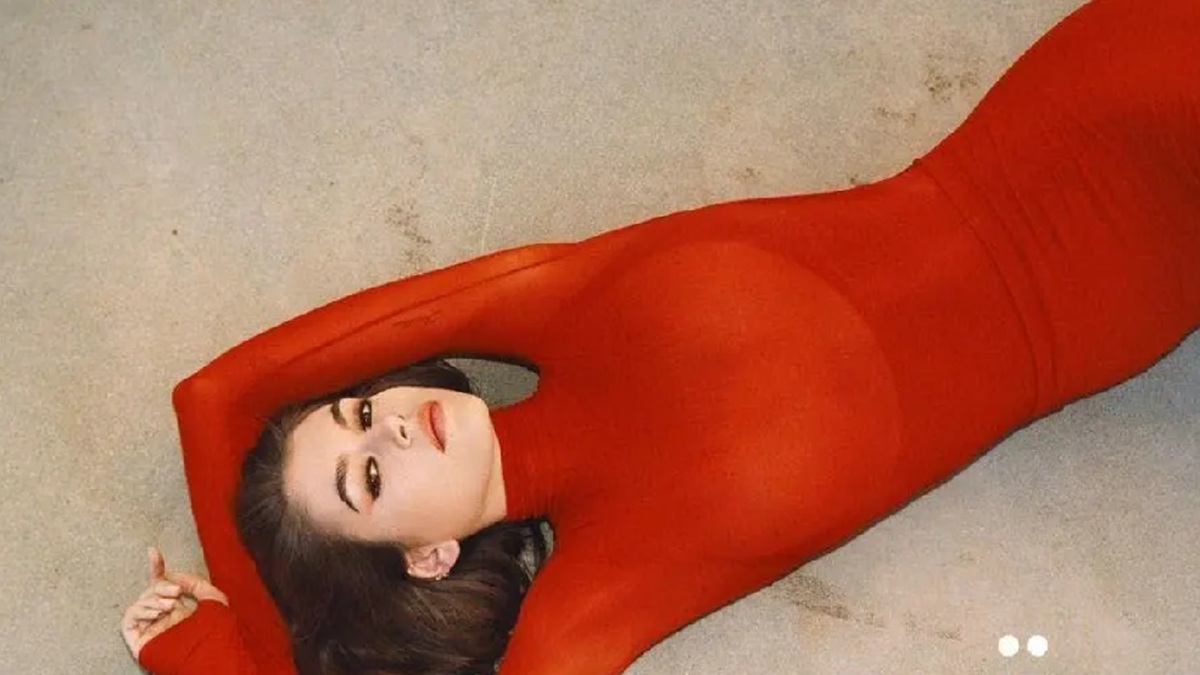
Alaïa is the clearest example. In terms of creative narrative and prestige, the French-Tunisian designer’s maison functions as a beacon brand within a portfolio defined by jewelry and watchmaking. The house experienced a turning point after the death of Azzedine Alaïa in 2017 and, in 2021, Pieter Mulier took over as creative director with a career linked to Raf Simons and stints at Dior and Calvin Klein.
Now that the company has consolidated its new image, acquired the respect and validation of the sector, and signed important retail operations, several sources place Mulier among the names that could be considered to take over the creative direction of Versace after the departure of Dario Vitale, Donatella’s replacement.
If this scenario is confirmed, the impact for Richemont would be more symbolic than financial because it would lose the figure that concentrates much of the cultural capital of its fashion portfolio.
