Editor’s Note
Richemont’s latest results underscore jewelry’s role as its resilient core business, even as market sentiment remains tempered by high expectations.
Richemont exceeded market expectations in the important Christmas quarter. Growth was once again driven by the jewelry business, while the watch division also surprisingly gained momentum. However, despite strong figures, the capital market reacted cautiously. High expectations and margin concerns are weighing on the stock.
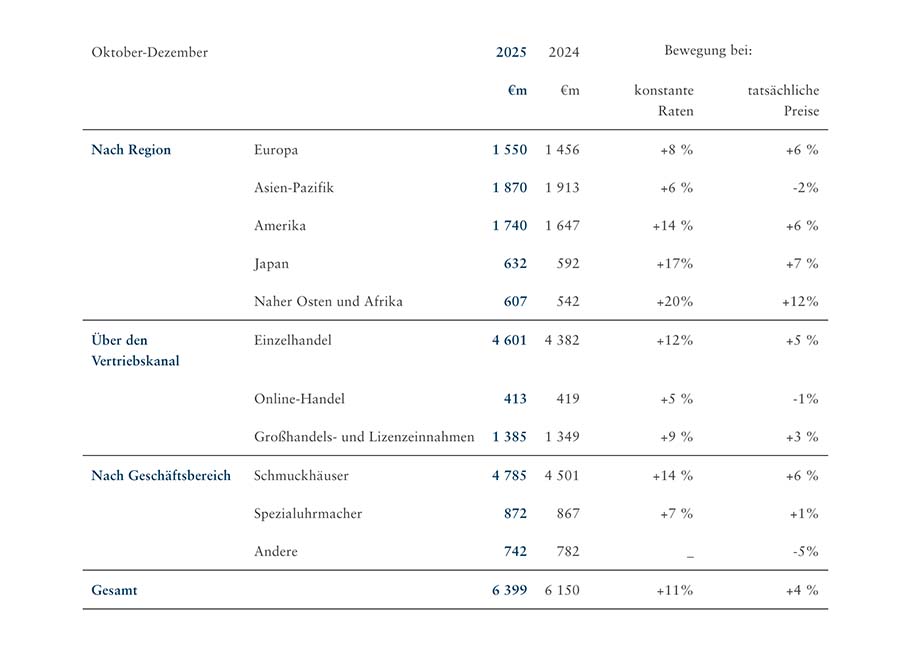
In the third business quarter until the end of December, Richemont increased its currency-adjusted sales by eleven percent to 6.4 billion euros. This placed the group above analyst estimates. By far the largest growth driver remained the jewelry segment. The so-called Jewellery Maisons with brands like Cartier and Van Cleef & Arpels grew by 14 percent and achieved revenues of around 4.8 billion euros. Jewelry is thus proving once again to be particularly resilient in an overall subdued luxury environment.

The watch division also performed better than in previous quarters. The Specialist Watchmakers with brands like IWC, A. Lange & Söhne, and Jaeger-LeCoultre increased by seven percent on a currency-adjusted basis. This marks the first noticeable recovery in a segment that had been under significant pressure in recent quarters. This is a positive signal for the specialist watch trade, even if the level has not yet reached previous growth phases.
Business developed particularly strongly in America with a plus of 14 percent. Japan recorded growth of 17 percent, while the Middle East and Africa even grew by 20 percent. Europe increased by eight percent. In Asia excluding Japan, the group’s most important single market, sales grew organically by six percent, slightly exceeding expectations. China, Hong Kong, and Macau together achieved a plus of two percent, marking the second consecutive quarter of growth.
Despite the strong operational development, the capital market reacted cautiously. Following a previous price rally, Richemont shares declined. Market observers point to increased expectations as well as ongoing concerns about margins. Factors weighing on the company include currency effects, potential US tariffs, and above all, high gold prices. Without further price adjustments, these factors could put pressure on profitability in the coming business years.

Richemont’s figures set the benchmark for the entire luxury sector. In the coming weeks, companies including LVMH, Kering, and Hermès will present their results.