Editor’s Note
Recent narratives suggesting a crisis in Swiss watchmaking are challenged by new data. This article examines the latest industry study, which reveals a sector not in decline but undergoing a significant transformation.
Over recent months, a mistaken idea has been frequently repeated: that the Swiss watchmaking industry is in crisis. However, the latest annual study by Morgan Stanley Research in collaboration with the specialized consultancy LuxeConsult suggests exactly the opposite. The sector is not contracting; it is redefining itself.
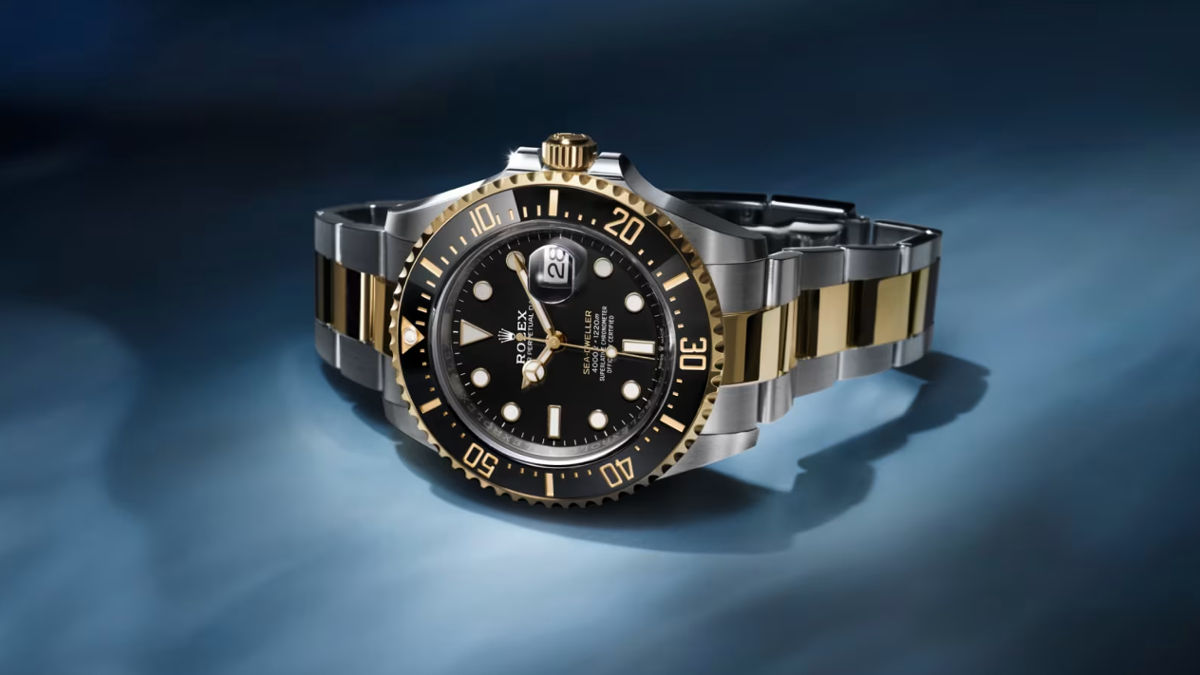
The report—one of the most closely followed analyses by luxury distributors and retailers—reveals that the global Swiss watch market is experiencing strong polarization: a few houses are concentrating an increasing share of value while the majority are losing volume. The picture is clear. The industry is still led by Rolex, but the relevant data point is that Cartier is consolidating its position as the world’s second-highest-grossing brand. It is accompanied at the top by Audemars Piguet, Patek Philippe, Omega, and Richard Mille, which dominate the global business.
The study itself indicates that the total retail value of the market is around 49 billion Swiss francs, while exports and units continue to decline. Put simply: fewer watches are being sold, but each one is worth more. Since the 2008 financial crisis, the total number of exported watches has decreased very significantly—by more than 40%—while the high-end mechanical segment remains stable. The Swiss watch is ceasing to be an industrial product and is progressively becoming a heritage asset.
The phenomenon is particularly noticeable in the high-end range. Watches priced above 50,000 Swiss francs represent a minimal part of the volume but generate a large part of the sector’s growth. In contrast, the mid-range—historically the economic heart of watchmaking—is suffering the most. This is not a loss of interest in watches. It is a change in the consumer. Today’s buyer is not just looking to tell time. They seek meaning, permanence, and cultural legitimacy.
In an uncertain economic context, aspirational luxury loses ground to preservation luxury. The watch now competes less with fashion and more with art, jewelry, or even emotional heritage. The study also points out that the major houses have steadily gained market share in recent years. To the point where the top four now account for more than half of the global business. The sector is consolidating around brands with history, narrative, and production control.
Part of this evolution is explained by the deliberate management of scarcity. Some firms carefully control their volume to maintain desirability. In economic terms, watchmaking has adopted a model close to that of contemporary art: it’s not about producing more, but about producing less and meaning more.
The transition does not affect the entire sector equally. The greatest difficulties are concentrated in traditional mid-range brands, which are highly dependent on volume and multi-brand distribution and have less capacity to build scarcity or their own narrative. This positioning is pressured from above by the major houses—which concentrate value and desirability—and from below by competition from connected technology. In this new environment, firms without a clear identity, without channel control, or without a differentiated product proposition are seeing store turnover fall and price sensitivity increase, forcing them to rethink collections, commercial networks, and brand strategy.
The consequence is profound. For decades, the industry functioned like a pyramid: many accessible watches supported a small pinnacle of high watchmaking. Today, it resembles more of a diamond: moderate volume and enormous concentration of value at the top. This phenomenon does not only affect the major houses. High-end independent watchmakers are also growing, while brands without a clear positioning find it increasingly difficult to compete.
What the report describes goes beyond watchmaking. It anticipates the new behavior of luxury in the post-pandemic and inflationary era: the consumer does not want to accumulate objects, they want to choose a few that matter. They prefer permanence over turnover. This is why the mechanical watch—an 18th-century technology—gains relevance in the midst of the digital age. It is not the most precise instrument, but it is one of the most meaningful. It represents accumulated time, craftsmanship, and continuity.