Editor’s Note
This article, based on data from Tenoris, reports on the performance of independent U.S. jewelry stores in 2025. While the year saw solid overall sales growth, the figures indicate a notable slowdown during the critical holiday period.
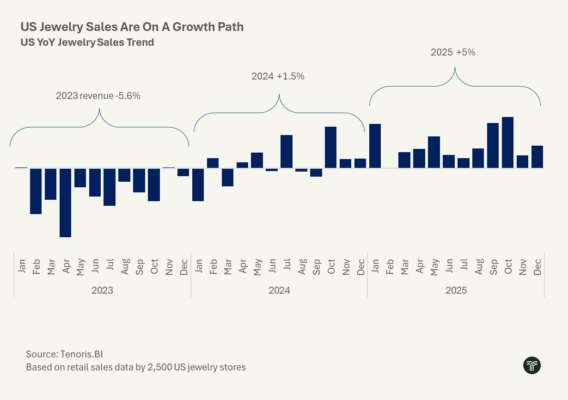
Independent jewelry stores in the United States generally experienced robust business in 2025, although their sales growth decelerated somewhat during the holiday season, according to data compiled by the industry analytics service Tenoris.
Year-over-year, jewelers’ sales increased by 5.6% in 2025 but rose by only 3% in November and 5.4% in December, Tenoris reported.
The annual sales growth was propelled by an 11.4% rise in the average price spent per item, which compensated for a 5.2% decline in the number of pieces purchased. Golan noted that this drop in purchase volume was concentrated in items priced under $2,500.
This disparity was particularly pronounced in December, when consumers bought 10% fewer items compared to the previous year, while paying 17.2% more for them.
Sales of loose diamonds declined in 2025, with loose natural diamonds being the worst-performing segment in the industry as they continued to lose market share to lab-grown diamonds.
Revenue from unmounted lab-grown diamonds fell by 1% in 2025, even as unit sales increased by 14%. However, the average price dropped by 13%—an improvement from the 24% price decline recorded in 2024.
He pointed out that 2025 was the first year in which jewelers’ gross profit on natural diamonds exceeded that of lab-grown diamonds, even though the gross margin percentage for lab-growns remained significantly higher. In fact, despite falling wholesale prices, independent jewelers increased their margins on lab-grown diamonds this year to a substantial 72%.
Gold presented the opposite challenge compared to lab-grown diamonds, as its price surged by 66% in 2025. In most cases, retailers did not pass the full increase on to consumers, though they raised the price of gold items by approximately 30% during the year and offered lighter-weight items than usual.
This strategy was insufficient to attract shoppers, and unit sales of gold jewelry fell by 16% for the year.
Overall, the figures present a mixed picture: while total jewelry sales were strong, lower-income consumers appear to be allocating their spending elsewhere.