Editor’s Note
This article examines the early overseas expansion of Chinese jewelry brand HEFANG. While it highlights the brand’s strategic entry into key Western shopping seasons, the core focus is on the foundational challenge of establishing a clear brand identity in new markets—a crucial step for any domestic brand with global ambitions.
Chinese fashion brands all harbor a dream of going global, and jewelry brands are no exception. HEFANG, a light luxury jewelry brand from Zhuhai, Guangdong, is one such brand, having begun exploring overseas business in 2024.
HEFANG seized the opportunity to participate in the recent Black Friday and Christmas sales season in Europe and America. However, more important than boosting sales at this stage is the task of clearly defining its positioning and building the brand—a process similar to its initial startup phase in China.
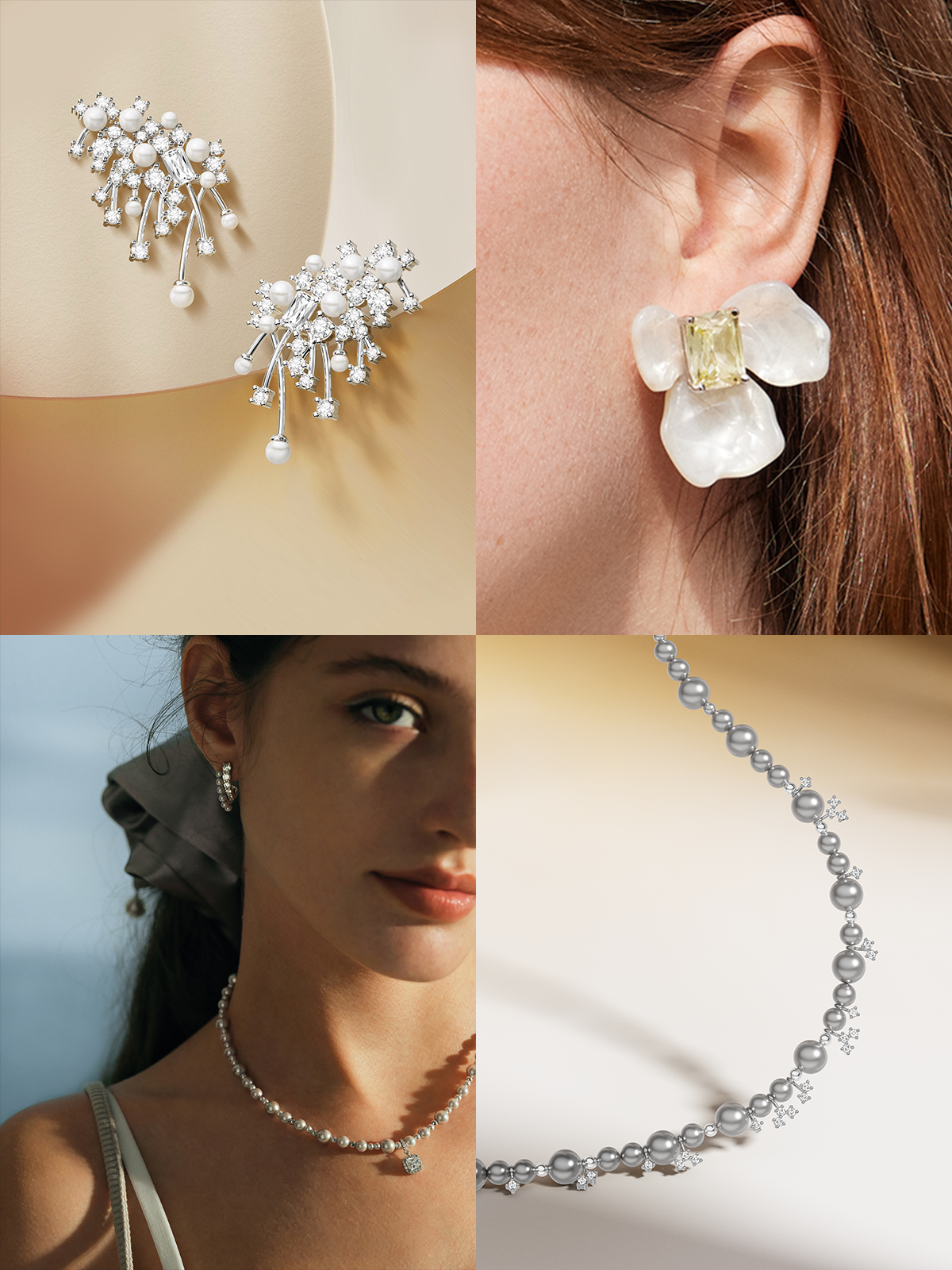
Founded in 2012, HEFANG started in the Chinese market around the same time as Pandora and APM Monaco. Like Swarovski, which entered China earlier, they belong to the light luxury fashion jewelry segment in the thousand-yuan price range, focusing more on personalized original designs to meet consumers’ daily styling needs, rather than pursuing value retention and heritage like traditional jewelry or luxury brands.
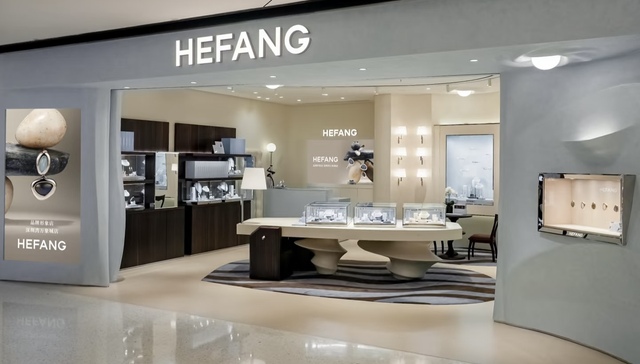
Since entering offline retail in 2018, HEFANG has now opened about 70 stores, mostly located in mid-to-high-end shopping malls in first- and second-tier cities. Although there is still a gap compared to the roughly two to three hundred stores of Swarovski, Pandora, and APM Monaco, HEFANG is one of the few domestic brands that has achieved scale in the light luxury jewelry market dominated by these international players.
Sun Hefang, founder of HEFANG, revealed in a 2023 interview that the brand’s annual revenue at that time was within 500 million yuan. HEFANG stated that its sales have continued to grow in recent years but did not disclose specific revenue figures. During the 2025 Tmall Double 11 shopping festival, HEFANG surpassed a host of international brands to rank first in sales in the accessories category.
Going global was naturally put on the agenda as part of this development trajectory. HEFANG’s decision to expand overseas at this stage is also related to external pressures brought about by market changes.
Compared to the early 2010s when HEFANG was founded, market competition is now increasingly fierce. More niche accessory brands can gain exposure through content e-commerce. While individually their scale and strength are far less than that of scaled brands, collectively they can take away significant market share.
Simultaneously, consumers have become more inclined towards value-for-money products. Even HEFANG has adjusted its product structure in recent years, lowering the average price of its main products from around 3,000 yuan to about 1,500 yuan.
The performance of similar light luxury brands in the Chinese market also reflects the climate. For example, Pandora’s revenue in the Chinese market has continued to decline in recent years, with rumors once circulating about a potential restructuring of its China business. The brand plans to close up to 100 stores in China this year. APM Monaco, which focuses on the Chinese market, has also been reported to have major shareholders seeking exit through equity sale or IPO.
According to data provided by Euromonitor International, the market size for fashion jewelry (costume jewellery) in China, to which HEFANG belongs, has not maintained consecutive growth in recent years. The market concentration is low, with the top brand holding less than 2% market share.
Sun Hefang believes that for a brand to develop in such an environment, it must inevitably look for where incremental growth is still possible. Compared to online brands that remain in the “small and beautiful” stage, HEFANG, having been established for 13 years, is already firmly rooted in the domestic market. Coupled with the founder’s international background, this gives HEFANG the conditions to seek new opportunities in overseas markets.
HEFANG has chosen to pursue both third-party platforms and its own direct-to-consumer (DTC) website.
HEFANG first joined Tmall Global’s cross-border sales channel in early 2024. The advantage of this channel is its low barrier to entry; brands can sell products from their existing Tmall stores overseas using the platform’s logistics, payment, and other infrastructure while retaining operational autonomy.
Sun Hefang said.
However, relying solely on Tmall Global is insufficient to penetrate the European and American markets, which HEFANG most wants to break into. Currently, the main buyer markets for Tmall Global include China’s Hong Kong, Macao, and Taiwan regions, as well as Singapore, Malaysia, and Australia.
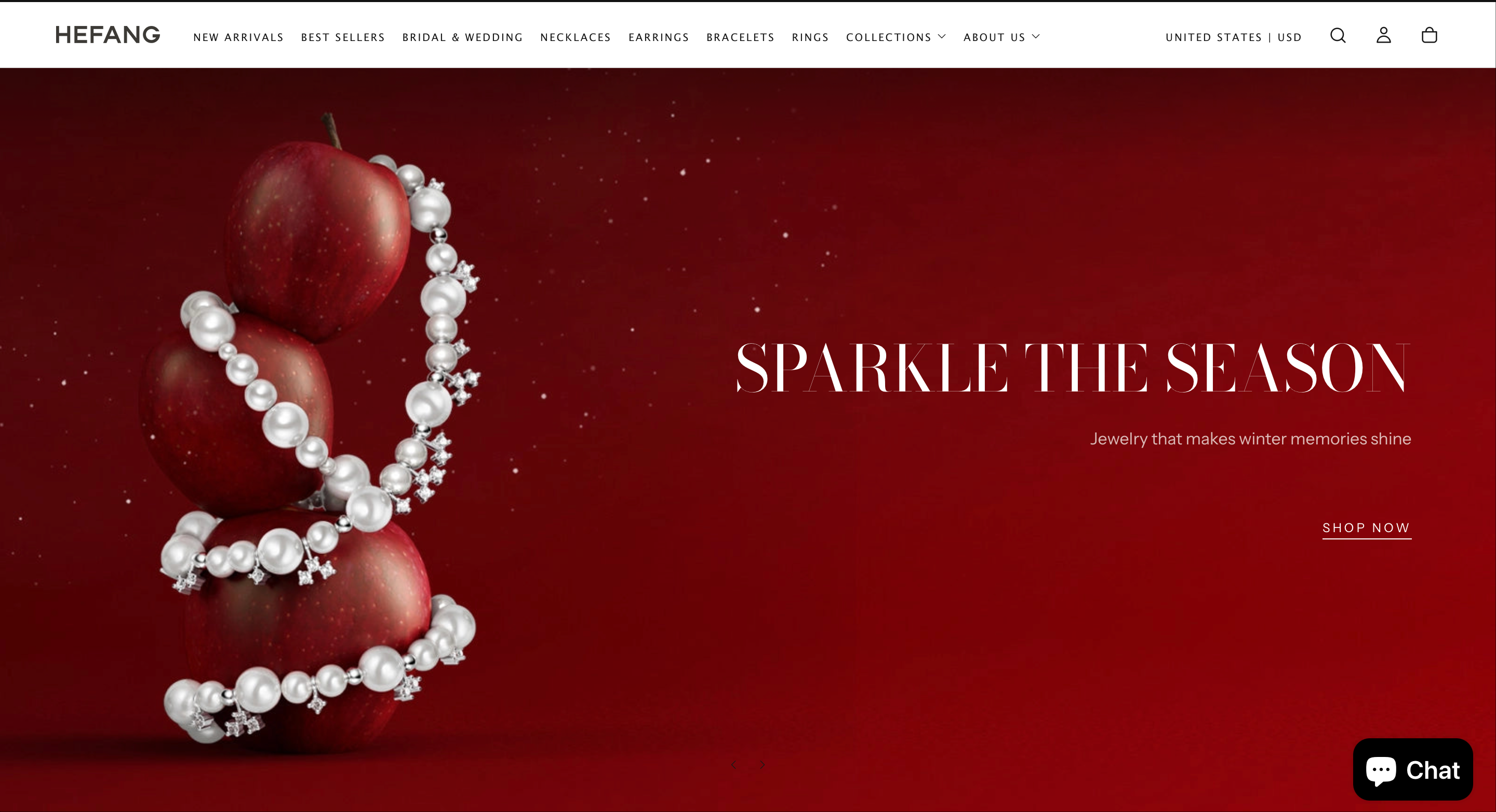
Consumers in Europe and North America prefer shopping on brands’ own websites. Therefore, HEFANG began building its brand DTC website in the fourth quarter of 2024 to cover a broader global market, including Europe and America. Compared to leveraging third-party platforms, operating a DTC site places higher demands on a company’s comprehensive capabilities.
Europe and America are HEFANG’s primary overseas destinations. Although, as the arbiters of global fashion trends, they have always been the markets with the highest barriers for Chinese and even Asian fashion brands.
HEFANG is more attracted by the maturity of the European and American markets. The brand stated that in these markets, the awareness and penetration of designer brands and fashion light jewelry are already very high. Furthermore, HEFANG’s design language itself is international, which reduces the additional costs of user and market education required.
Some of HEFANG’s designs even feel more familiar to European and American users, such as the “Cutlery Series” inspired by knives and forks. This series was permanently collected by the London Central Saint Martins Museum in 2025. To some extent, this also provides endorsement for HEFANG’s entry into Europe and America.
HEFANG stated.
But clearly, for HEFANG to make itself known and accepted in the unfamiliar European and American markets, relying solely on museum-collected works is far from enough. HEFANG needs to retrace the path it took to build its brand in China, now in overseas markets.
In Sun Hefang’s view, there is no guaranteed “trick or formula” for success in going global. Constant adjustment through exploration is necessary, but the overall methodology is not vastly different from that in China—the core of building a brand in any market is to clearly define positioning, find suitable channels, and then clearly express the brand.
HEFANG presents a unified brand image in both domestic and overseas markets, maintaining a light luxury price positioning and, for now, a consistent product assortment, with no separate “customization” for specific markets at this stage.
However, differences in market demand objectively exist. Sun Hefang does not deny this,
Rather than designing localized products for different markets, HEFANG chooses to use a universal, global design language to lower the barrier to cross-cultural understanding. HEFANG’s designs never tout Eastern aesthetics; they mostly use elements with universal appeal, such as snowflakes, feathers, flowers, and bows. Although there is a zodiac series for the Chinese Lunar New Year, it is currently limited to the Chinese market.
This approach of finding the greatest common denominator is feasible—APM Monaco from Monaco also adopted this strategy for globalization. However, it places higher demands on a brand’s acuity in capturing market demand and its speed of response.
To keep up with these foreseeable demands, HEFANG, backed by its family-owned supply chain, is advancing the globalization of its upstream operations. In 2025, HEFANG’s London Foreign Trade Design Center and Vietnam production base were put into use, with a Thailand production base already in the planning stages. HEFANG stated that the London center is primarily for capturing market trends and collaborating with global designers, while the overseas supply chain, besides increasing production capacity, also considers应对ing the uncertainties of global trade friction.
To some extent, HEFANG’s current global expansion, like its initial创业, possesses a “luxurious” configuration that is difficult for ordinary brands to match. Unlike doing business in the domestic market, in the realm of fashion brands going global, the competition among companies is not about who can make a splash overseas faster, but about who has more patience and the strength for long-term investment.
Sun Hefang stated.