Editor’s Note
While most jewelry sold in Switzerland meets safety standards, this article highlights potential health risks from metals like nickel, lead, and cadmium. Consumers are advised to purchase from reputable sources to minimize exposure.
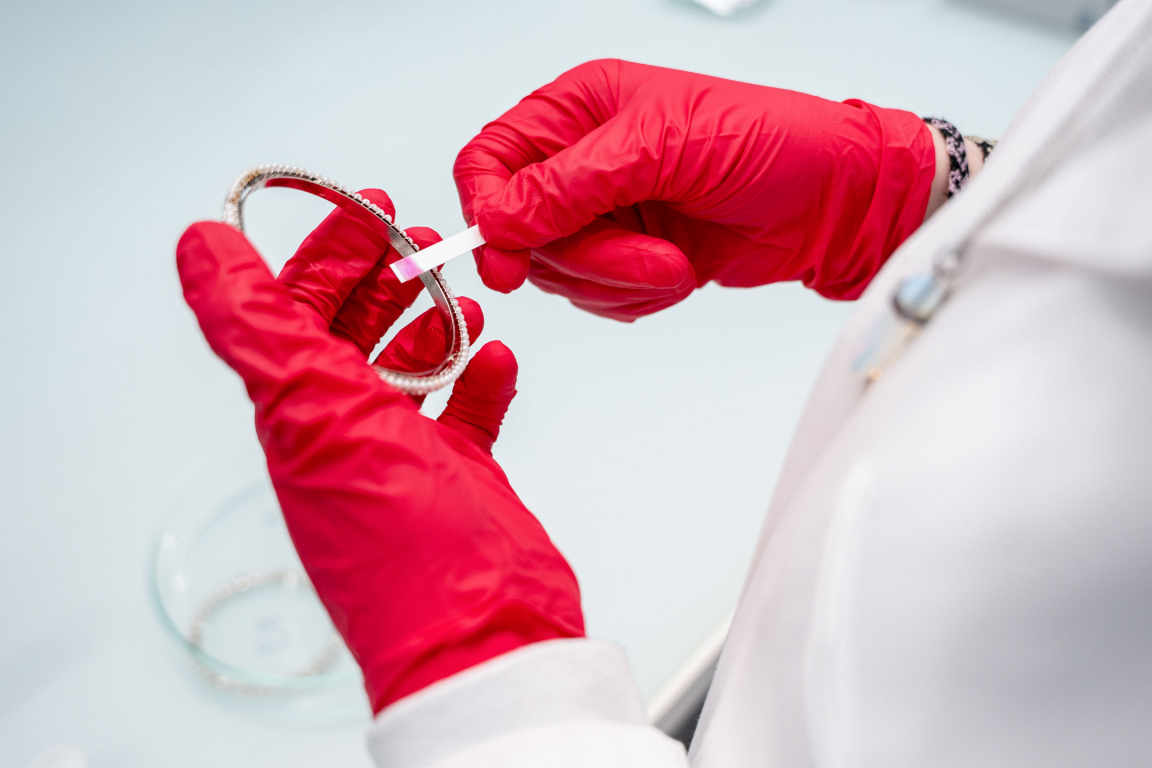
Metal jewelry can pose health risks. It can release nickel or contain heavy metals such as lead and cadmium. Investigations show that most jewelry items available on the Swiss market comply with legal requirements. Those who purchase jewelry from trustworthy sources are on the safe side.
Jewelry is more than just an ornament for many people, but it can also harbor dangers. Metal jewelry can release nickel (nickel release), contain heavy metals like lead and cadmium, or pose a risk of injury and ingestion. Wearing jewelry that releases nickel is the most common cause of people developing an allergic reaction to metal jewelry. An allergic reaction manifests as itching or redness of the skin. Symptoms often only appear after repeated contact, once the body has been sensitized beforehand. Jewelry containing lead or cadmium is toxic if licked or accidentally swallowed. This is particularly dangerous if young children get hold of the jewelry.
The Law on Food and Consumer Goods sets requirements for nickel release and heavy metal content in jewelry. Therefore, the Cantonal Laboratory of Zurich regularly checks jewelry for these chemical hazards.
Over the last two years, jewelry from department stores, fashion, decoration, or craft stores, as well as from Swiss online providers, was examined. A total of 32 samples were analyzed, including ear pendants, bracelets, clasp chains, and sunglasses. Additionally, customs referred a larger jewelry shipment for inspection.
The majority of the samples tested were of no concern. They contained no heavy metals and did not release nickel. However, six ear pendants and bracelets – including 4 samples from oriental shops – released nickel or contained cadmium or lead. These were removed from the market. The importers were obligated to test future goods more thoroughly. The shipment (20 kg) referred by customs contained bracelets that released nickel and contained lead, which were intended to be worn at a wedding. When importing large quantities that are not exclusively for private use, the legal requirements must also be met. The entire shipment was destroyed by customs as special waste at the importer’s expense.
Consumers can hardly check for themselves whether their metal jewelry releases nickel or contains heavy metals. It is advisable to only purchase jewelry from trustworthy sources. This applies especially when buying from online shops or purchasing travel souvenirs. If there is a suspicion that a piece of jewelry releases nickel, it should no longer be worn. Particular care should be taken with children to ensure they have no contact with jewelry that releases nickel to prevent sensitization to nickel.
To ensure jewelry can continue to be worn without concern, spot checks on Swiss providers will also take place next year. Furthermore, mobile controls can also be used to check providers of new jewelry at weekly or flea markets.