Editor’s Note
This article outlines the primary economic and market forces that drive gold prices, from currency fluctuations to investor sentiment. Understanding these factors can help investors move beyond daily volatility and assess gold’s role as both a monetary asset and a long-term hedge.
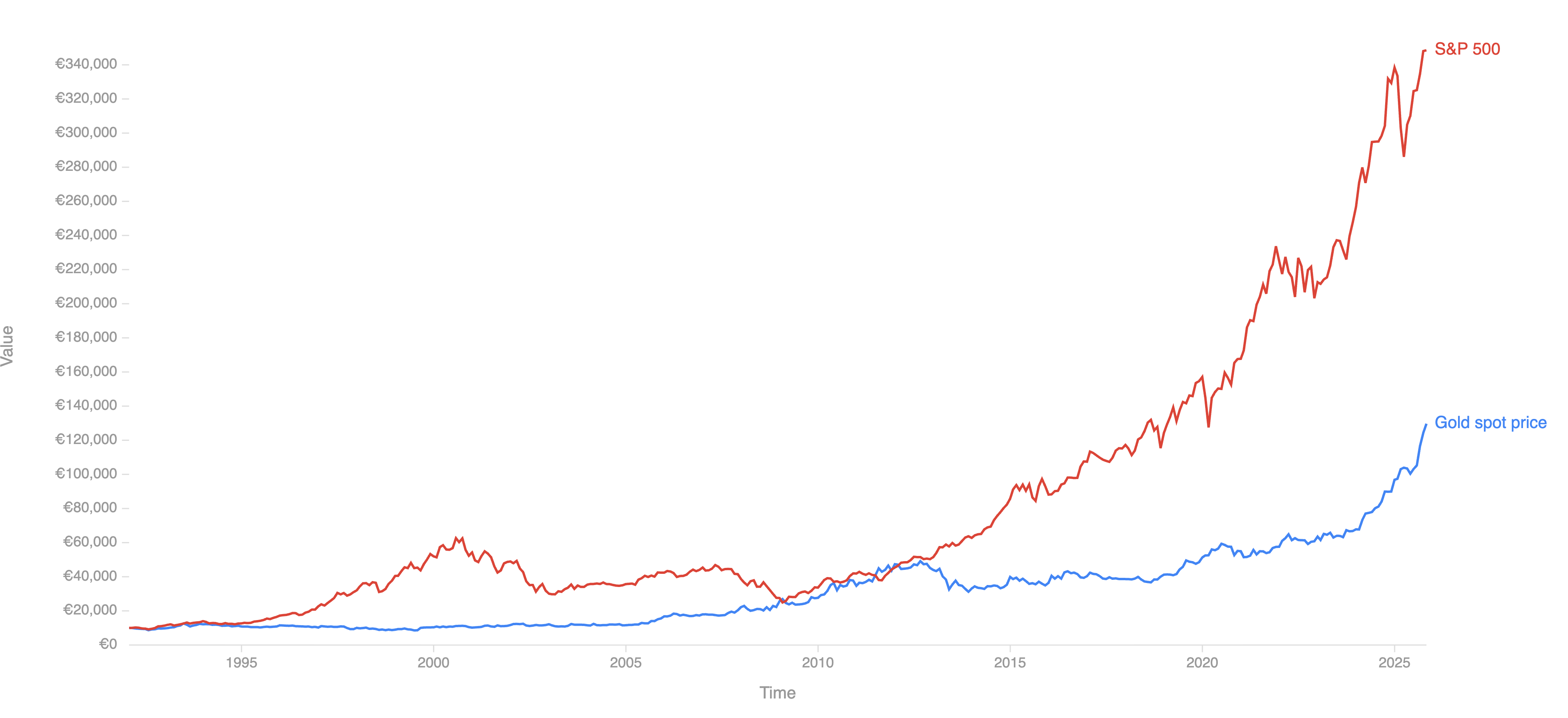
Gold prices rarely change on their own. They are influenced by a combination of numerous economic forces that shape capital flows, currency strength, and investor behavior in global markets. Understanding the key factors that influence gold prices helps investors look beyond short-term news and focus on the elements that consistently impact gold prices over time.
Gold functions both as a monetary asset and a protective hedge. Its performance is less tied to economic growth and more linked to real yields, inflation expectations, fluctuations in the US Dollar Index, and changes in central bank purchases. Shifts in purchasing power, confidence in fiat currencies, and the underlying demand for gold from investors and institutions play a crucial role in pricing gold in global markets.
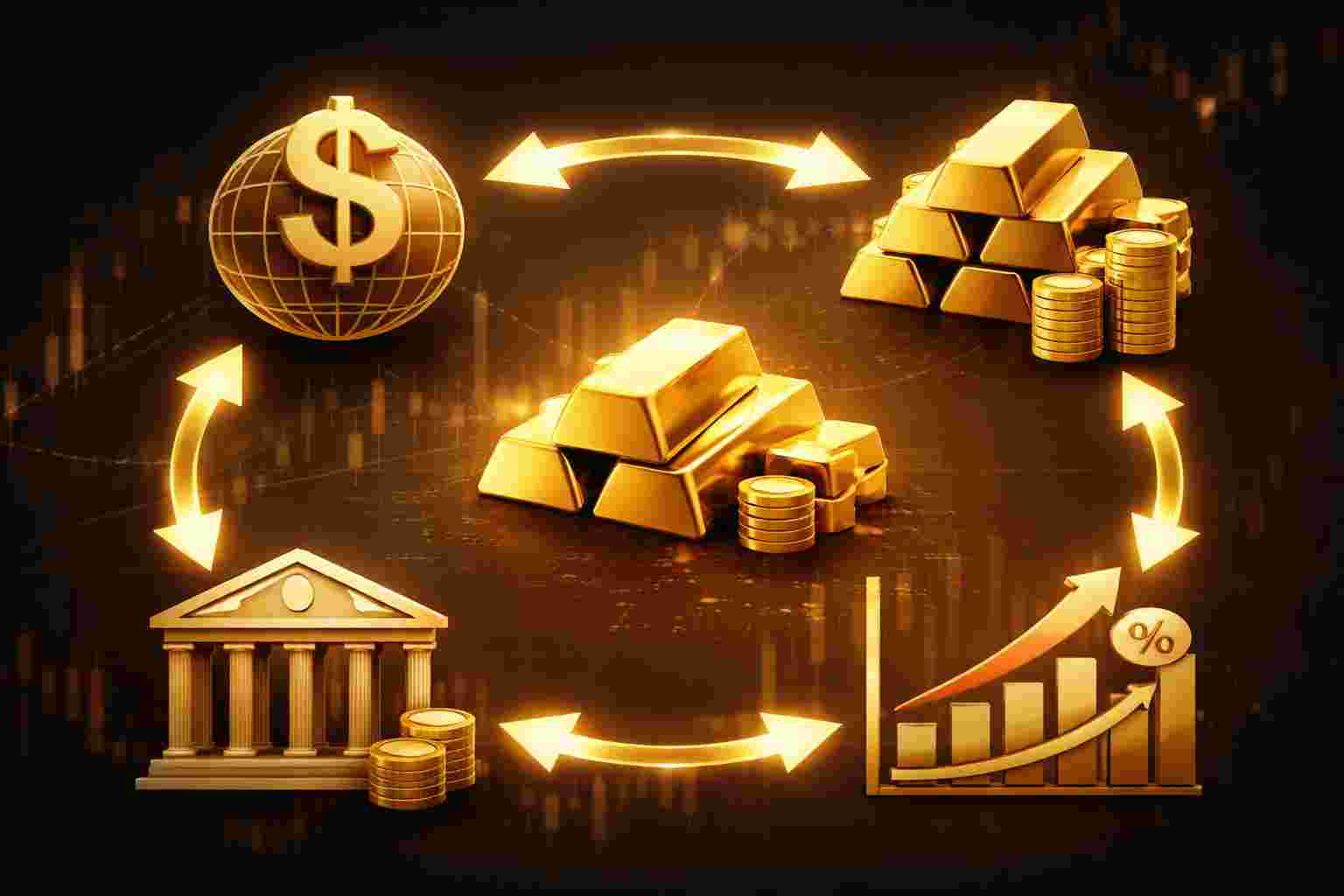
Several factors play a significant role in determining gold prices. These factors do not operate in isolation. Depending on the economic environment, they can either reinforce each other or pull in opposite directions.
- Real Yields influence how attractive gold is compared to interest-bearing assets.
- Inflation Fears affect gold’s appeal as a means of preserving purchasing power.
- Fluctuations in the US Dollar Index change the price of gold for buyers outside the US.
- Purchases by Central Banks provide sustained demand and help limit downward pressure.
- Total demand for gold from investors and consumers supports long-term price trends.
These elements explain most of the medium and long-term fluctuations in gold prices, even when short-term volatility appears driven by news or headlines.
This long-term perspective highlights gold’s dual role. It can act as an effective shield during periods of high inflation or rising market stress, but it often lags behind growth-oriented assets when economic conditions are stable and risk appetite is strong.
Interest Rates and Real Yields: The Primary Transmission Channel
Nominal interest rates alone do not determine gold’s direction. What matters is the level of real yields, i.e., interest rates adjusted for inflation expectations.
When real yields rise, holding cash or bonds becomes more attractive compared to gold. When real yields fall or turn negative, gold’s appeal increases because the opportunity cost of holding it decreases.
Therefore, the Federal Reserve’s policy decisions are extremely important. Despite headlines about interest rate hikes, if inflation expectations rise faster than nominal yields, gold prices can surge, reducing real yields.
Inflation Expectations and Gold’s Value-Preservation Role
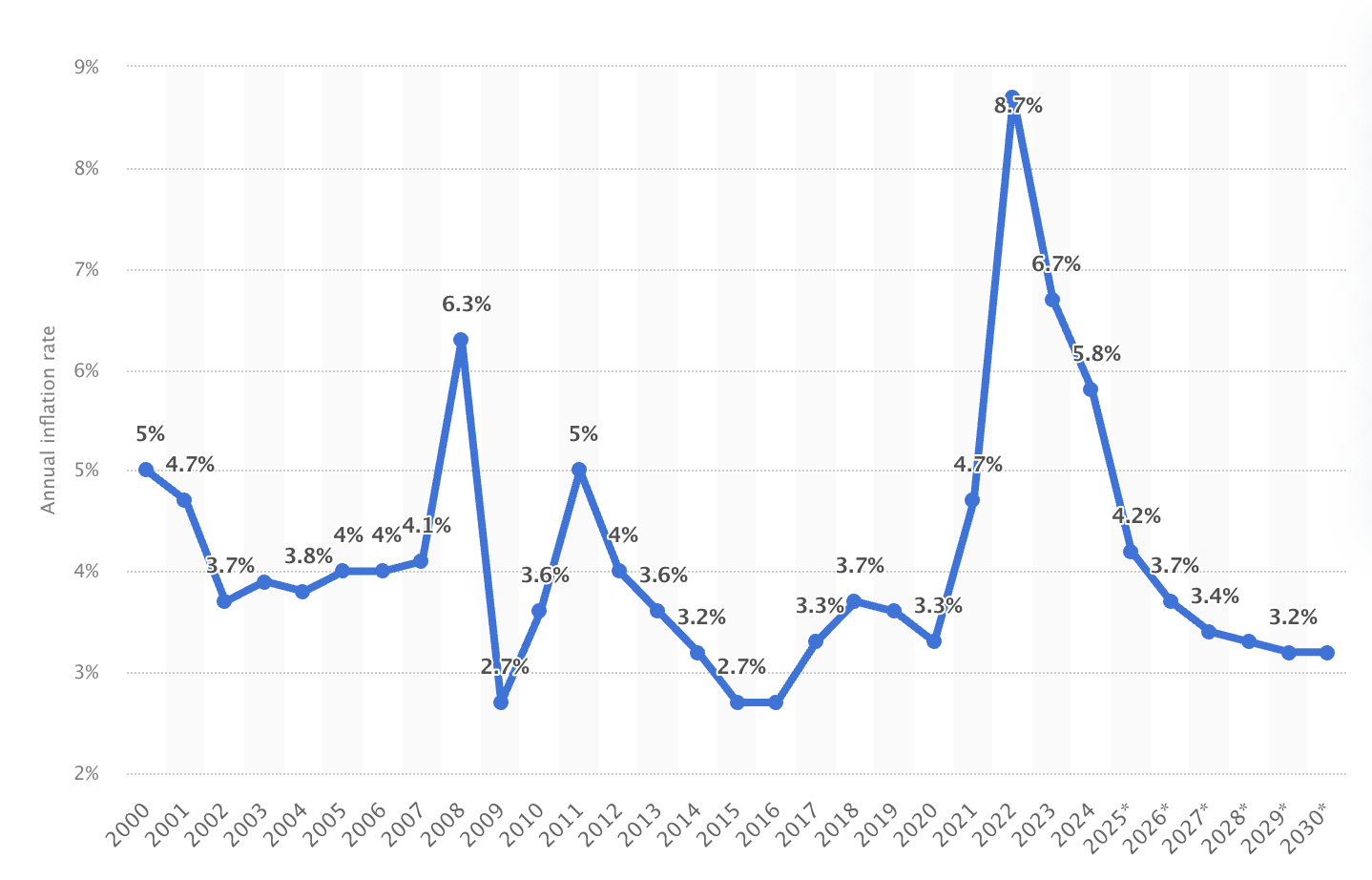
Gold prices are not just affected by inflation news. What’s important is whether people believe inflation will remain high enough for long enough to erode their purchasing power. When prices rise for a short period and then stabilize, gold prices often see little change. But when inflation is likely to persist for a long time, people’s interest in gold usually increases.