Editor’s Note
This article explores how social media is reshaping consumer behavior, creating a new “social-perfect” shopper who discovers and demands lab-grown diamonds online. It examines the need for brands to provide both digital sparkle and verifiable quality.

Swiping has become the new storefront. Social media platforms now drive the majority of product discovery, with consumers encountering everything from lab-grown diamond rings to plush collectibles through short-form videos, influencer demos and user-generated content. This shift has created a new breed of buyer: the social-perfect consumer—someone who expects products to match their screen-idealized vision while demanding transparent proof of quality, safety and performance.
The gap between social buzz and sale-closing assurance has become a critical business challenge. Recent research from Google and National Research Group reveals that nearly three-quarters (73%) of business buyers now complete their purchasing journey in 12 weeks or less, relying heavily on self-directed digital research rather than sales representatives. More tellingly, 58% of buyers who made a B2B purchase in the past six months also switched vendors during that period, indicating that loyalty has become contingent on transparent, data-rich product information rather than longstanding relationships. Additionally, about 68% of buyers report frustration when purchasing online due to lack of product information, stock visibility, delivery times and pricing.
For buyers, the imperative is clear: converting viral moments into scalable, repeat orders requires sourcing from suppliers who build trust directly into their product data. Four growth categories demonstrate where qualified manufacturers are turning social traction into sustainable revenue by leading with verifiable specifications rather than flashy promises.

The lab-grown diamond market is experiencing one of the fastest expansions in the jewelry sector. According to Fortune Business Insights, the worldwide market was valued at $25.9 billion in 2024 and is projected to reach $74.5 billion by 2032, expanding at a 14.1% CAGR. This trajectory is fueled by manufacturing leadership in Chinese Mainland and India, coupled with accelerating adoption among younger consumers across Asia Pacific.
Social platforms amplify every facet. Close-up videos from online jewelers, comparison clips and unboxing reels drive discovery. The critical conversion point arrives when a viewer moves from admiration to purchase intent. At that instant, confidence hinges on precise 4C grading (cut, color, clarity, carat), third-party certification and imagery that shows how the stone performs under varied lighting conditions. Suppliers who provide this data upfront reduce purchase hesitation and minimize costly returns, which can erode margins by about 15-20% in the jewelry category.
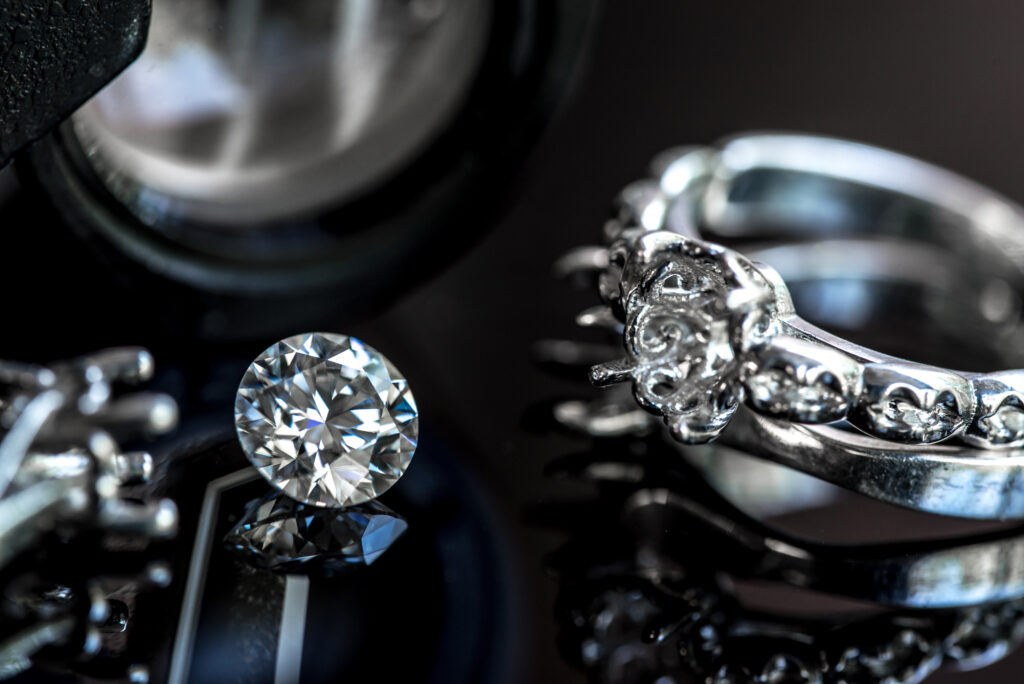
Younger buyers, particularly Gen Z and millennials, view ethical sourcing and environmental impact as purchase criteria equal to carat weight. This shift means that B2B buyers who stock lab-grown collections must prioritize suppliers offering not just stones, but full traceability documentation and lifecycle impact data.
The sourcing strategy for buyers is straightforward. Partnering with manufacturers who embed grading reports and authentication documentation into their listings allows sellers to mirror the transparency that social-perfect consumers demand. Original equipment manufacturer (OEM) and original design manufacturer (ODM) jewelry suppliers from Chinese Mainland and India offer exactly this capability, enabling buyers to list products with verified specs that align with the close-up magic seen on screen.

Global fashion accessories represent a $1.1 trillion market in 2024, projected to reach $1.9 trillion by 2032 at a 7.3% CAGR, according to Fortune Business Insights. This growth is propelled by outfit-styling content that generates billions of hashtag views, yet the industry faces a critical friction point: returns. McKinsey research indicates that 70% of online fashion returns stem from poor fit, costing retailers significantly in shipping, processing and restocking.