Editor’s Note
This article details the sharp rebound in precious metals following a significant correction, highlighting the key drivers behind gold and silver’s recovery. It also notes the continued confidence among major financial institutions in the sector’s underlying fundamentals.
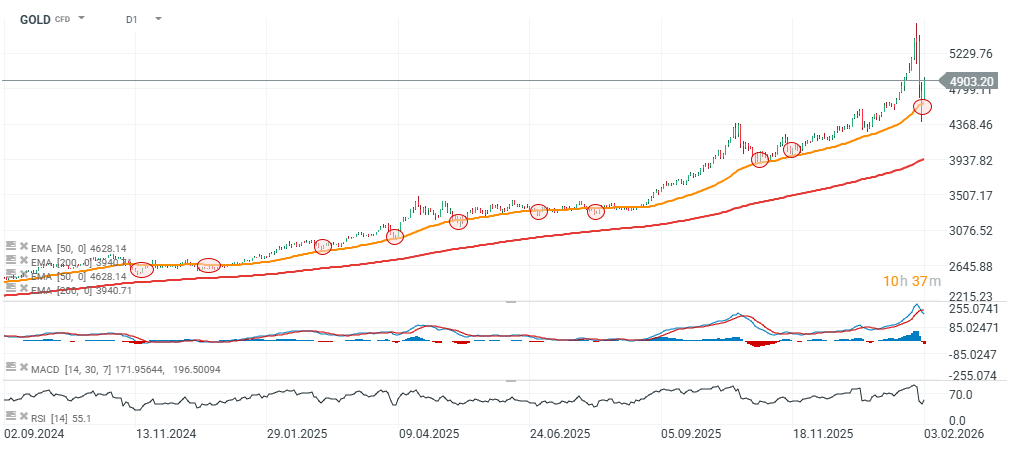
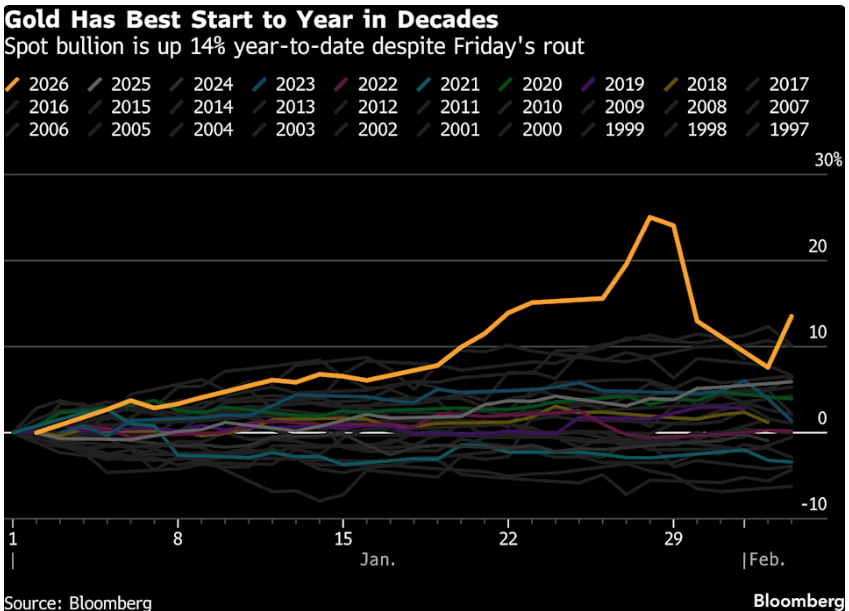
Gold surges +5% to $4,950/oz, silver jumps +8% to $88/oz, following the sharpest correction since 2013.
The rebound is fueled by dip buying, continued significant Chinese inflows, the return of call options, and entries into leveraged ETFs.
A stabilized US dollar and a “risk-on” tone in the markets support the recovery.
Banks (UBS, Deutsche Bank, Barclays) believe the fundamentals remain strong despite the severity of the decline.
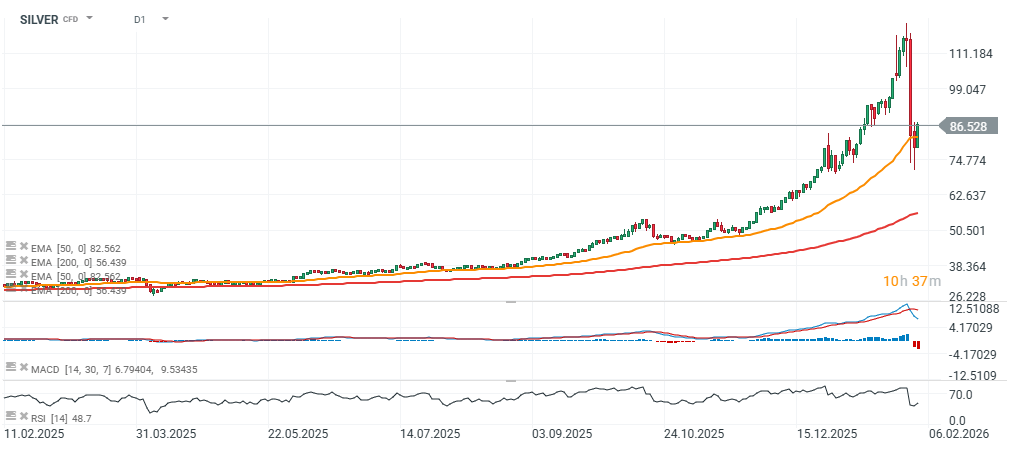
Silver remains more volatile than gold, but its structural supply deficit continues to be a long-term bullish pillar.
This rapid correction triggered forced selling, particularly on leveraged positions. However, this movement also created opportunities for dip buying, quickly exploited by institutional and tactical investors.
The observed rebound is largely explained by this technical mechanism. The levels reached during the decline were perceived as attractive, triggering both automatic and discretionary buy orders. This dynamic allowed prices to recover quickly, erasing a significant portion of the initial losses.
The strong return of call options is an important signal. These instruments, used to bet on rising prices, indicate a short-term resurgence of confidence. In parallel, leveraged ETFs backed by gold and silver recorded new inflows, mechanically amplifying the upward movement.
This behavior highlights a recurring characteristic of the precious metals market: a high sensitivity to financial flows, sometimes independent of short-term fundamentals.
Asian demand, both institutional and private, remains strong, particularly in a context of reserve diversification and the search for alternative safe-haven assets.