Editor’s Note
This article discusses a potential multi-billion euro deal between Kering and L’Oréal, which would represent a significant strategic pivot for the luxury group. While based on sources, such a transaction would have major implications for the competitive landscape of the luxury beauty sector.
According to sources, French luxury group Kering is considering selling its beauty division to French beauty giant L’Oréal for approximately 4 billion euros.
If the deal is finalized, it would mark Kering’s strategic shift towards optimizing its asset portfolio and focusing on its core businesses by divesting non-core assets. L’Oréal would develop beauty, fragrance, and personal care lines for Kering’s fashion and jewelry brands such as Bottega Veneta, Balenciaga, Alexander McQueen, Pomellato, and Qeelin, and would also take over the British fragrance brand Creed.
According to Kering’s 2024 financial report, Kering Beauty’s annual revenue was 323 million euros, primarily from Creed.
Kering’s first-half financial report showed that the beauty department’s revenue increased by 9% year-on-year to 150 million euros. The second quarter saw a 12% year-on-year increase, particularly benefiting from the strong performance of Creed’s women’s fragrances. Since the first fragrance series from Balenciaga and Bottega Veneta are scheduled for launch in the third quarter of 2025, Kering Beauty’s revenue in the first half of the year still relied mainly on contributions from Creed.
Simultaneously, Kering Group is expected to reduce its debt level. As of June 30 this year, its debt reached 9.5 billion euros.
The latest performance report from Reebok International Limited and its subsidiary RILUK IPCO Limited shows that both revenue and profit increased in 2024.
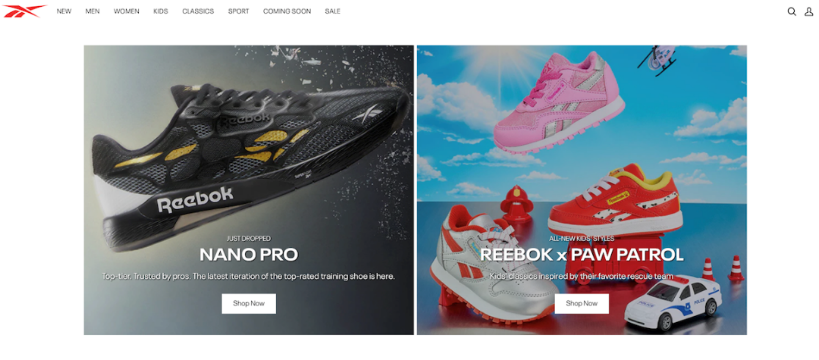
Reebok International is the holding company under the brand management group Authentic Brands Group (ABG); RILUK IPCO is a company registered in the UK but its New York branch is responsible for Reebok’s business operations.
In 2024, Reebok’s revenue (entirely composed of global licensing fee income) was $302.489 million, a 9.4% increase from 2023 ($276.436 million); operating profit was $192.37 million, compared to $176.83 million in 2023; net profit was $179.93 million, up from $163.55 million in 2023; income tax paid was $12.43 million, down from $13.27 million in 2023.
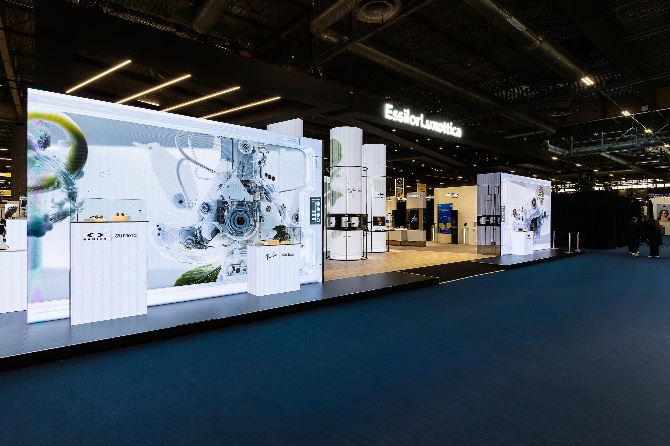
Global eyewear giant EssilorLuxottica announced its third-quarter financial results. Driven by the new generation of smart glasses launched in collaboration with Meta Platforms, the company’s quarterly sales increased by 11.7% at constant exchange rates, reaching 6.87 billion euros (approximately $8.02 billion). EssilorLuxottica stated that its wearable device business achieved “exponential growth,” becoming one of the main growth drivers. In September, the company launched the new Ray-Ban Meta and Oakley Meta series of smart glasses, which performed outstandingly in self-operated stores like Sunglass Hut.
Recently, the high-end outdoor brand Arc’teryx experienced a sudden personnel earthquake. Its Greater China General Manager, Ivan She, officially resigned on October 17, 2025. The timing of the resignation is less than a month after the controversial “Himalayan Rhododendron Incident,” seen as a key measure for the brand to address public opinion waves. Effective immediately, She’s duties will be temporarily assumed by Arc’teryx Greater China Chief Marketing Officer Ma Jin, who will later report directly to Arc’teryx Global CEO Stuart Haselden.
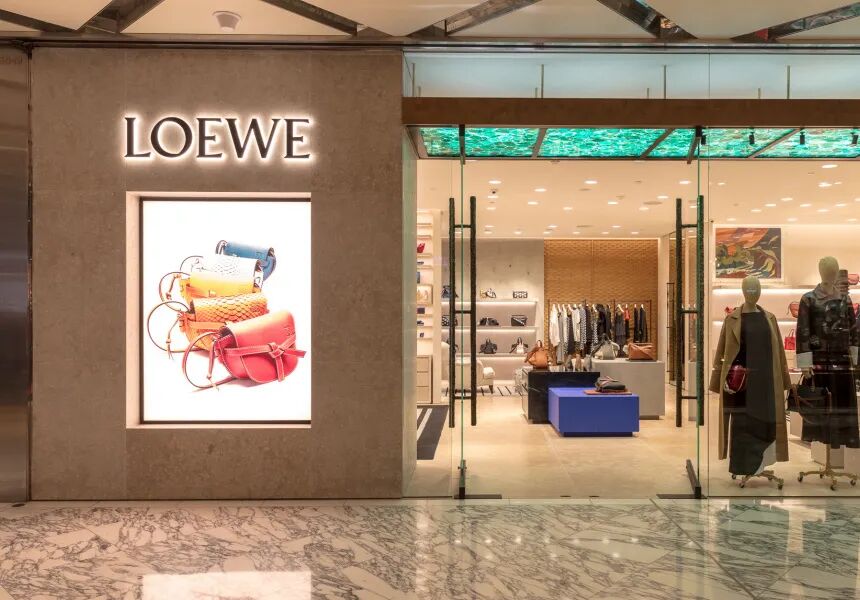
The European Commission recently announced fines totaling 157 million euros on three luxury brands, Gucci, Loewe, and Chloé, for engaging in anti-competitive retail price-fixing practices in the European market.
The investigation revealed that these three companies, within the European Economic Area, involved preventing their wholesale partners (primarily independent retailers) from freely setting online and offline retail prices, thereby maintaining a specific high-end pricing system.
Gucci was fined 119.6 million euros, Loewe 18 million euros, and Chloé 19.6 million euros.
The European Commission also noted that these three companies fully cooperated during the investigation and provided important evidence at different stages. Especially Gucci and Loewe, which submitted materials with significant added value in the early stages of the investigation, thus had their fines reduced based on leniency and reduction systems.
After the market closed on October 16, Italian luxury group Brunello Cucinelli announced its audited performance data for the first nine months of the 2025 fiscal year (ending September 30): total revenue increased by 10.8% year-on-year to 1.0192 billion euros (calculated at constant exchange rates: +11.3%), consistent with the preliminary data released two weeks ago.
The Chinese market once again achieved double-digit growth. The group stated that this market will gradually and steadily bring new customers to the luxury industry.
Currently, the Chinese market accounts for approximately 13% of total revenue. The group predicts that this share will gradually increase, driven by the series’ uniqueness and extremely high manual craftsmanship quality. Against this backdrop, the brand opened a brand-new store in Shanghai’s Lujiazui.