Editor’s Note
This article addresses persistent myths about the diamond industry, highlighting how outdated perceptions fail to reflect its significant modern transformations and the potential consequences of such misconceptions.
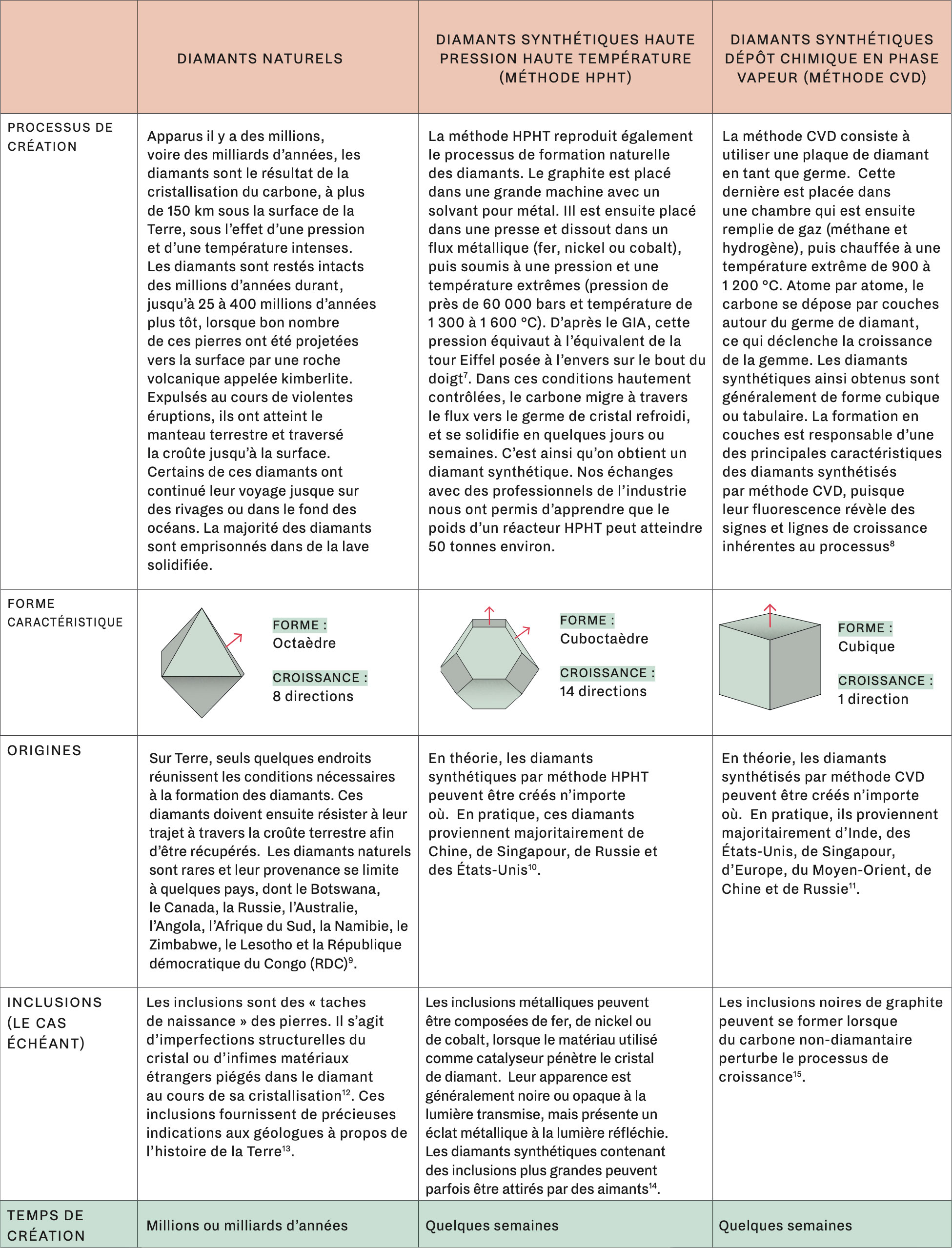
Recent years have marked the advent of synthetic diamonds, a new category born from industrial progress. Their arrival coincides with a flood of misconceptions, myths, and unfounded claims.
In this analysis, we will attempt to address misconceptions about natural diamonds and synthetic diamonds.
The objective is not to oppose these two categories, nor to establish a hierarchy, but rather to shed light on the reality and conditions of creation of synthetic and natural diamonds. Similarly, we intend to provide precise, accurate, and reliable information that will help buyers make informed decisions. As the study shows, the reader is free to form their own opinion based on the available information.
Customers, mining companies, investors, local communities in diamond-producing regions: all players in the diamond value chain suffer the consequences of misinformation, which challenges their economic stability.
We want to leave a positive legacy for all these stakeholders through honest and impartial research.
Our work details the investigation in the form of frequently asked questions concerning environmental and social standards, as well as misconceptions about the market, for example, the quantity of diamonds extracted.
We respond to those who claim it is impossible to differentiate a synthetic diamond from a natural one, and advise customers on purchasing a diamond by detailing the international regulations put in place to protect buyers throughout the supply chain.
Regarding the environment, we examine the notion of sustainability of synthetic diamonds and what it entails. Thus, we will review water consumption, waste and chemicals used, the carbon footprint of synthetic and natural diamonds, as well as the process of responsible mine commissioning and closure.