Editor’s Note
The diamond industry is confronting a historic downturn, driven by shifting consumer preferences and economic pressures. This article examines the factors behind the slump, from cooling luxury demand to the rise of lab-grown alternatives.
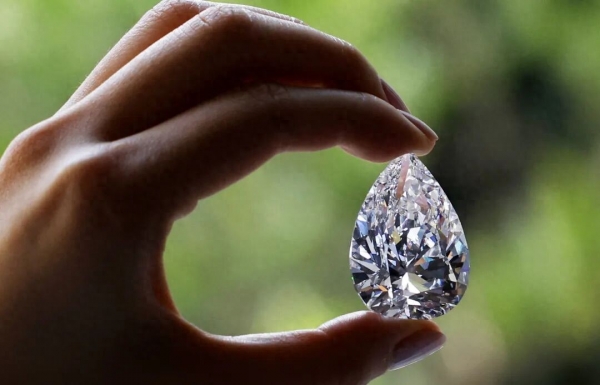
Diamonds—once the ‘heart’s desire’ of many—have become unattainable for some due to their high prices. However, since peaking in 2022, the diamond industry is experiencing one of the most severe and prolonged crises in its modern history, influenced by factors such as cooling luxury consumption in major consumer countries and the growing popularity of lab-grown diamonds.
On January 20, according to a report by Yicai, at the first routine diamond auction of the year which began this Monday, De Beers, the world’s largest diamond producer, significantly reduced the prices of rough diamonds over 0.75 carats. The specific extent of this price adjustment is not yet known.
Informed sources stated that De Beers adopted a unified pricing and invoicing policy at this auction—no longer pricing each box of diamonds separately but issuing a consolidated total price invoice, making it difficult to calculate the exact price reduction. This price cut by De Beers stems from the price decline following the drop in global diamond market demand.
According to the RapNet Diamond Price Index (RAPI), in 2025, the RAPI for diamonds over 3 carats fell slightly by 0.4%. Smaller, everyday consumer-grade diamonds like 0.3-0.5 carats, impacted by lab-grown diamonds and weak demand, saw significant price drops.
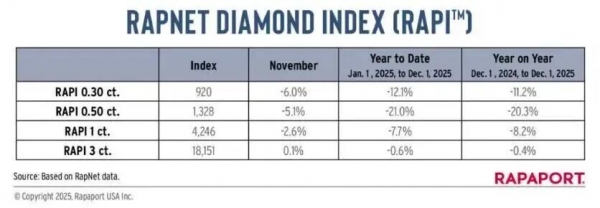
De Beers holds significant sway in the rough diamond market. The company holds 10 diamond auctions annually, where participating ‘sightholders’ typically can only passively accept the prices and quantities offered. However, in the current tense market environment, many diamond dealers are no longer willing to pay the prices set by De Beers.
It is noteworthy that in recent years, the diamond industry, one of the global symbols of luxury, is wavering. End demand remains persistently weak.
Market consumer confidence is insufficient, and high gold prices are driving consumers towards lightweight gold jewelry, putting further pressure on diamond demand. De Beers has accumulated over $2 billion in inventory, and since last year, the completion rate of its diamond auctions has also been declining.
Industry analysts point out that as a leading upstream enterprise, De Beers’ price reduction aims, on one hand, to boost sales performance, and on the other hand, to provide greater profit margins for midstream processors to stimulate market demand.
Official information shows that De Beers was founded in London in 1888, and its advertising slogan ‘A Diamond is Forever’ has had a widespread impact. As the world’s largest diamond production and sales company, De Beers once accounted for 90% of the world’s diamond supply market.