Editor’s Note
**Editor’s Note:** An international investigation has found that two-thirds of products from Shein and Temu fail Canadian safety standards, highlighting serious risks from dangerous toys, overheating chargers, and toxic jewelry. This report underscores the urgent need for stricter oversight of fast-growing online marketplaces.
Home
Economy
Online Commerce
Dozens of Items Sold on Shein and Temu Fail to Meet Canadian Standards
Two-thirds of products tested in an international investigation were found to be dangerous.
Published and updated on Nov. 25, 2025
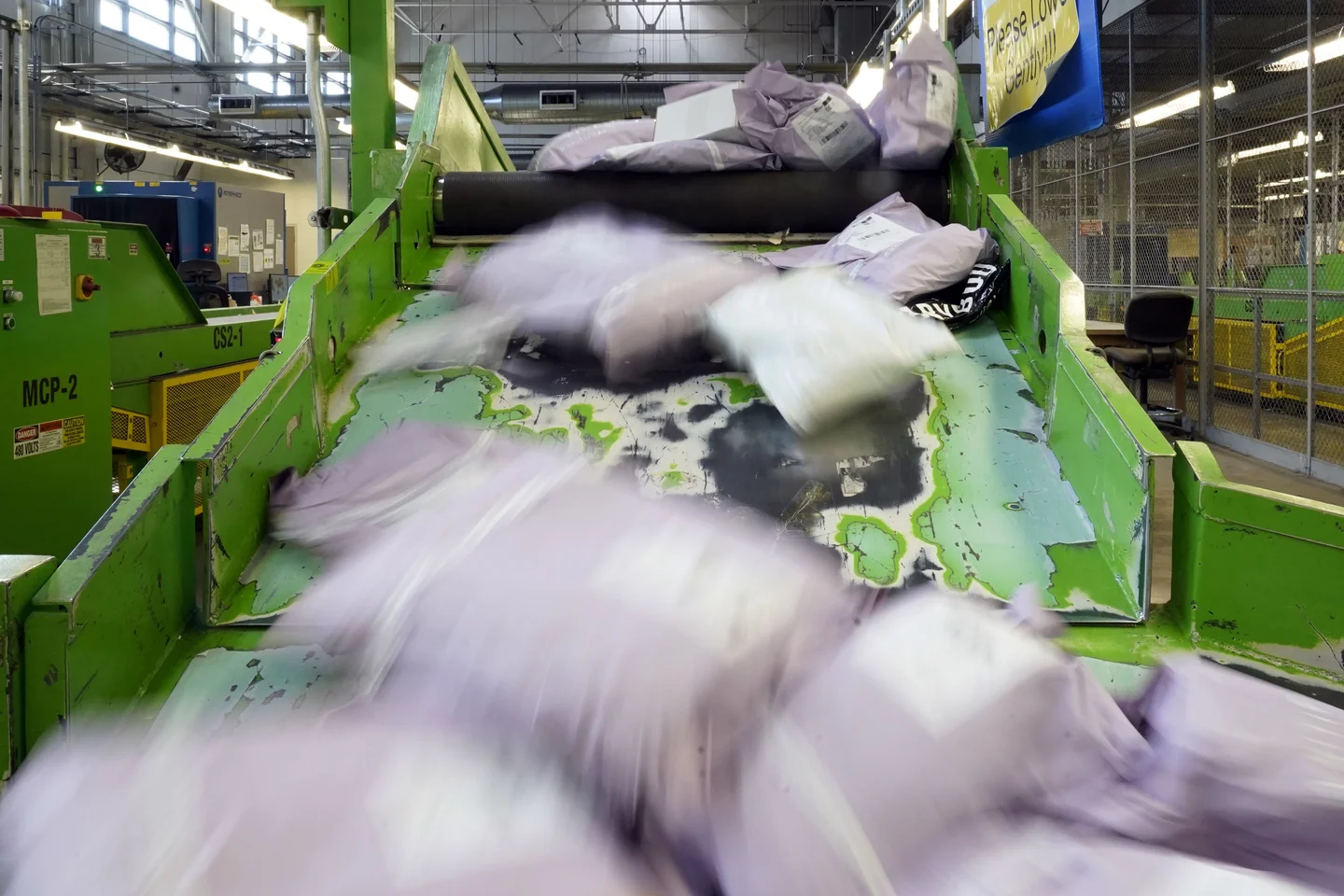
Photo: Charles Rex Arbogast Associated Press
Packages slide along a ramp at customs at Chicago’s O’Hare International Airport
By Annabelle Caillou
Dangerous toys, overheating chargers, toxic jewelry: a new international investigation by consumer organizations reveals that many products sold by online commerce giants Temu and Shein violate safety standards in effect in Canada.
The International Consumer Research and Testing (ICRT), of which the Quebec magazine *Protégez-vous* is a member, had 162 products—children’s toys, USB charging blocks, and necklaces—among the best-sellers on the two Chinese platforms analyzed in a laboratory. Result: 65% of the items selected on Temu did not comply with European rules, which are similar to those in effect in Canada. The non-compliance rate rises to 73% for products obtained on Shein.
The conclusions of the tests conducted on toys intended for children under 3 years old are particularly alarming. Of the 54 products analyzed, only one sold by Temu was compliant.
The laboratories report numerous poorly attached small parts, sharp edges, and excessively high sound levels. Sensory balls purchased on Shein, for example, reached 115 decibels, “the equivalent of a jackhammer,” it was noted.
Some toys also contain toxic substances. In a miniature bus, formaldehyde—a substance considered carcinogenic—was found in an amount five times higher than the limit permitted in Canada.
Also read: Temu and Shein eat into Quebec store sales
Video: Prioritizing style over quality, this is the price of ‘fast fashion’
The analysis of the 54 USB charging blocks also demonstrated mechanical and electronic defects in nearly all cases. “Nearly a third of the products tested (12 for Shein and 5 for Temu) presented significant risks of overheating or electrical arcing; they could therefore have caused a fire,” emphasizes *Protégez-vous*.
Among the 54 necklaces chemically tested, four had compliance defects under Canadian laws. The laboratories detected significant amounts of cadmium, “a heavy metal [that] can have harmful effects on the kidneys, lungs, stomach, and intestines if ingested.” But also nickel, which can cause skin irritation.
The consumer organizations that participated in the investigation also wanted to measure the responsiveness of Shein and Temu to these irregularities.
Complaints made as ordinary consumers were ignored by the Chinese giants. However, when the products were reported by an ICRT member organization, the platforms removed them from their site. However, similar products remained for sale.
The investigation notes that Shein subsequently recalled only a few of its problematic products, while Temu did not recall any.
Numerous Criticisms
This is not the first time the Chinese online commerce giants have been criticized in this way. Other studies around the world have already warned of the shortcomings and dangers of the products they sell.
In early November, Shein found itself in the crosshairs of French justice after childlike sex dolls were put up for sale on its site.
Shein and Temu are also heavily criticized for the working conditions they impose in their Chinese factories or for their environmental impact, their model being to produce ever more low-quality clothing in record time, without regard for the environment.
Recently, in Quebec, the CEO of Renaissance, Éric St-Arnaud, expressed concern about the influx of clothing from these platforms into his donation centers, items often of too poor quality to be resold in his thrift stores.
Last June, Quebec creators told *Le Devoir* they had found presumed copies of their designs or models, sold at low prices on Shein and Temu.
Groups of Quebec retailers, including the Quebec Retail Council, have also been denouncing for months the unfair competition from Chinese platforms, which jeopardize local businesses. They continue to call, in vain, for the federal government to act.