Editor’s Note
**Editor’s Note:** Öko-Test’s latest investigation reveals that cheap fashion jewelry often contains toxic levels of lead, nickel, and cadmium—posing a particular risk to children. Consumers are urged to exercise caution when purchasing low-cost accessories.
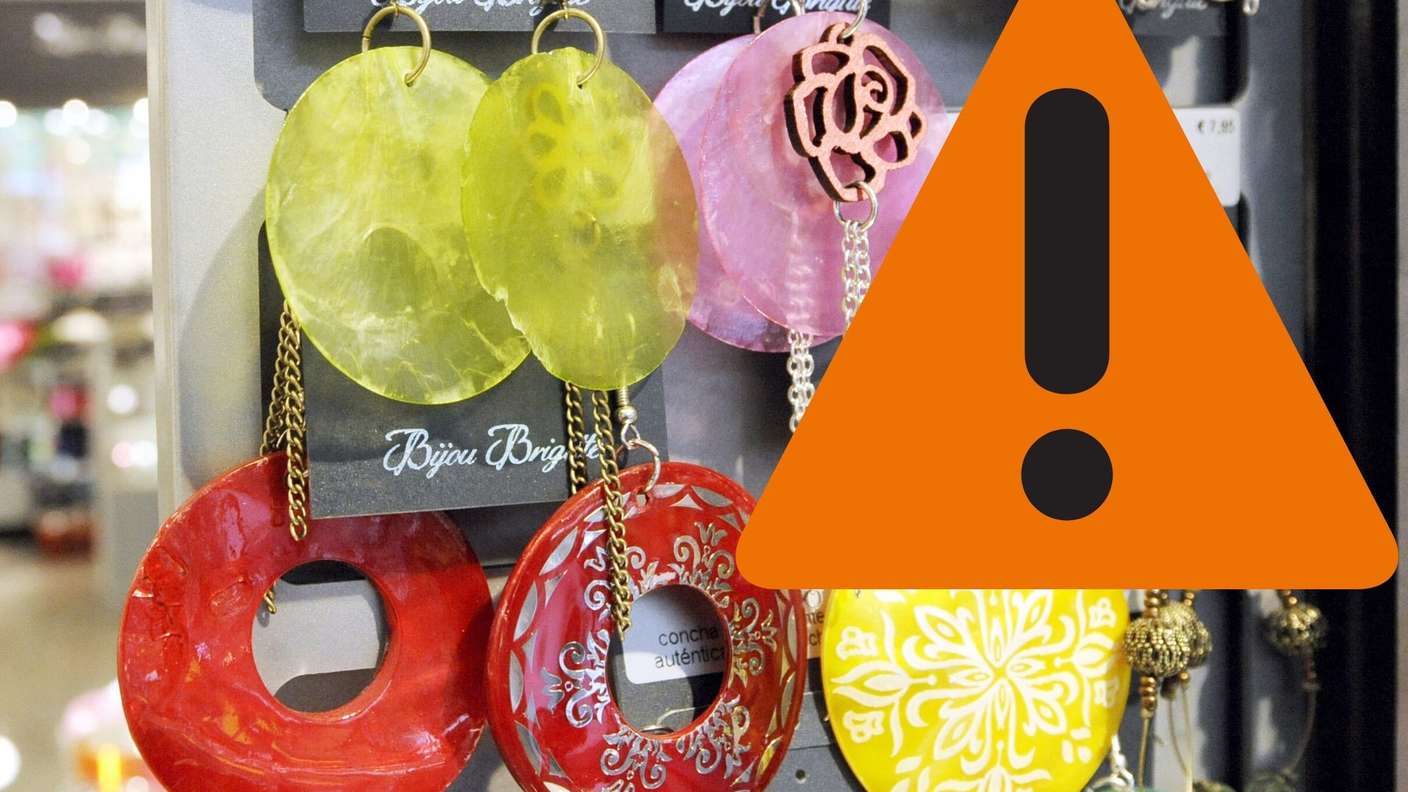
Fashion jewelry often contains nickel, lead, and cadmium. (Symbolic photo) © Maurizio Gambarini / dpa, Collage: RUHR24
Cheap jewelry? Öko-Test has examined fashion jewelry and found toxic substances such as lead and nickel. There is a danger for children.
However, harmful substances like lead, cadmium, and nickel are often used in jewelry production.
Nickel
Cadmium
Nickel values
Nickel
Cadmium
Cadmium
Cadmium
Cadmium

Cadmium
Not banned, but they are heavily regulated. EU chemicals law sets maximum levels of 0.01 percent for cadmium and 0.05 percent for lead. Despite these requirements, these values are often exceeded.
Cadmium
Cadmium
Nickel
Cadmium
Cadmium
If children react with allergic asthma to jewelry or clothing, nickel should be avoided. This is reported by wa.de.
Date: February 21, 2020, 10:48 AM
By: Victoria Maiwald
Fashion jewelry shines and sparkles and is also beautifully cheap. Öko-Test warns of poison – especially children are in danger.
Dortmund/Frankfurt – Not everything that glitters is gold, as they say – and there is much truth in that. Because especially the cheap fashion jewelry available at Bijou Brigitte, Claire’s, or H&M has little to do with precious metals, as RUHR24.de reports.
This would not be a problem if manufacturers did not use toxic and carcinogenic substances in the chains, rings, and earrings. Consumer advocates and authorities regularly criticize excessive lead, cadmium, nickel, and other pollutants. The experts at Öko-Test, who have also examined self-tanners, speak of poison in fashion jewelry.
As the testers report, some manufacturers have repeatedly appeared in the European Rapid Alert System for dangerous consumer products (RAPEX) in recent years. This system records various consumer goods that EU authorities classify as dangerous or potentially dangerous.

According to Öko-Test, jewelry retailer Bijou Brigitte, for example, has been flagged four times since 2017 for elevated nickel levels. Nickel can cause allergic reactions when it has prolonged contact with the skin. Allergies to the substance are widespread.
Between 2015 and 2019, the EU rapid alert system objected to excessive lead about 60 times. More than half of the products originally came from China. Lead is a harmful heavy metal – it can accumulate in the body and impair fertility. Lead can even damage the nervous system and unborn children.
Excessive levels of the carcinogenic heavy metal cadmium were reported a total of 150 times in the same period. About 80 percent of the objected fashion jewelry came from the People’s Republic of China. Cadmium can also accumulate in the body and damage kidneys and bones.
Although the toxicity of the heavy metals cadmium and lead is not acute, there is a warning against accidentally swallowing the jewelry pieces – then the body can absorb the metals. The danger is particularly high for children. The Federal Institute for Risk Assessment (BfR) recommends that children should not wear fashion jewelry:
As the consumer magazine Öko-Test, which recently also found pollutants in baby teething rings, explains, the limit values for the metals cadmium and lead are regularly exceeded.
In 2019, the Federal Office for Consumer Protection and Food Safety (BVL) published the results of the “Nationwide Monitoring Plan,” which examined particularly low-priced fashion jewelry from markets and itinerant traders.
Of the tested jewelry pieces, about 8 percent exceeded the respective limit values for lead and cadmium. Particularly alarming: In some, the determined cadmium and/or lead value was over 90 percent. The jewelry thus consists almost entirely of toxic substances.
And the SWR Marktcheck also found something in February 2020: The reporters had 15 jewelry pieces, including from H&M, Zara, Primark, and Claire’s, tested in a laboratory. The result is not reassuring.
In addition to cadmium, lead, and nickel, the testers also found carcinogenic PAHs (polycyclic aromatic hydrocarbons) and hormone-active plasticizers. These concerning substances were present in every fourth jewelry piece.
Bijou Brigitte again stood out negatively: In a men’s bracelet, the SWR testers found four different plasticizers – two of which are banned from July 2020. Bijou Brigitte wants to remove the product from the market.
That harmful substances are repeatedly found in products is shown by Öko-Test on deodorants: The winners were cheap brands, while expensive ones sometimes contained dangerous ingredients.

Retailers like Zeeman and the discounter Action have also stood out negatively. In the jewelry pieces, cadmium and the suspected carcinogen naphthalene were found – which was also discovered as a toxic residue from coke production in the soil of the city of Dortmund.
Search keywords: Jewelry Cadmium